A first vegetable garden does not need twelve beds, forty seed packets, a greenhouse, or a spreadsheet complicated enough to qualify as accounting software.
It needs sunlight, workable soil, water, a realistic crop list, and a planting date that makes sense for North Central Texas.
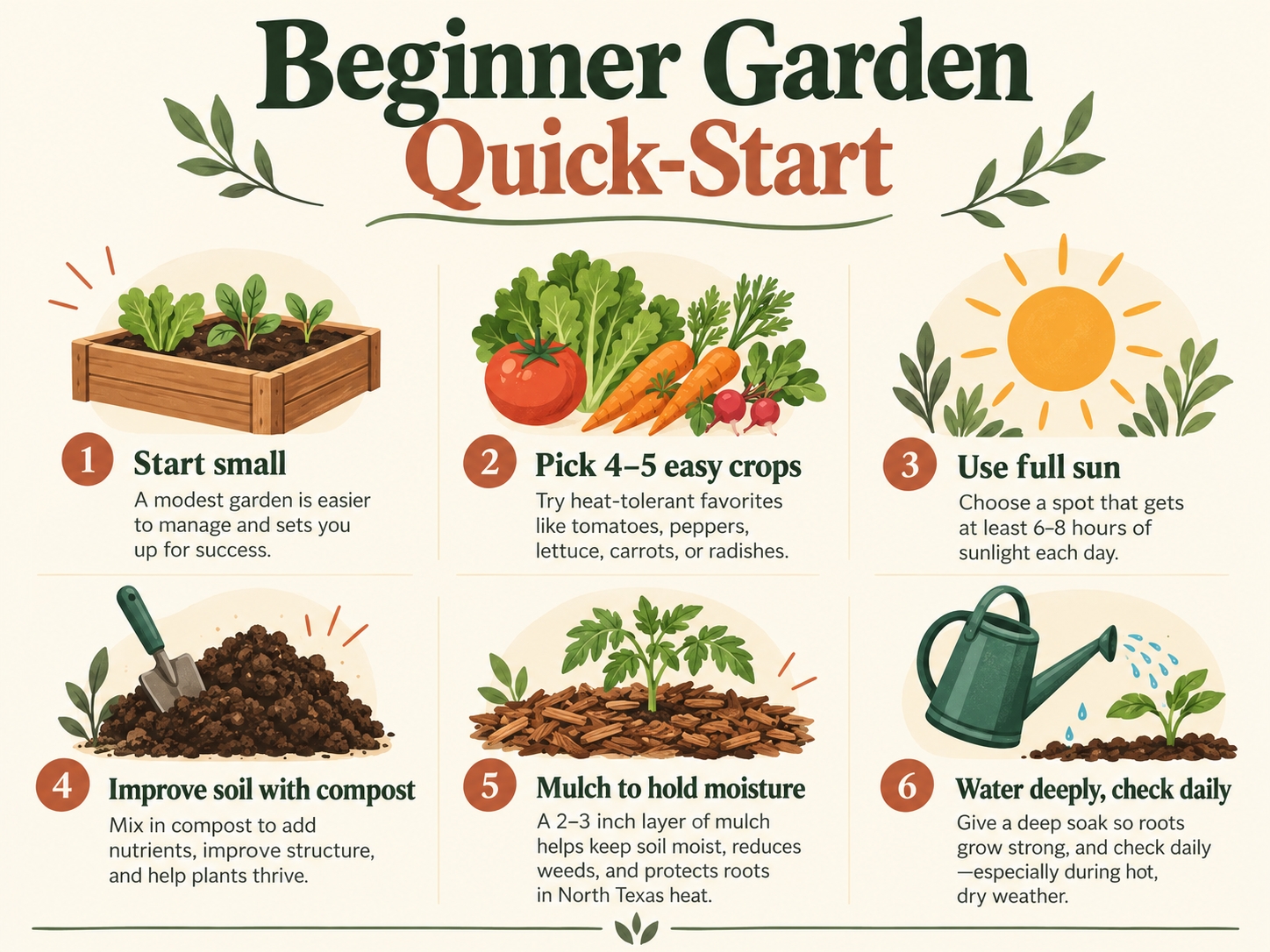
1. Start smaller than you think you need
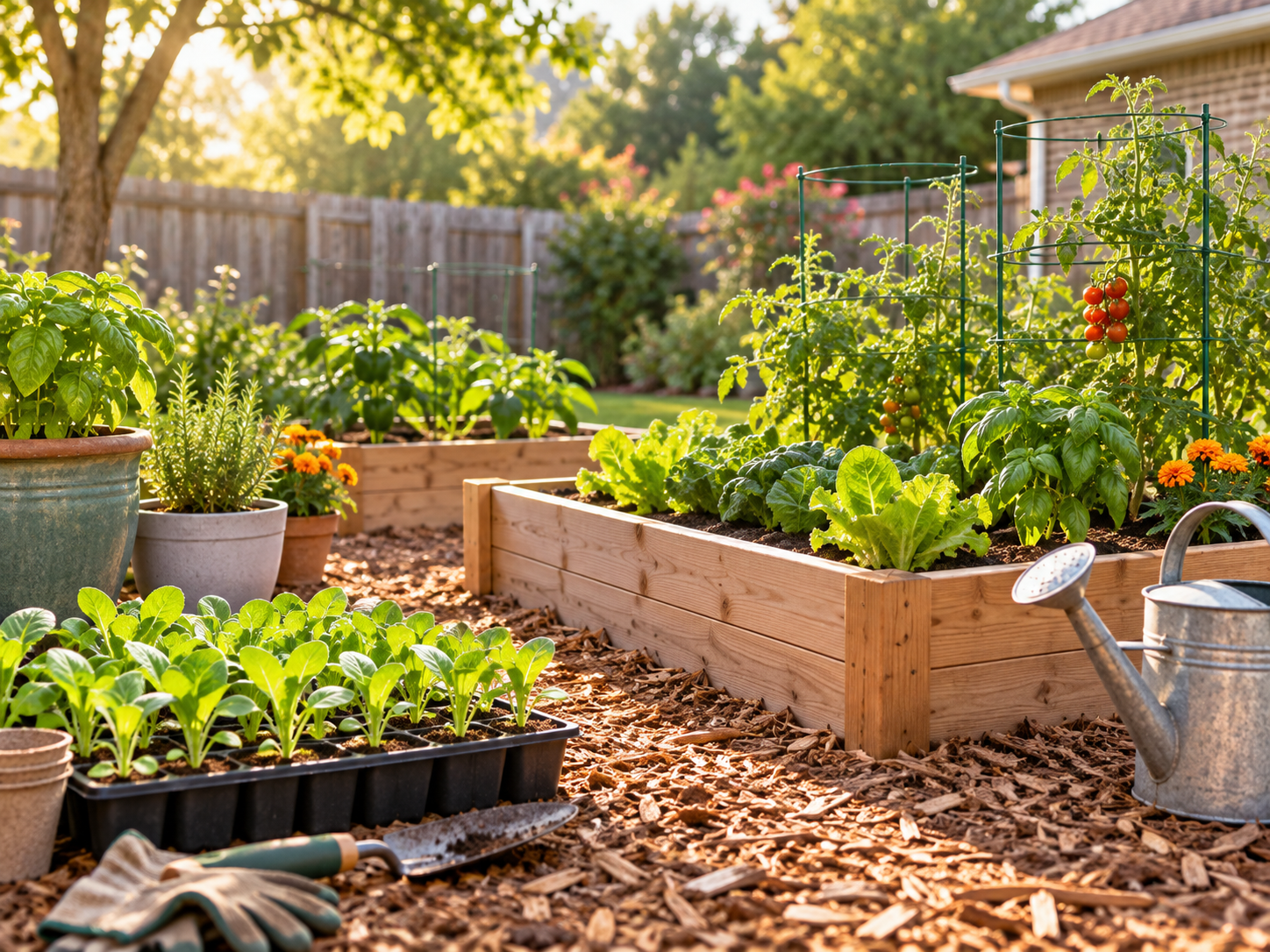
One or two beds—or even several large containers—can produce enough food to teach you a lot without turning the garden into a full-time job.
2. Choose the sunniest practical spot
Most fruiting vegetables need strong sun. Leafy greens tolerate more shade, but tomatoes, peppers, squash, beans, and melons are much more productive with abundant direct light.
3. Fix drainage before buying plants
If water stands after rain, solve that problem before filling the space with vegetables. A raised bed may be easier than trying to force a vegetable garden into poorly drained ground.
4. Plant by season—not by what the store is selling
Texas has cool-season and warm-season planting windows. The nursery may have tomatoes on a gorgeous February afternoon, but the weather forecast still gets a vote.
5. Pick forgiving crops
Good first warm-season crops
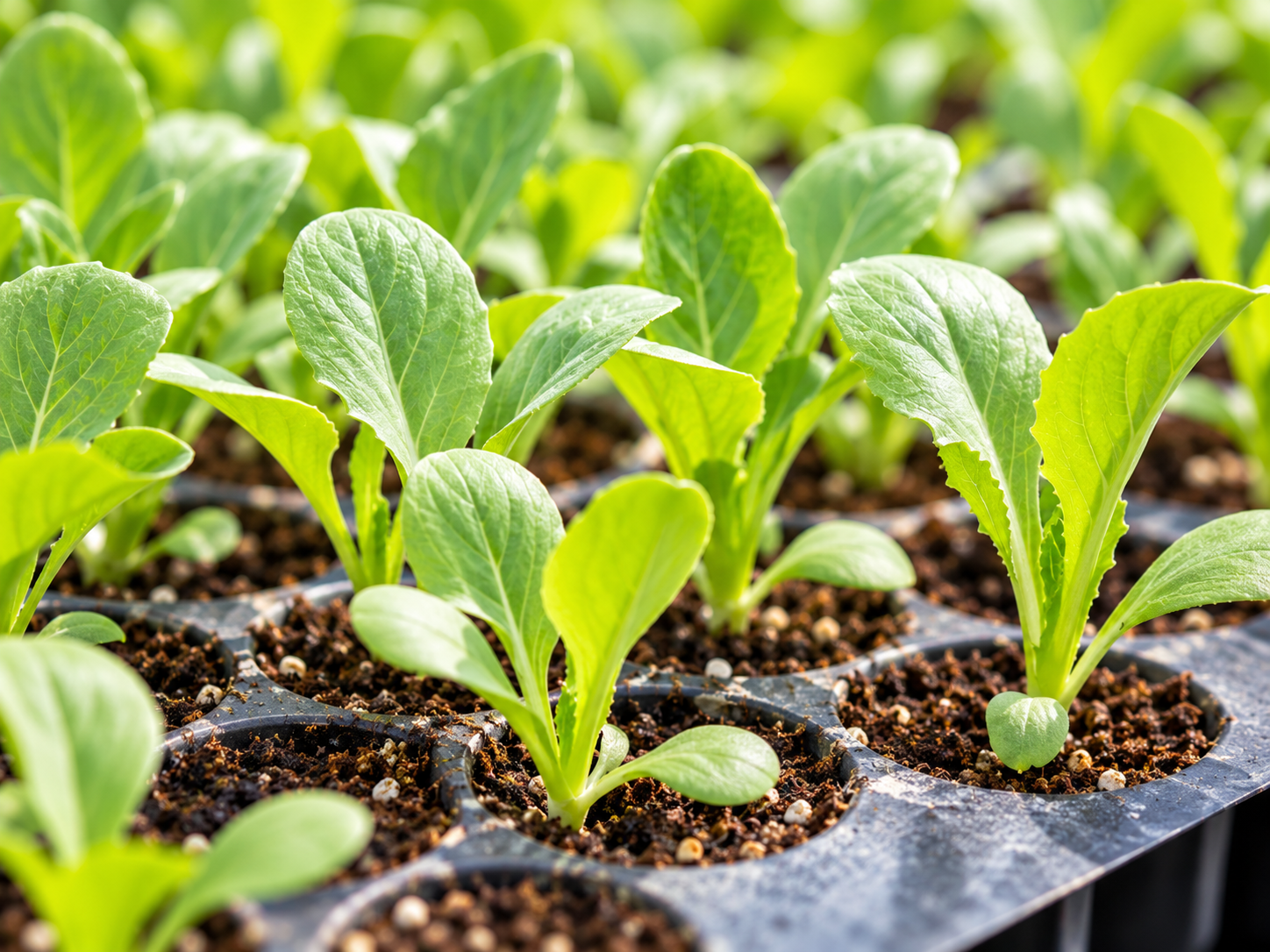
Bush beans, summer squash, cucumbers, cherry tomatoes, peppers, and okra.
Good first cool-season crops
Radishes, lettuce, spinach, turnips, Swiss chard, cilantro, and onions.
6. Mulch and water deeply
Mulch helps stabilize moisture and soil temperature. Water deeply enough to wet the root zone, then let the soil tell you when it needs water again instead of watering automatically every day.
7. Keep a record
Write down the variety, planting date, first harvest, major pest problems, and whether you would grow it again. That information becomes more useful every season.
8. Expect something to fail
A plant dying does not mean the garden failed. Heat, pests, hail, disease, poor timing, and questionable decisions happen in real gardens. The useful part is figuring out what happened before repeating it.
Build the garden around the work you can actually maintain
A first garden is easier to keep productive when the size matches the time you have available. A bed that can be weeded, watered, checked for pests, and harvested in fifteen or twenty minutes will usually teach you more than a huge plot that becomes overwhelming by June. Leave walking space around beds and containers so you can reach every plant without stepping into the root zone. If a crop requires a trellis, cage, or other support, install it early rather than trying to work around a mature plant later.
Think in seasons instead of one big planting day
North Texas gardens are not planted once and then left alone. Cool-season crops can occupy beds before tomatoes and peppers are ready, and summer crops can be removed in time for fall planting. That means the same small bed can produce several different harvests during the year. Keeping a simple plan of what will follow each crop prevents the common beginner problem of filling every inch in spring and having nowhere to plant in fall.
Check the garden often, but do less reacting
A quick daily walk is more valuable than a major rescue session once a week. Look under leaves, check whether soil is actually dry, notice new flowers and fruit, and catch weeds while they are small. At the same time, avoid responding to every droopy leaf with water or every chewed edge with pesticide. Plants respond to heat, wind, transplanting, insects, and ordinary growth. Learning to observe first and act second is one of the most useful gardening skills you can build.
Spend money where it removes recurring problems
A sturdy hose, reliable timer, drip line, mulch, strong tomato support, and decent soil are usually more valuable than buying dozens of varieties or decorative gadgets. The garden becomes much easier when watering is dependable and plants are supported before they fall over. Start with the basic systems, then add extras after you know what kind of gardener you actually are.
It also helps to choose one or two goals for the first season. Maybe the goal is fresh tomatoes and peppers, a salad bed, or enough herbs to stop buying them at the store. A garden built around a clear goal is easier to plan than one built by grabbing every interesting plant at the nursery.