
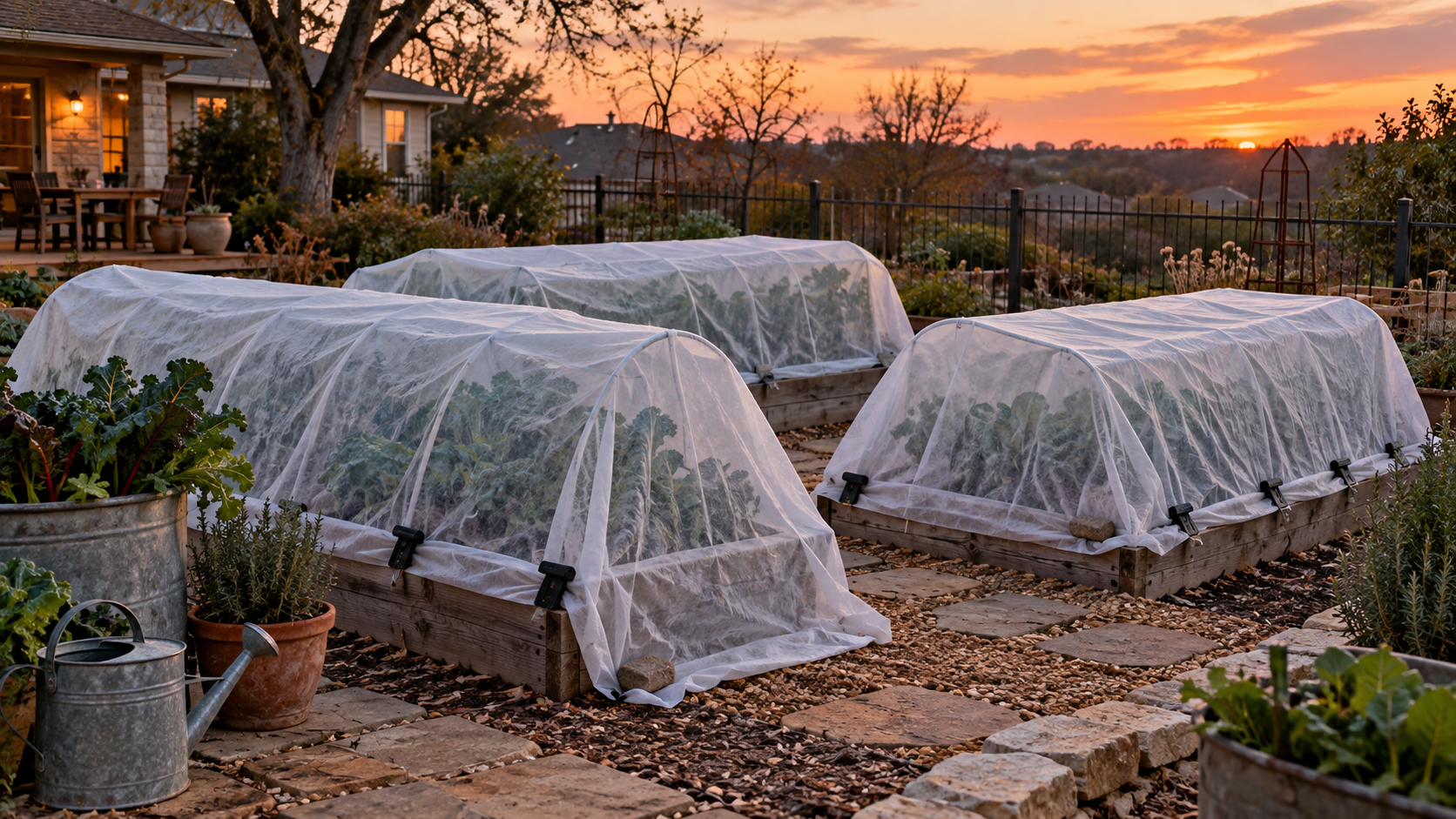
A Texas frost forecast can make a garden look like somebody threw every spare sheet in the house over the yard. That can actually work—but only if the cover is doing the right job.
Know what you are protecting
Some fall vegetables tolerate temperatures below freezing much better than warm-season crops. Beans, squash, peppers, tomatoes, melons, and similar warm-season plants are much more vulnerable than established spinach, mustard, turnips, carrots, and many brassicas.
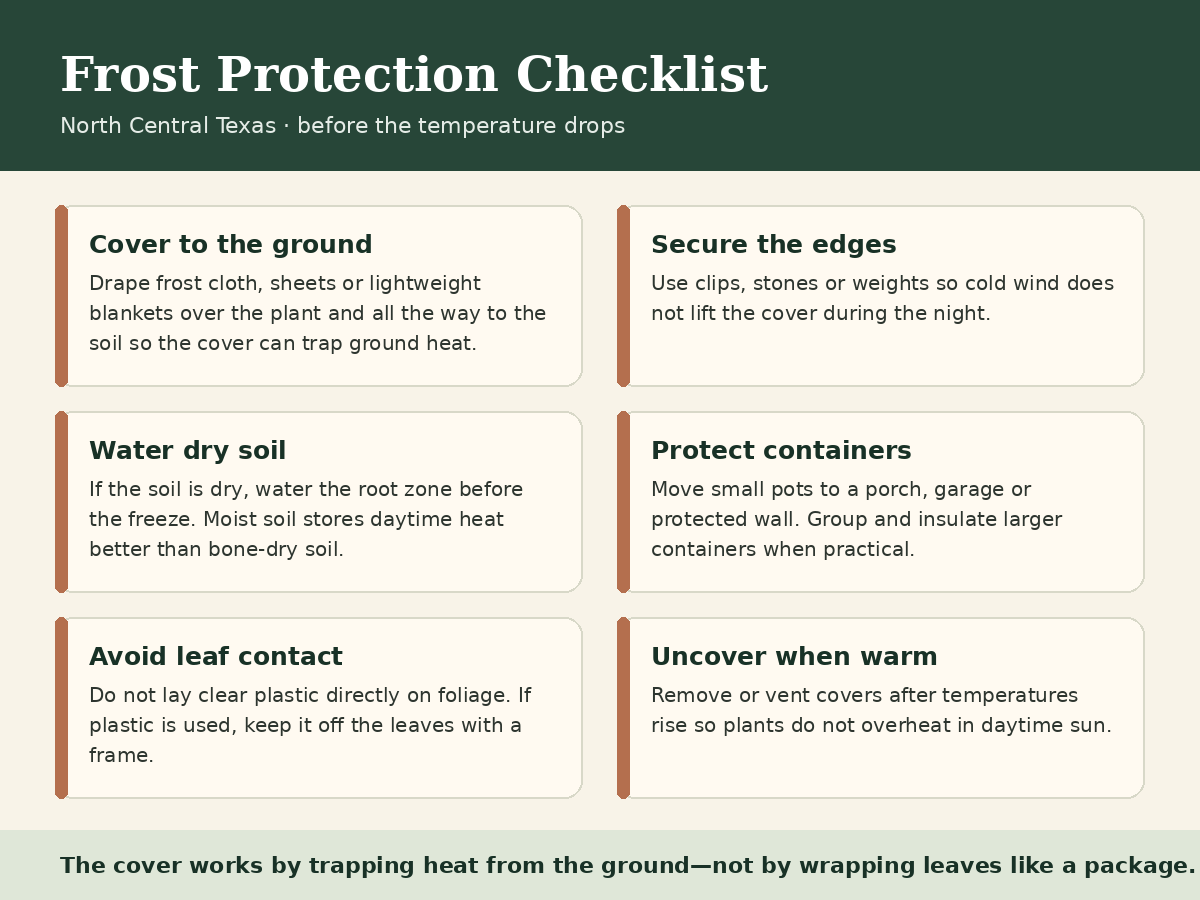
Cover the plant all the way to the ground
The goal is to trap heat coming from the soil. Drape the cover over the plant and let it reach the ground, then secure the edges. Do not cinch the cover tightly around the trunk or stem like a lollipop.
What can you use?
Frost cloth, sheets, lightweight blankets, cardboard boxes, and similar materials can all help. The material should not crush delicate plants.
Clear plastic directly touching leaves is a poor choice during a frost. If plastic is used as part of a structure, keep it from resting on foliage.
Water the soil before the freeze
If the soil is dry, watering the root zone before the cold night can help because moist soil stores more daytime heat than dry soil and also keeps the plant from facing drought stress at the same time.
When should the cover go on?
Put covers in place late in the day before temperatures fall, after the soil has had time to absorb daytime warmth. Remove or vent them when temperatures rise so plants do not overheat.
Containers need extra attention
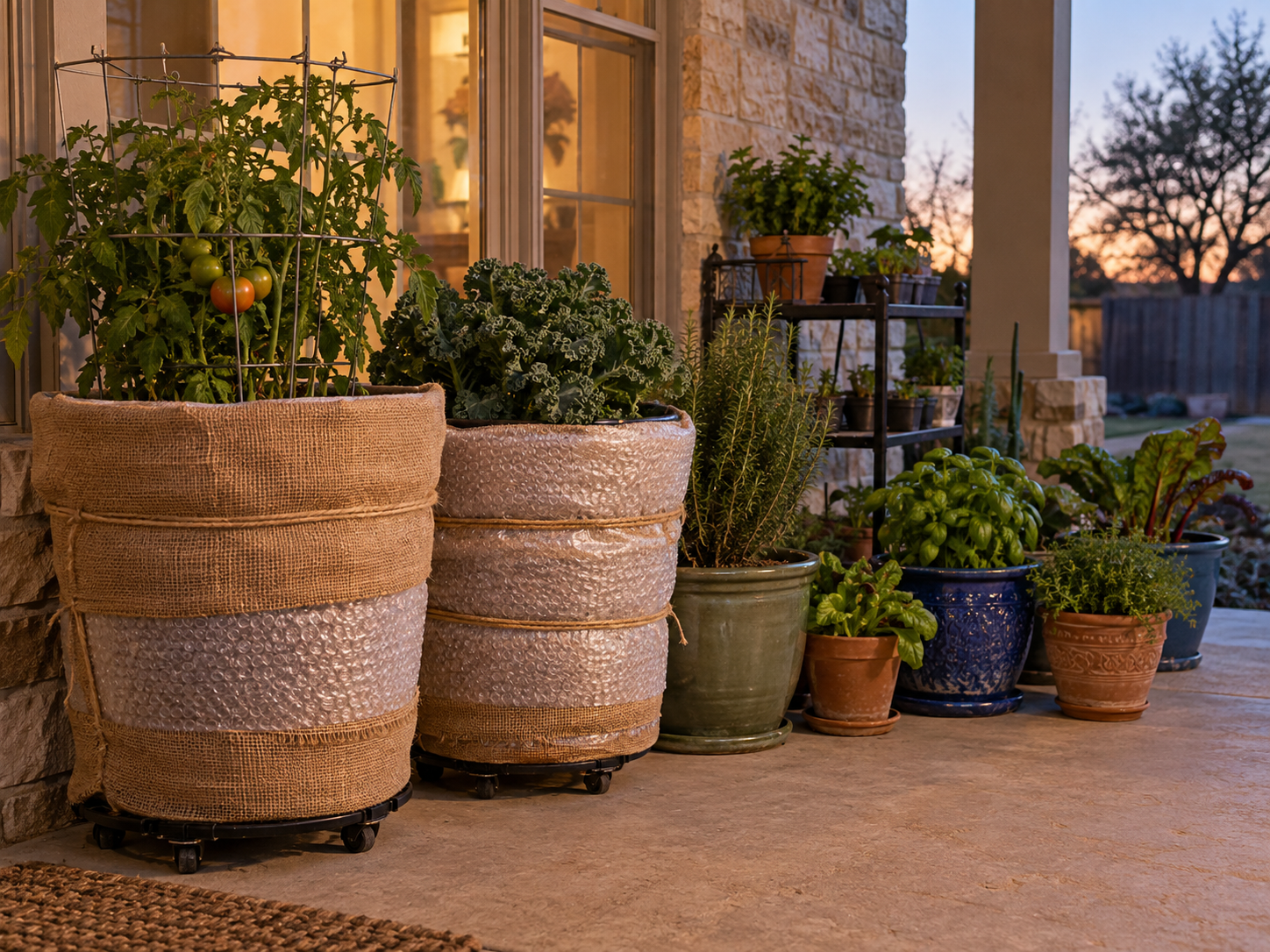
Roots in containers are more exposed to cold than roots in the ground. Move small pots into a garage, porch, or protected area when practical. Larger containers can be grouped together and insulated.
After a freeze
Do not rush out at sunrise and prune every damaged leaf. Wait until the extent of damage is clearer, especially on woody plants. For annual vegetables that have completely collapsed from freeze injury, cleanup can happen once the tissue is obviously dead.
Know which plants actually need protection
Not every plant in the garden reacts to cold the same way. Established kale, spinach, many brassicas, carrots, and other cool-season crops can often handle temperatures that would seriously damage tomatoes, peppers, basil, squash, or tropical container plants. Protecting everything wastes time and materials, so prioritize tender crops, new transplants, flowering plants you want to keep producing, and containers whose roots are more exposed to cold air.
How to cover plants correctly
Frost cloth works best when it traps warmth rising from the soil. Drape it over the plant and secure the edges to the ground rather than wrapping the foliage like a package. Use hoops, cages, or stakes if the material is heavy enough to crush tender growth. Plastic can block wind, but it should not rest directly on foliage during freezing weather, and it needs ventilation when the sun comes out. Remove or open covers during warmer daytime conditions so plants do not overheat.
Water and mulch can help too
Moist soil generally holds and releases heat better than bone-dry soil, so a garden that is already dry may benefit from watering ahead of a freeze. Do not flood saturated ground or wet foliage unnecessarily. Mulch helps protect roots and moderates soil-temperature swings, but avoid piling mulch over crowns or against stems. Containers can be grouped near a protected wall, moved into a garage or sheltered area, or wrapped around the pot to reduce rapid root-zone cooling.
After the freeze, wait before pruning
Cold-damaged foliage can turn limp, dark, or brown very quickly. Resist the urge to cut everything back immediately. Damaged material can provide some temporary protection if another cold night follows, and the true extent of injury may not be obvious for several days. Once temperatures stabilize, prune back to healthy tissue and give the plant time to show where new growth is still viable.
Use the forecast as a trigger, not a guarantee
Forecast temperatures are measured under standardized conditions, while your garden may be warmer or colder depending on elevation, wind, buildings, fences, and nearby pavement. Low spots can collect colder air, and containers on an exposed patio may chill faster than plants beside the house. If a crop is valuable or especially tender, a small margin of caution is usually easier than trying to rescue it after damage.