
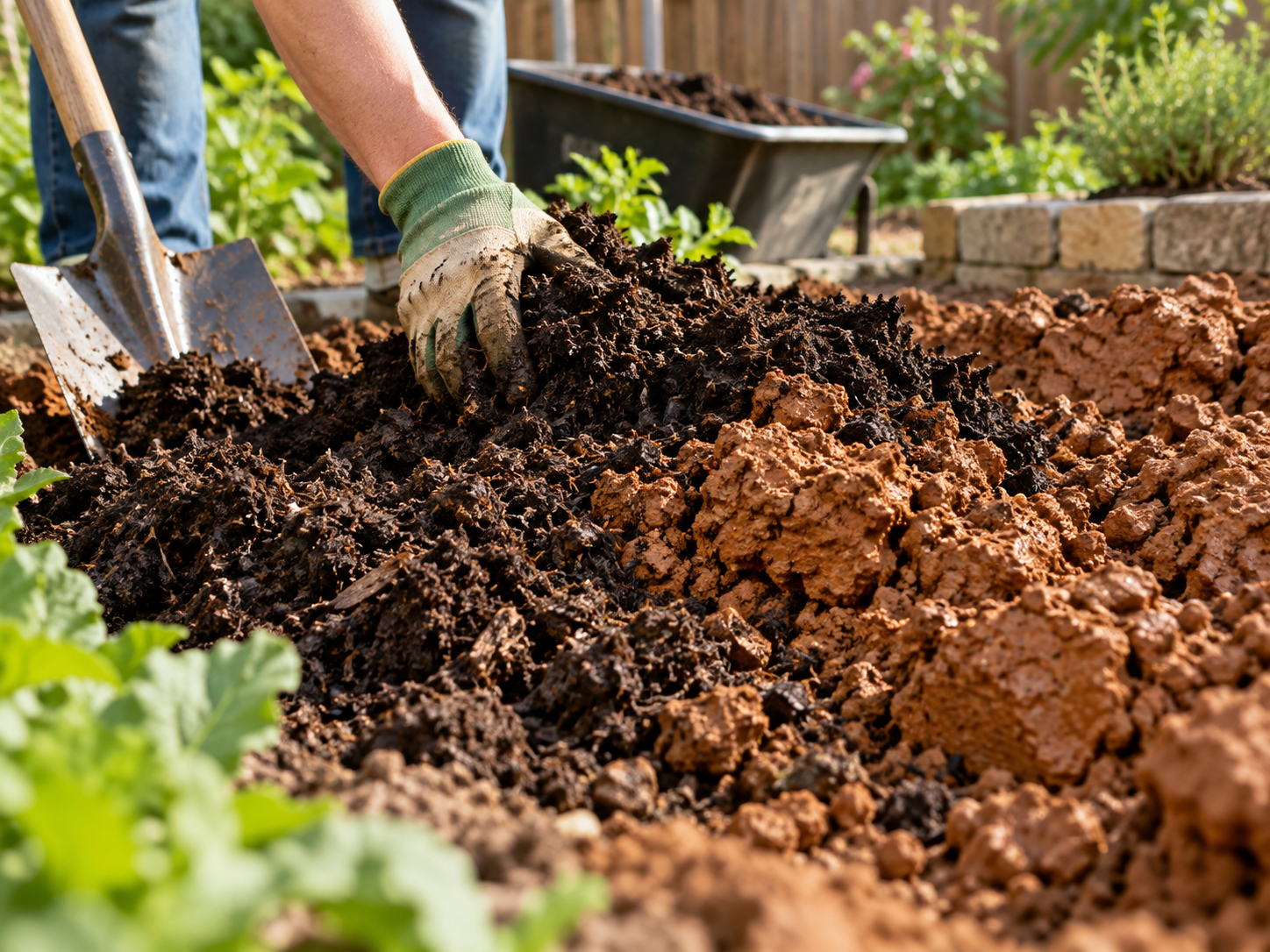
If you garden in North Central Texas long enough, you are going to have an opinion about clay. It can hold nutrients and moisture well, but it can also become sticky when wet, hard when dry, and miserable if you work it at the wrong time.
First: do not work wet clay
One of the easiest ways to make heavy soil worse is to till, dig, or stomp through it while it is saturated. Wait until the soil is moist but crumbly instead of slick and sticky.
Organic matter is the long game
Finished compost is one of the most useful additions to a vegetable bed because it improves structure and supports soil life without trying to turn the native soil into something it is not.
Add organic matter in reasonable amounts and repeat that process over seasons. Huge one-time amendments are not a substitute for steady soil-building.
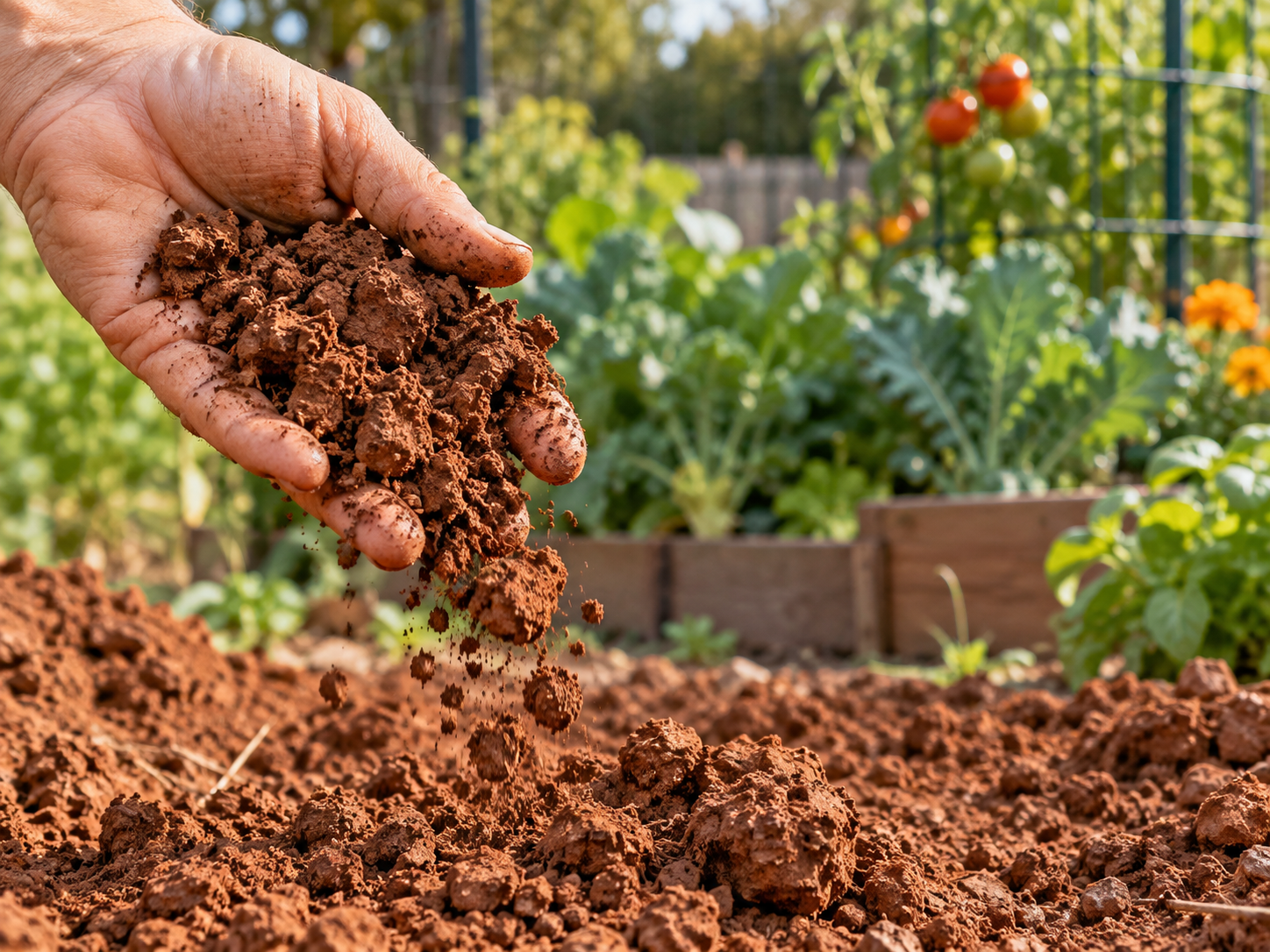
Raised beds can make Texas gardening easier
Raised beds improve drainage and let you control the root-zone soil more precisely. They are especially useful where native soil stays wet too long, compacts easily, or is difficult to work.
Do you need gypsum?
Texas gardening advice sometimes recommends gypsum for heavy clay, but it is not a universal cure. The benefit depends on the soil chemistry. A soil test is a better way to decide what the soil actually needs than adding amendments because clay is present.
Do not automatically add sand
Small amounts of sand mixed into clay can create an even denser material rather than magically creating loam. If you are trying to improve texture, organic matter and raised beds are usually more predictable home-garden tools.
Mulch protects the work you already did
A mulch layer reduces evaporation, moderates soil temperature, and limits surface crusting. Keep mulch slightly away from plant stems and tree trunks.
Get a soil test before chasing pH
North Texas soils vary. Do not add lime, sulfur, phosphorus, or other major amendments simply because a gardening article says your region “usually” needs them. Test first.
Do not work clay when it is too wet
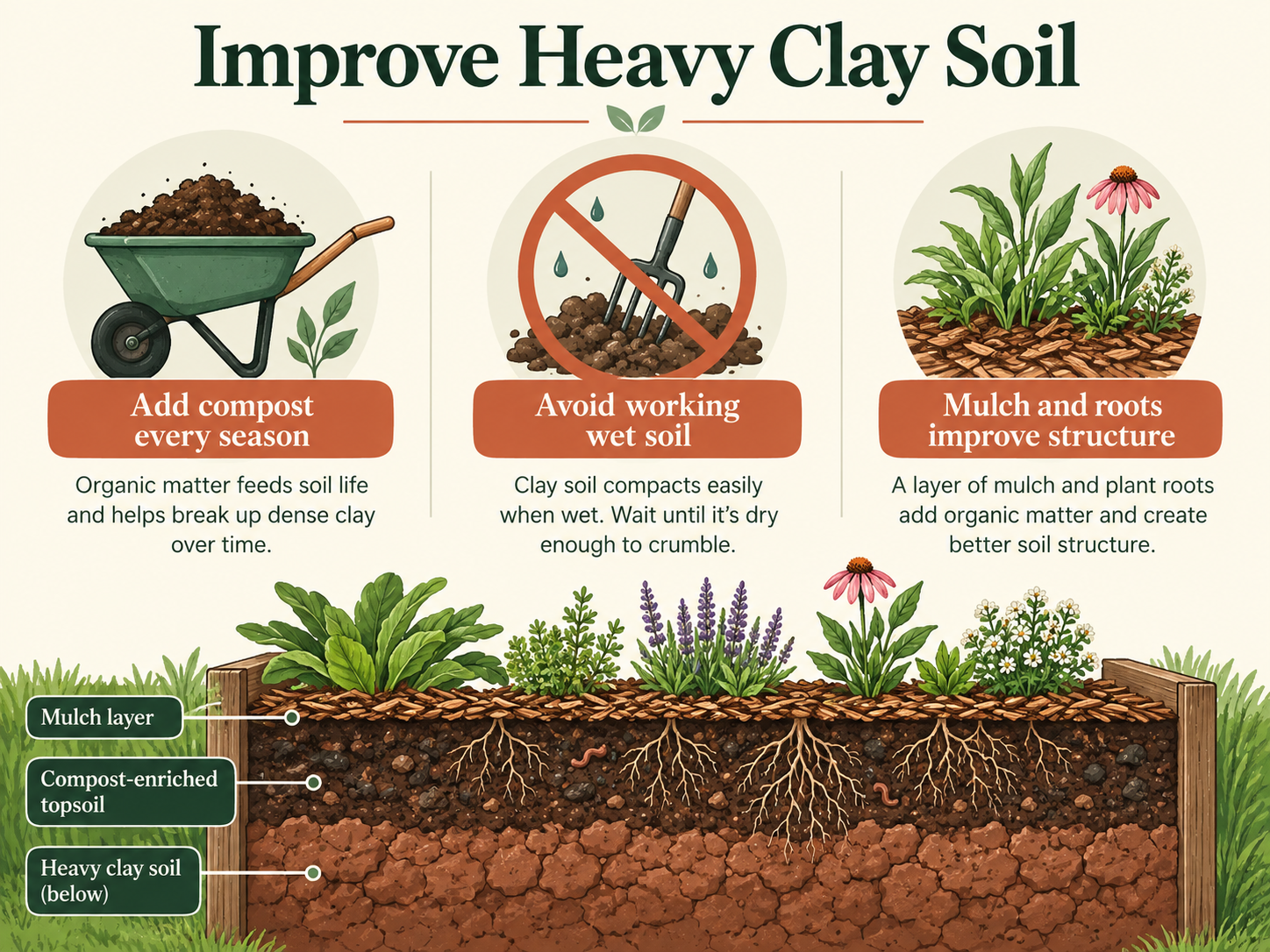
One of the fastest ways to make heavy soil harder to manage is digging or tilling while it is saturated. Wet clay smears and compacts, then can dry into dense clods. Wait until a handful can be squeezed together but still breaks apart with moderate pressure. If it behaves like modeling clay, give it more time to dry before major digging.
Organic matter works over repeated seasons
Finished compost, decomposed leaves, and plant residues improve soil gradually rather than instantly. Apply reasonable amounts and let roots, soil organisms, weather, and time continue the process. Mulching the surface also matters because bare clay can crust, crack, and heat rapidly. As mulch breaks down, it feeds the same soil-building cycle without requiring you to dig deeply every season.
Avoid the temptation to fix clay with sand
Adding a small amount of sand to heavy clay does not reliably create loam and can make the soil behave even more densely. Changing soil texture requires far more mineral material than most home gardeners expect. For a vegetable bed, adding organic matter, protecting the surface, preventing compaction, and improving drainage are usually more realistic strategies.
Know when a raised bed is the easier answer
If the site stays waterlogged, is extremely compacted, or would require years of work before vegetables can root well, a raised bed can create a manageable growing zone immediately. That does not mean the native soil is useless. Roots can eventually move below the bed, and improving the surrounding soil still helps drainage and the overall landscape.
Use roots as part of the soil-improvement plan
Plant roots create channels, feed soil organisms, and help aggregate particles as they grow and decompose. Keeping beds planted when practical—vegetables, cover crops, or even deep-rooted ornamentals around the garden—can improve structure in ways a shovel cannot reproduce. Avoid walking on growing areas, especially when wet, so those developing pore spaces are not compacted again.
Measure improvement by workability
Do not expect clay to stop looking like clay. A better goal is soil that drains more predictably, crusts less severely, supports healthy roots, and can be worked without turning into bricks. Those practical changes are better measures of success than trying to transform native soil into a completely different texture.