
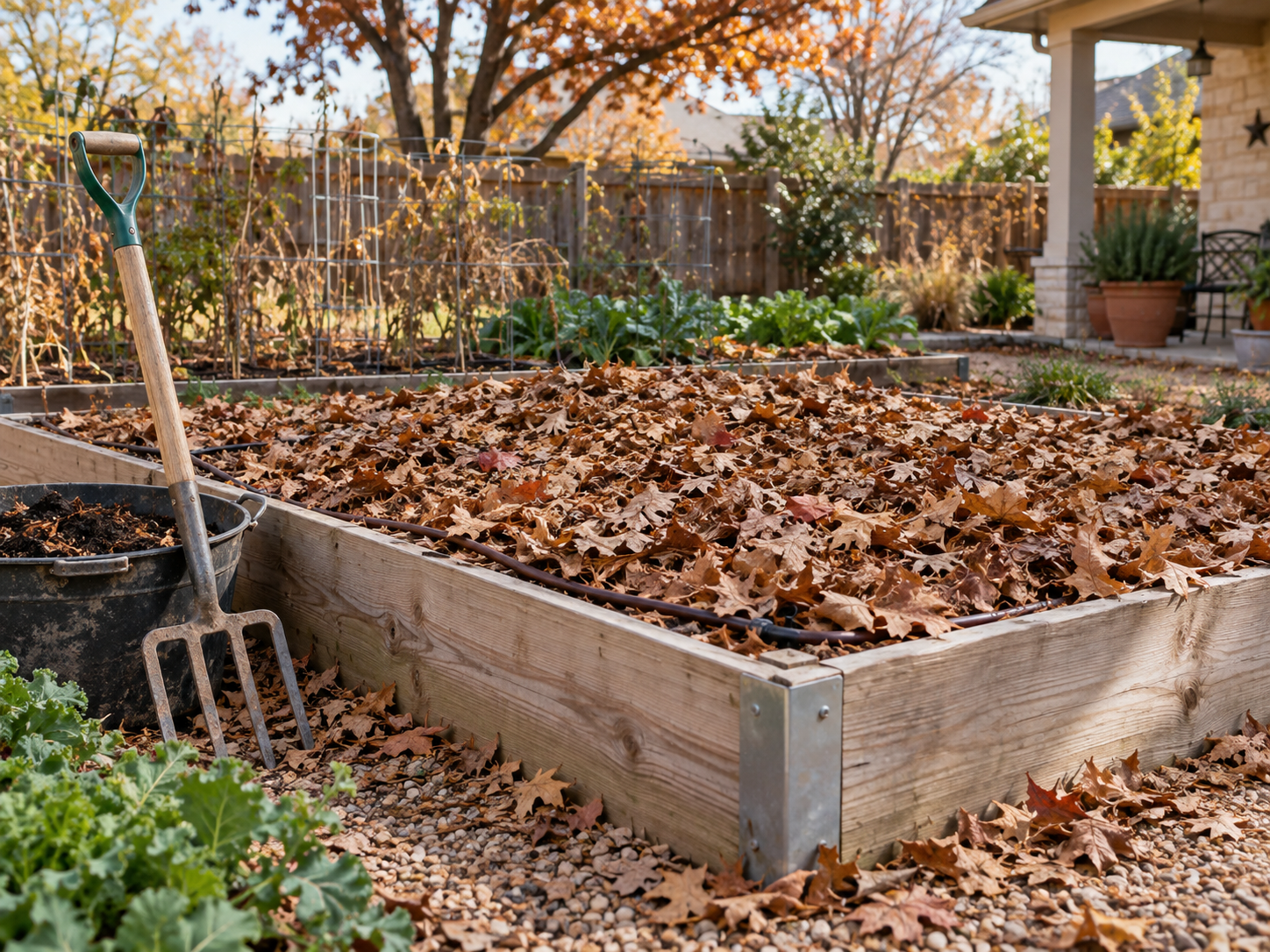
An empty garden bed does not have to sit bare all winter. In fact, winter is one of the easiest times to improve soil for next season—without trying to grow a full vegetable garden in every square foot.
1. Clean out the finished crop
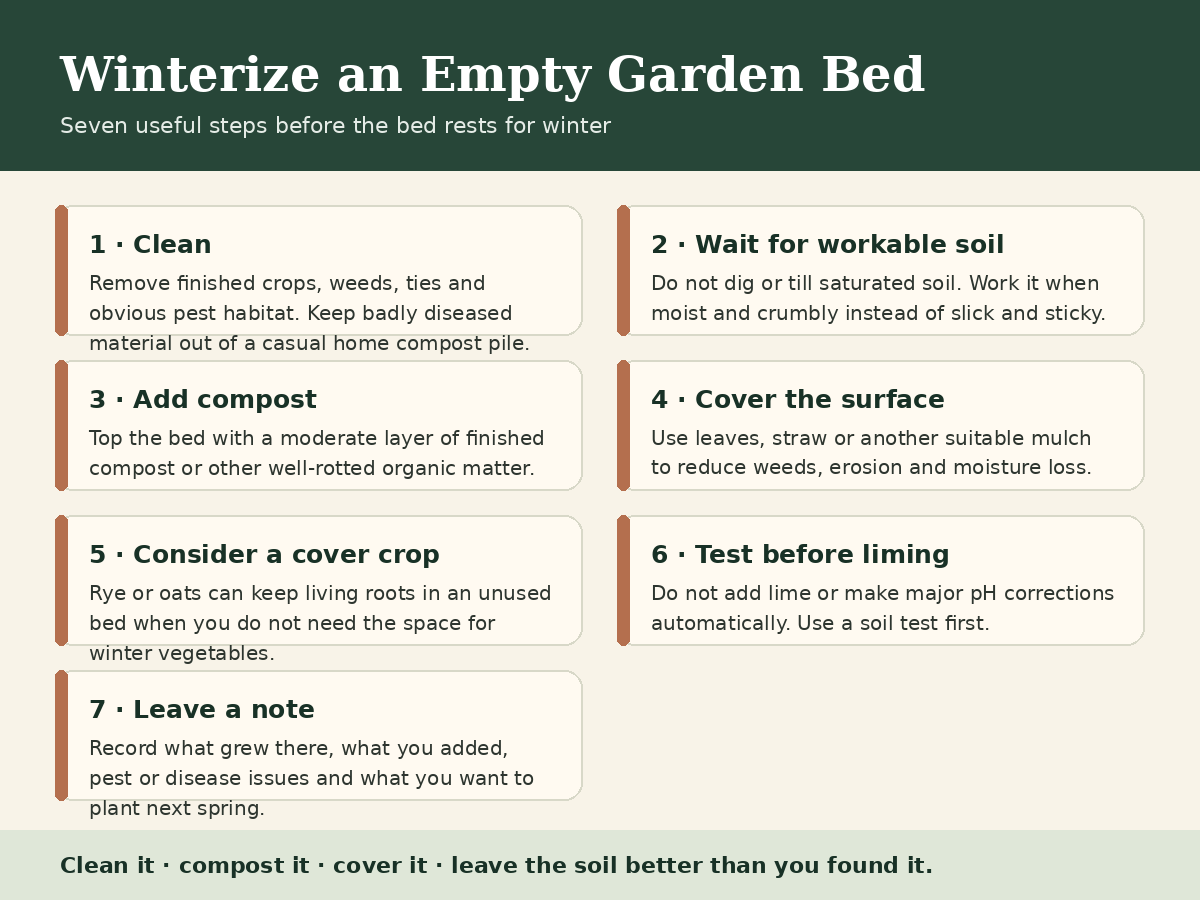
Remove dead plants, weeds, stakes, ties, and obvious pest habitat. If plant material was heavily diseased or insect-infested, do not automatically put it into your home compost pile. Healthy residue can be composted or incorporated where appropriate.
2. Work with the soil only when it is workable
Do not dig or till saturated soil. Texas A&M recommends working soil when it is moist rather than wet. Winter digging can help rough soil mellow as moisture and temperature changes work on it over time.
3. Add finished organic matter
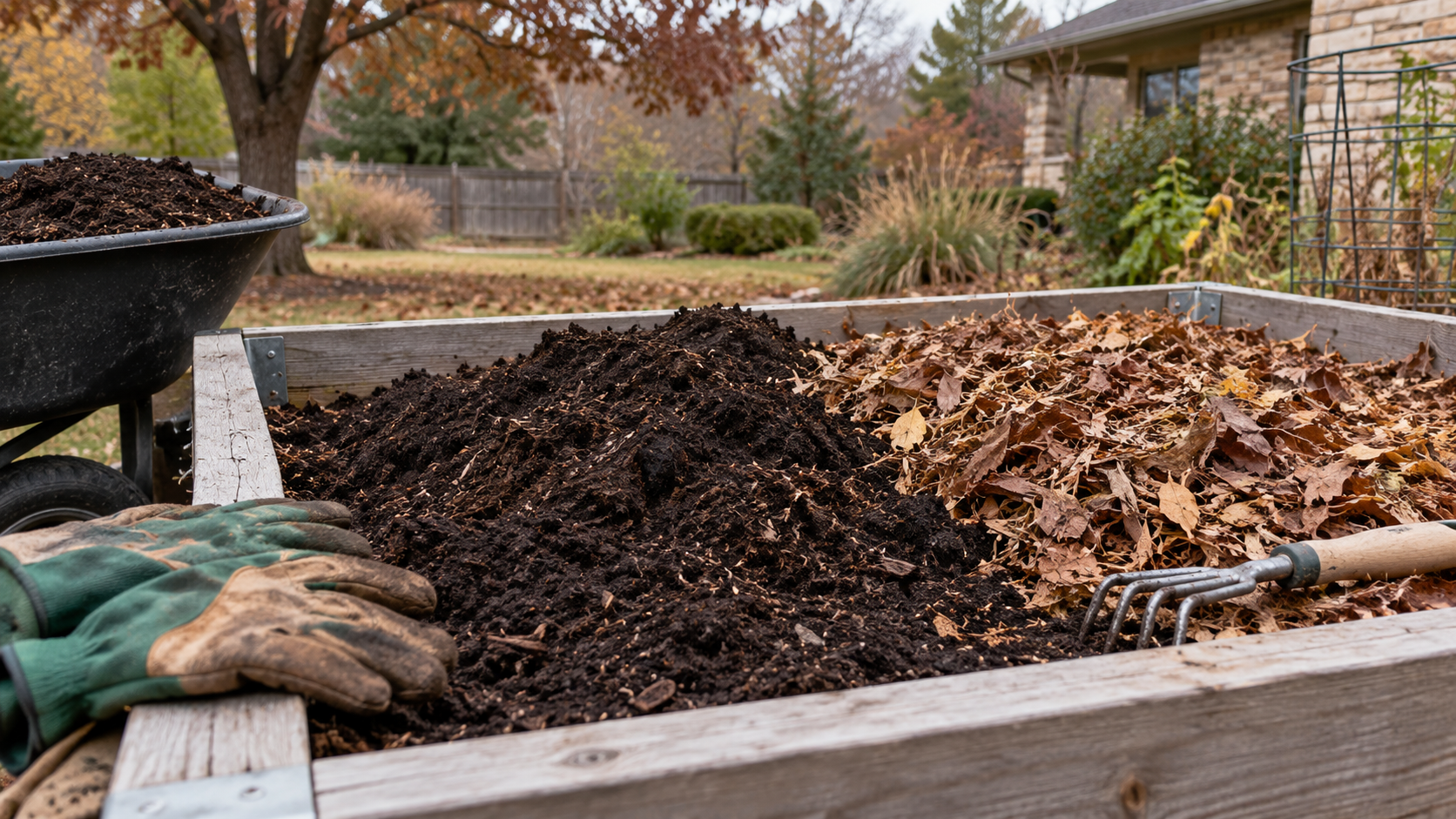
Add well-rotted compost or other finished organic matter. Winter is a good time to build soil structure because the material has time to settle and continue breaking down before spring planting.
Do not assume more is always better. A moderate layer is enough; you are improving soil, not replacing the entire bed every winter.
4. Cover the soil
Mulch helps slow moisture loss, suppress weeds, and reduce temperature swings. Leaves, straw, compost, bark, and other appropriate organic mulches can all help protect an unused bed.
5. Or grow a winter cover crop
If the bed will truly stay unused, a cover crop can keep living roots in the soil and add organic matter later. Texas A&M specifically notes rye or oats as fall-planted green-manure options that can be turned under in spring. Cover crops are not a good fit if you plan to use the same bed for an active fall/winter vegetable garden.
6. Do not lime just because it is winter
If you think your soil needs lime or major pH correction, test first. North Texas soils vary, and “add lime every winter” is not a universal rule.
7. Leave yourself a spring note
Write down what was in the bed, what you added, any pest or disease problems you saw, and what you want to plant next. That one minute of record keeping can prevent a lot of guessing in March.
Separate healthy debris from problem debris
Healthy spent plants can be chopped for compost when appropriate, but heavily diseased foliage or material covered with persistent pests should not automatically go into a cool backyard pile. Removing problem debris reduces the amount of infected or infested material sitting beside next season's crop. Roots from healthy annuals can often be left to decompose in place if they are not in the way.
Protect bare soil through winter
Leaving soil exposed invites erosion, surface crusting, weeds, and rapid moisture loss. A layer of shredded leaves, straw, or another suitable mulch protects the surface while slowly adding organic matter. If you use a winter cover crop, choose one you can realistically terminate before spring planting rather than creating extra work at the exact time beds need to be ready.
Do not over-amend just because the bed is empty
An unused bed is a good time to add finished compost, but more is not automatically better. A modest top-dressing is usually enough for routine maintenance. Lime, sulfur, gypsum, or concentrated fertilizer should be based on an actual reason—preferably a soil test—rather than added every winter by habit.
Use winter to fix the structure around the bed
Repair loose boards, reset trellises, replace broken irrigation fittings, clear paths, and decide where spring supports will go. These small jobs are easier while the bed is empty. A winterized bed should enter spring not only with protected soil, but with fewer structural chores waiting when planting weather arrives.
Leave yourself a note for spring
Write down what grew in the bed, any pest or disease problems, what amendments were added, and what you plan to plant next. A simple tag or garden journal entry prevents the spring habit of guessing what happened six months earlier. If a bed had a recurring problem, winter is the time to decide whether crop rotation, soil testing, drainage work, or a different variety should be part of the next plan.
A winterized bed should be easy to reopen
The goal is not to seal the garden away. Mulch and cover crops should protect soil without creating a spring cleanup project larger than the bed itself. When warm planting weather returns, you should be able to pull back mulch, prepare a planting row, and get started without rebuilding the entire bed.