

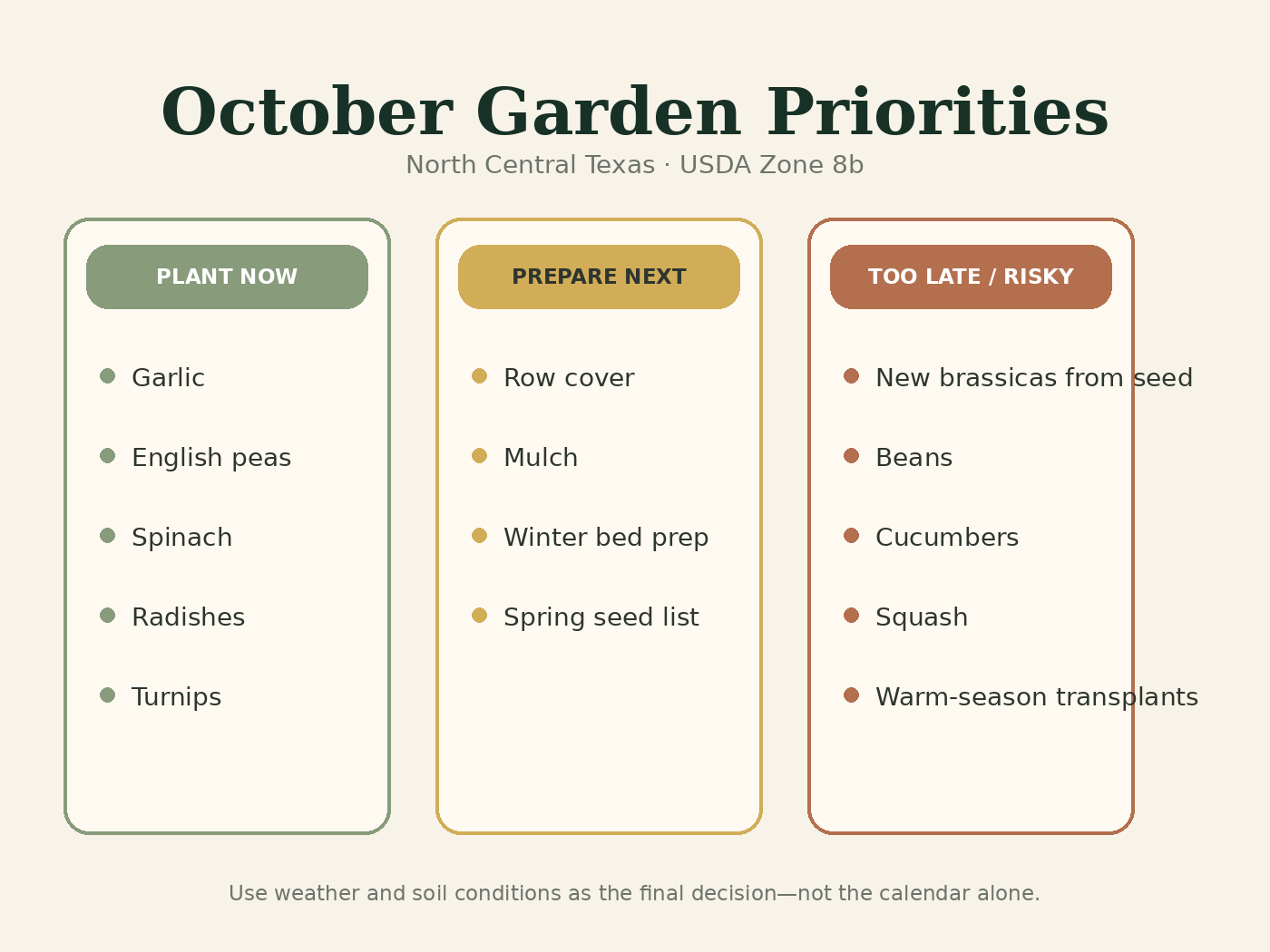
Plant now
- Continue garlic through October.
- Parsley can continue into early October.
- English peas, spinach, radishes, and turnips remain strong fall choices within their local windows.
- Keep established brassicas, greens, roots, and lettuce growing with steady moisture and pest checks.
Prepare next
- Set aside mulch or row cover for the first cold snaps.
- Note which empty beds will stay productive and which should be winterized.
- Start planning winter soil-building and spring seed orders.
Wait on these
- Broccoli, cabbage, Brussels sprouts, and cauliflower are better established earlier; October is late to begin them from scratch in North Central Texas.
- Warm-season beans, cucumbers, squash, tomatoes, and peppers are running out of frost-free time.
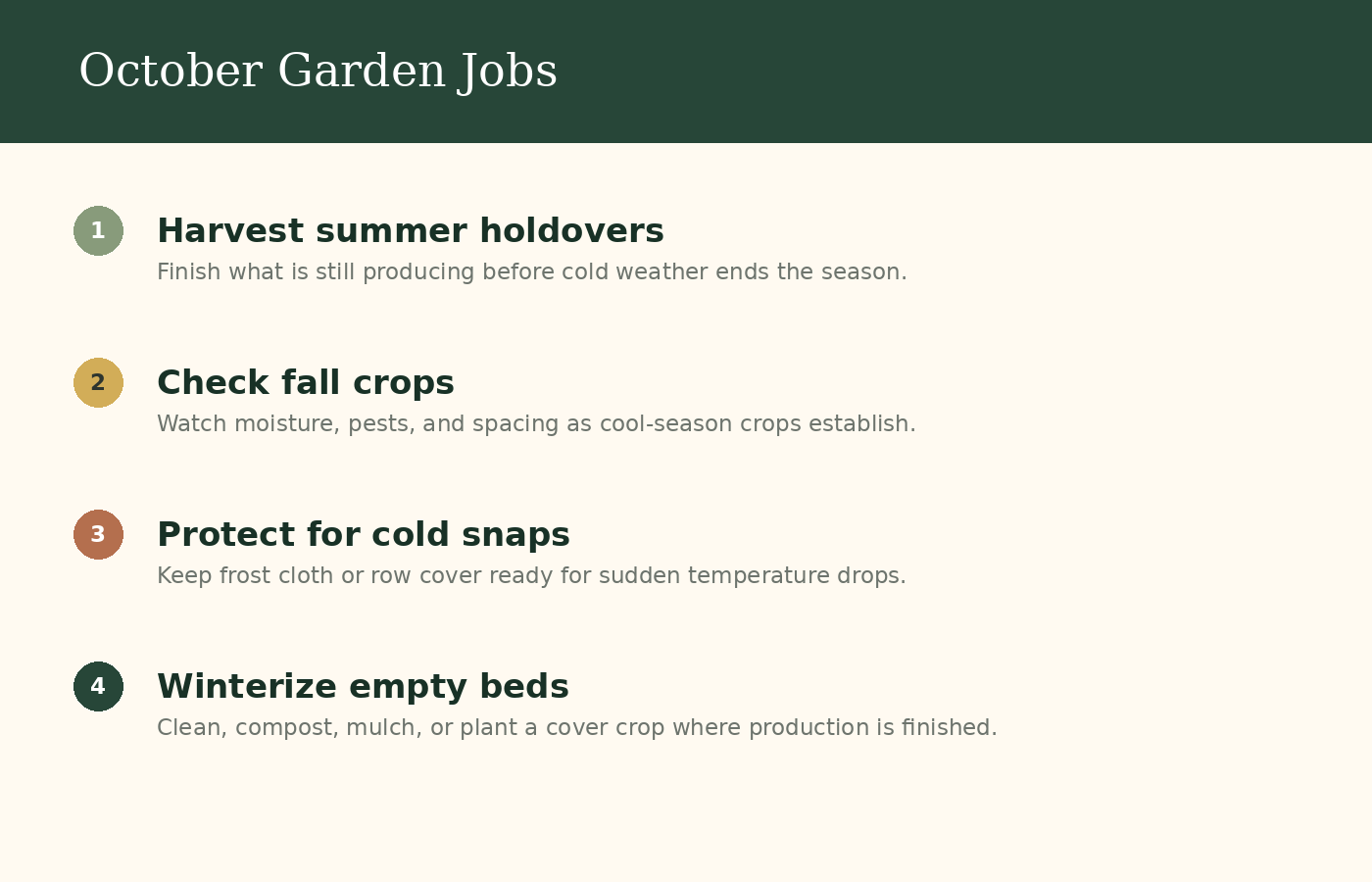
Garden jobs for October
October is a management month as much as a planting month: keep fall crops healthy, harvest summer holdovers, and prepare empty beds for winter.
October is when cool-season crops take control
By October, the garden should be shifting away from trying to restart warm-season vegetables and toward crops that appreciate cooler weather. Garlic, peas, spinach, radishes, turnips, lettuce, roots, herbs, and established brassicas can carry the beds through fall and into winter. The exact mix depends on what was planted successfully in August and September.
Watch moisture as temperatures change
Cooler weather reduces evaporation, so irrigation that was appropriate in September may become excessive in October. Keep checking the soil rather than leaving a summer watering schedule running automatically. Fall crops still need moisture to establish, but cold, saturated soil creates its own problems.
Use the month to prepare for freezes
Locate frost cloth, repair hoops, clear space for tender containers, and identify irrigation components that may need protection. Doing this before the first urgent forecast is much easier than searching for supplies the evening temperatures are expected to drop.
Harvest regularly as growth slows
Cool weather can improve the quality of many greens and roots, but shorter days also mean crops take longer to replace harvested growth. Pick what is ready without stripping plants too aggressively. For cut-and-come-again lettuce, chard, and kale, remove mature outer leaves and leave the center growing point intact.
October is also a good month to label garlic, onions, perennial herbs, and other plantings that may become hard to identify once winter growth slows. A simple marker prevents accidental digging later.
Common October mistakes
One mistake is continuing a summer irrigation schedule after temperatures have dropped. Another is assuming cool-season crops cannot be damaged by pests. Aphids, caterpillars, slugs, and other problems can remain active during mild fall weather. Keep scouting even though the garden feels calmer.
Keep beds productive between harvests
As radishes, lettuce, turnips, and other quick crops come out, small succession plantings can refill the gaps. That keeps soil covered and spreads harvest instead of producing everything at once. Just make sure later sowings still have enough season to mature.
Begin winter cleanup selectively
Remove diseased summer debris and collapsing vines, but leave healthy flowers and habitat plants where they are still feeding pollinators or providing shelter. Fall cleanup does not have to mean stripping the garden bare.
October checklist
Reduce irrigation as evaporation slows, succession sow quick cool-season crops, plant garlic in its proper window, harvest mature roots and greens, and prepare frost supplies. Remove diseased summer debris while leaving useful flowers and habitat where appropriate. The garden should be shifting toward crops that can realistically carry through cooler weather.
Check mulch after fall rain and wind. Bare soil can crust and cool unevenly, while overly thick mulch piled against plant crowns can trap moisture. Keep an even protective layer over the soil surface without smothering the plants you are trying to protect.
Make the most of mild working weather
October is one of the most comfortable months for repairs and cleanup. Fix trellises, replace damaged edging, organize hoses, and prepare cold-weather supplies while the garden is pleasant to work in. These jobs are much easier now than during a windy freeze or the first rush of spring planting.
← September All months November →