
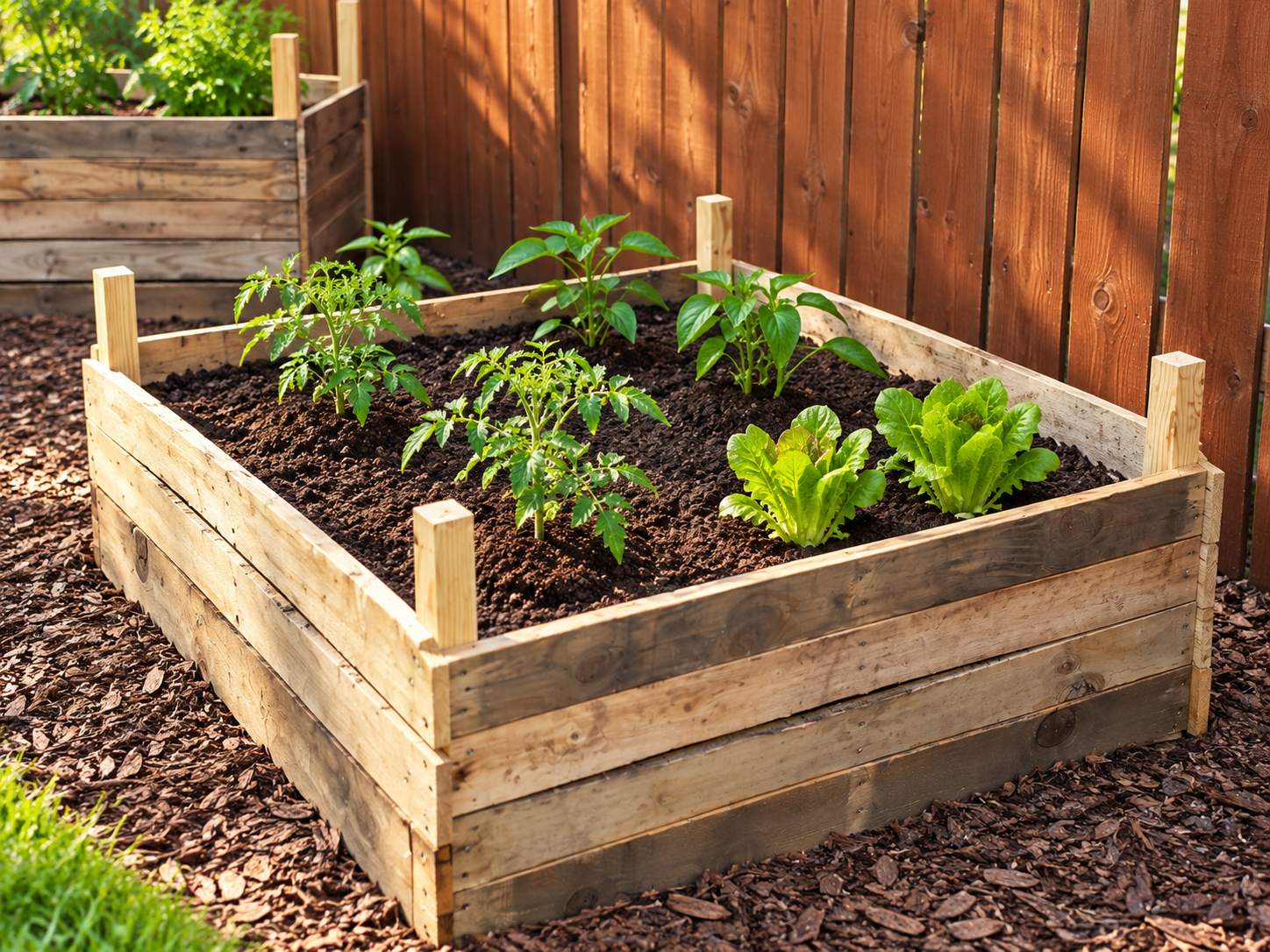
Raised beds are not the only way to garden in Texas, but they solve several very common problems at once: drainage, compacted soil, poor native texture, bending, and keeping amendments where the roots actually use them.
How tall should a raised bed be?
There is no single perfect height. A shallow framed bed can work where native soil underneath drains well and is reasonably workable. Taller beds give you more control over the root zone and are easier on your back, but they require more fill material and dry out faster.
Width matters more than people think
Build the bed so you can reach the center without stepping into it. For a bed accessible from both sides, about four feet wide is a common practical maximum. A bed against a fence or wall should be narrower.
Do not fill it with straight topsoil
A productive bed usually needs a blend that drains well but still holds water and nutrients. Finished compost belongs in the mix, but a bed made almost entirely from compost can shrink dramatically and behave unpredictably.
Drainage comes first
Do not line the bottom with plastic. Water needs somewhere to go. If burrowing pests are a problem, hardware cloth can be used without sealing the bed.

Mulch is especially valuable in Texas
Raised beds warm and dry faster than in-ground beds. A surface mulch helps keep moisture more stable and reduces soil splash onto leaves.
Plan irrigation before the plants get big
Drip tubing or soaker-style irrigation is much easier to install before tomatoes, squash, and beans fill the bed. Water the root zone deeply and adjust frequency to the crop, weather, and soil rather than watering by a fixed calendar.
Refresh instead of replacing
At the end of a season, you usually do not need to empty the bed. Remove diseased debris, add finished compost as needed, top up settled soil, and protect the surface with mulch or a cover crop.
Build a bed you can reach without stepping into it
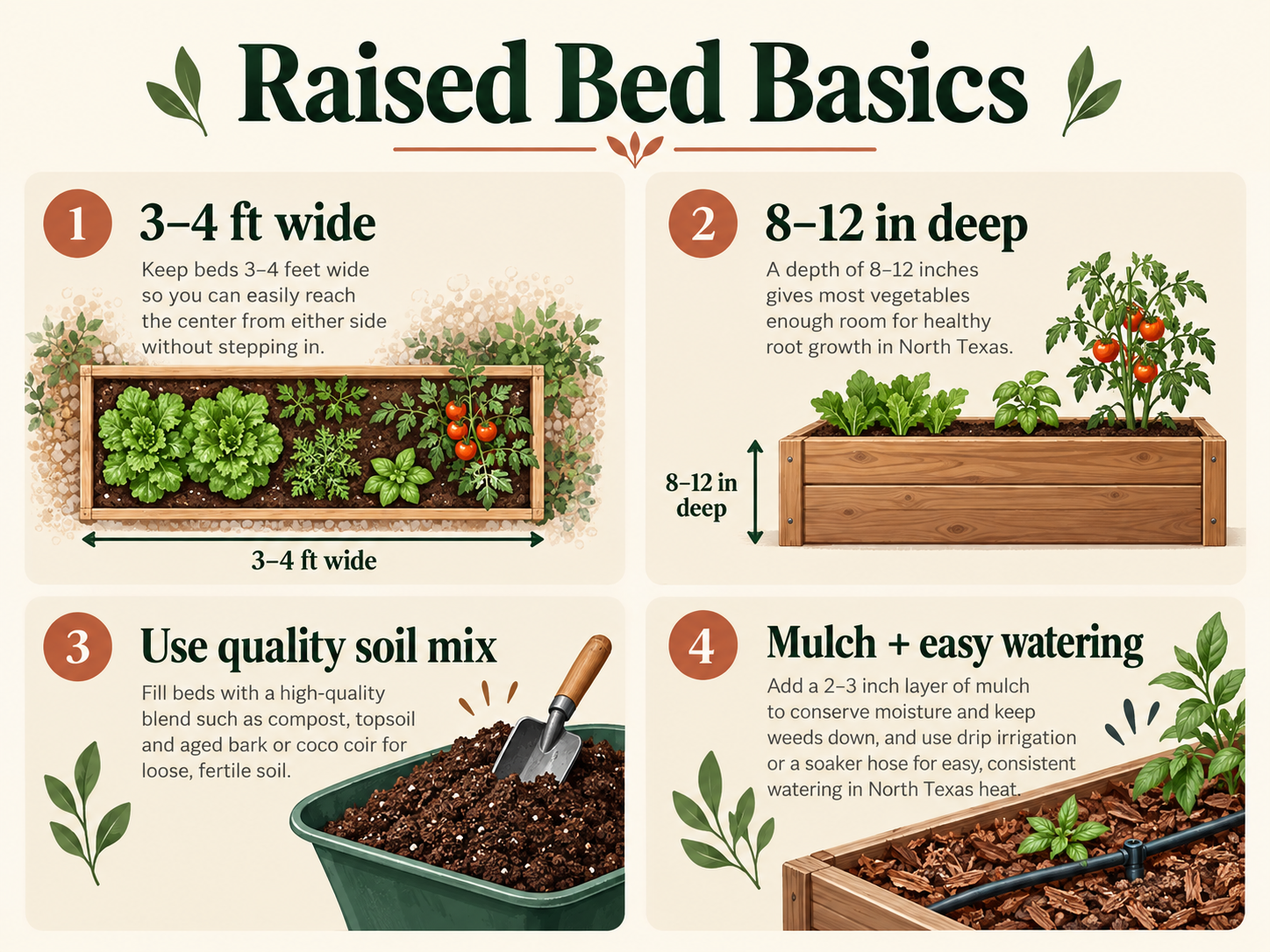
A raised bed is easiest to manage when every part of the soil can be reached from a path. Four feet wide is common when the bed is accessible from both sides, but narrower may be more comfortable for shorter gardeners or beds placed against a wall. Length can vary, but very long beds are easier to live with when there is a path or break nearby instead of requiring a long walk around every time.
Do not overcomplicate the soil mix
The bed needs a blend that drains well but still holds moisture. Finished compost is useful, but a bed filled with nearly pure compost can settle dramatically and may not behave like stable garden soil. Use a balanced mix of quality topsoil or mineral soil with compost and other appropriate organic material. Expect some settling during the first year and plan to top-dress rather than completely replace the soil.
Raised beds dry faster in Texas heat
Improved drainage is useful in wet weather, but the same raised position exposes more soil surface to hot air. Drip irrigation or soaker lines under mulch can reduce the amount of daily attention needed during summer. Check moisture several inches down before watering; the top may look dry while the root zone still has moisture.
Refresh instead of rebuilding every season
After harvest, remove diseased debris, loosen only where necessary, add a modest layer of finished compost, and replace mulch. Roots and soil organisms do useful structural work when the bed is not repeatedly emptied and remixed. Over time, a raised bed should become easier to manage, not a container that has to be rebuilt from scratch every spring.
Crop rotation is helpful, but do not overcomplicate a small garden
Moving crop families can reduce the repeated buildup of certain pests and diseases, but a home garden with only a few beds may not allow perfect multi-year rotation. Do what is practical: avoid planting the same problem-prone crop in the exact spot repeatedly when you have another option, remove diseased debris, replenish organic matter, and keep records. Good sanitation and healthy soil still matter when textbook rotation is impossible.