
Most compost problems are not mysterious. They usually come back to the same four things: too much wet material, not enough brown material, not enough air, or not enough moisture.
The pile is slimy or soggy
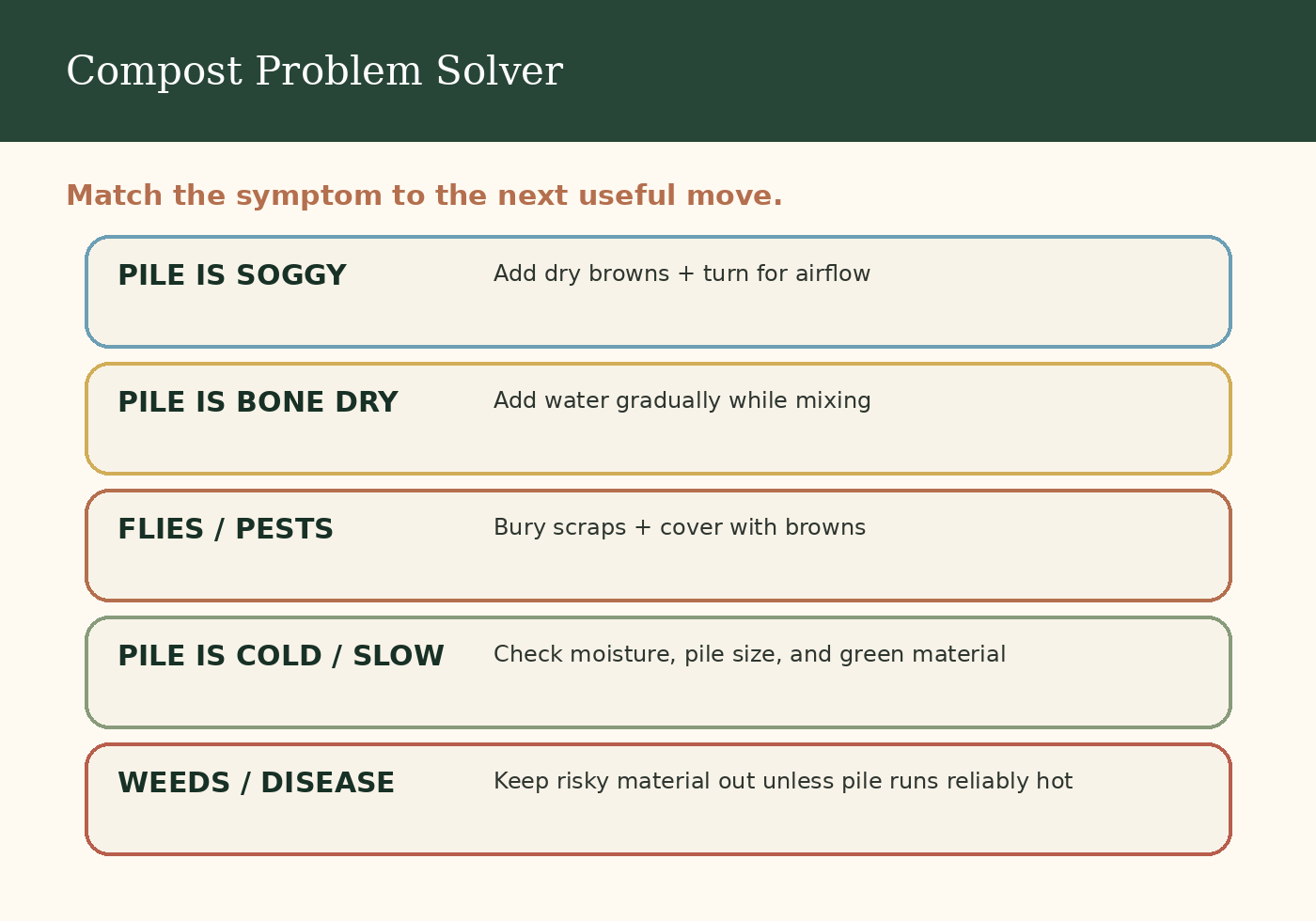
Add dry leaves, shredded cardboard, straw, or another brown material. Mix it through so air can move back into the pile.
The pile is bone dry
Add water gradually while turning the material. The goal is damp like a wrung-out sponge, not a flooded pile.
The pile is full of flies
Cover fresh food scraps instead of leaving them exposed. A visible layer of wet kitchen waste is an invitation to insects.
The pile is not heating
A backyard pile does not have to become extremely hot to decompose, but a cold, inactive pile may simply be too dry, too small, or too low in fresh nitrogen-rich material.
Can I compost diseased plants?
I would not depend on a typical home pile to destroy every pathogen, pest, or weed seed. If the plant material is badly diseased or infested, keep it out of the pile unless you know you are managing a reliably hot composting system.
When should I stop adding material?
If you want finished compost sooner, stop feeding one pile and start a second. That lets the first pile finish decomposing instead of constantly receiving new scraps.
Diagnose the pile in the same order every time
When compost is not behaving, start with moisture, then airflow, then the mix of greens and browns. Grab a handful from inside the pile rather than judging the dry surface. Material that drips is too wet; material that feels dusty and will not hold together is too dry. If moisture is reasonable, push into the center and look for matted layers. Grass clippings, wet leaves, and kitchen scraps can pack tightly enough to exclude oxygen even when the overall pile looks normal from the outside.
Fix one problem without creating another
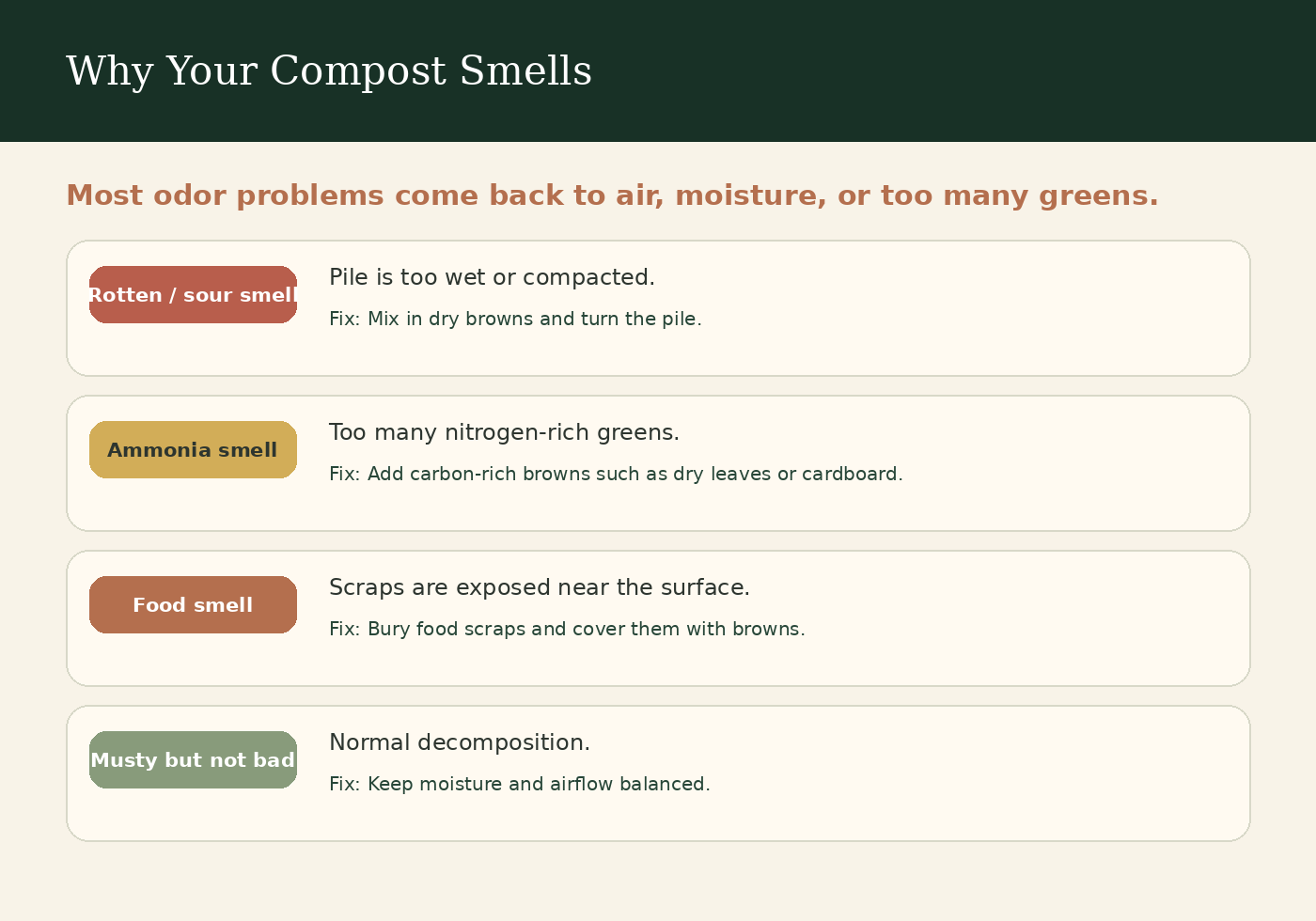
A soggy pile usually needs dry, bulky browns such as shredded cardboard, dry leaves, or small woody material. A dry pile needs water added gradually while the material is mixed so the center gets damp too. A pile overloaded with fresh greens can smell sharply of ammonia; add carbon-rich material and mix it through. If the pile is slow but otherwise smells earthy, it may simply be too small, too dry, or lacking enough nitrogen-rich material to heat strongly. Not every backyard pile needs to become hot compost to eventually break down.
Pests are usually a management clue
Fruit flies, rodents, raccoons, and other visitors are more likely when food scraps are left exposed or when meat, dairy, oily food, or large amounts of cooked food are added. Bury kitchen scraps toward the center and cover each fresh addition with several inches of browns. A secure bin can help where animal pressure is high, but good ingredient management still matters. If a pile repeatedly attracts pests, simplify what goes into it until the system is working cleanly again.
Sometimes the easiest fix is a reset
If a pile has become a dense, sour, waterlogged mass, spread it out, break apart compacted clumps, mix in dry browns, and rebuild it loosely. Compost is forgiving. You usually do not need to throw the material away; you just need to restore the conditions decomposer organisms need: moisture, oxygen, carbon, nitrogen, and time.
Temperature is information, not a grade
A hot pile tells you decomposition is happening quickly, but a pile that never reaches dramatic temperatures can still make compost. Smaller backyard piles often heat briefly and then cool. If the material is slowly darkening, shrinking, and losing its original identity without creating odor or pest problems, decomposition is still happening. Turn it when you want to speed the process or correct compaction, not because the pile has failed some imaginary compost test.
One last rule: change one thing at a time
If a pile is struggling, avoid dumping in water, fertilizer, lime, and a bag of leaves all at once. Correct the most obvious problem first, mix the pile, and give it several days. Compost is easier to understand when you can see how the pile responds to one adjustment instead of five.