
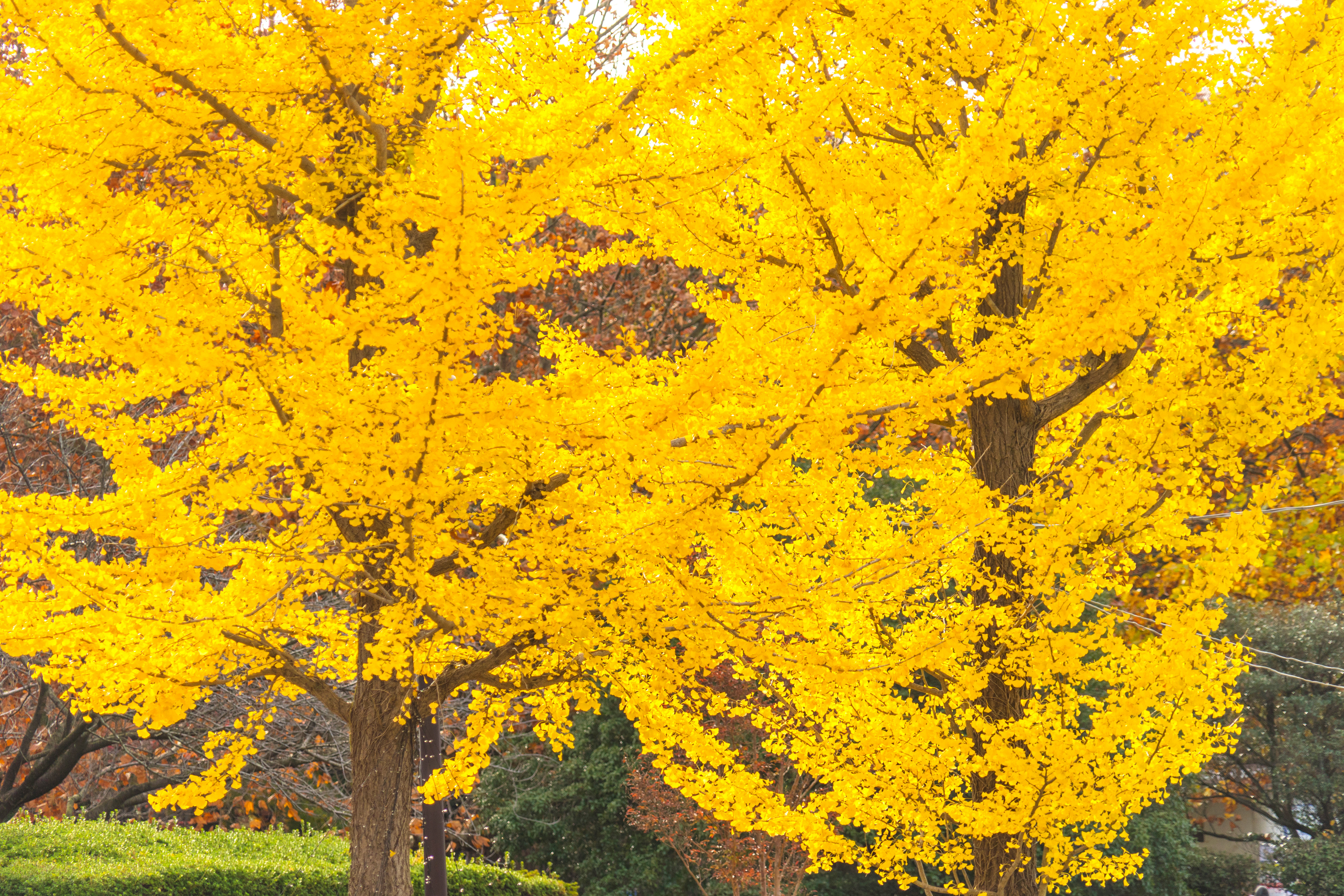
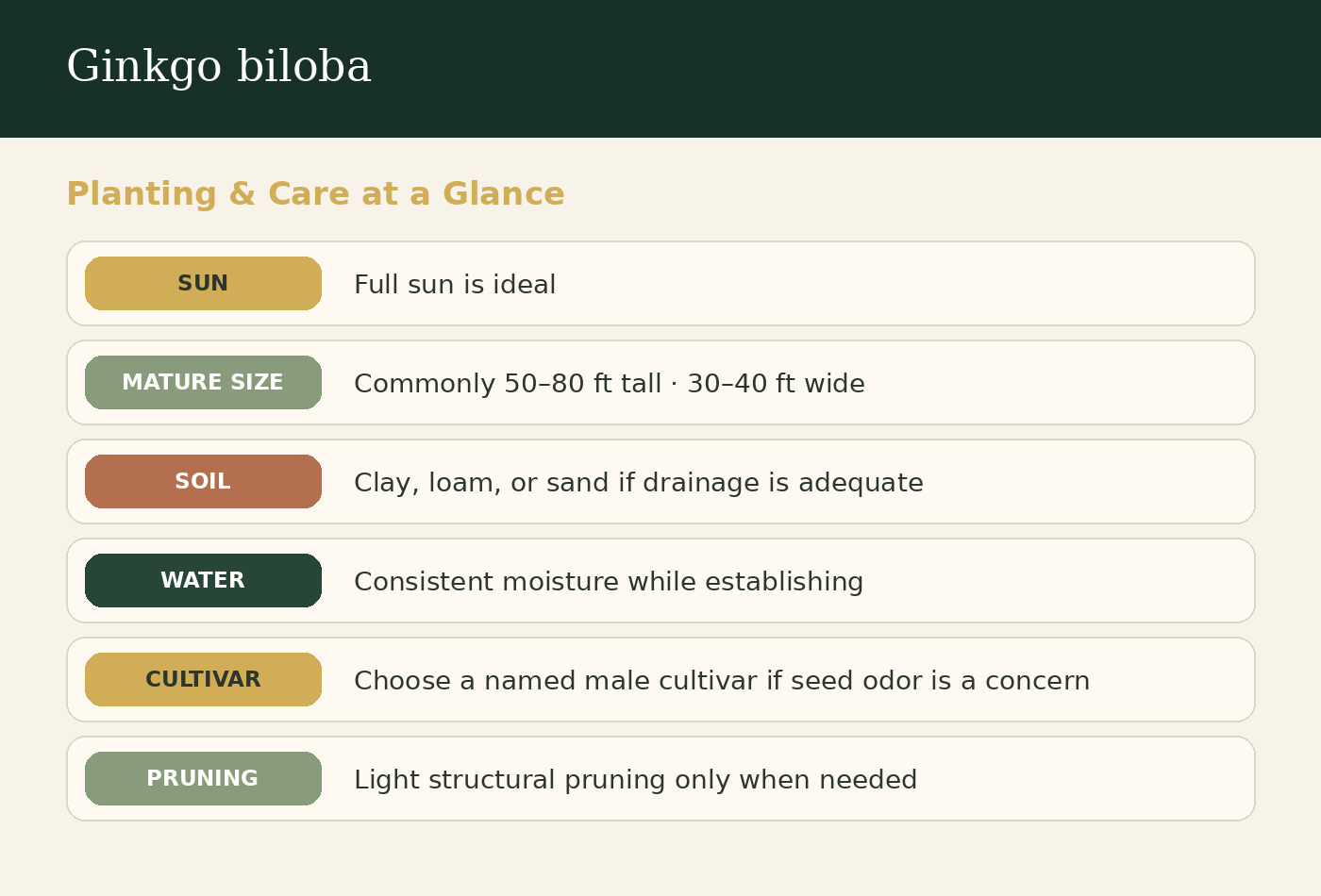
Ginkgo biloba is a slow-growing ornamental that performs best in full sun and well-drained soil. It is adaptable to many soil types, and young trees benefit from consistent moisture while they establish.
A remarkably adaptable tree
Ginkgo is famous for tolerating conditions that bother many other trees: heat, drought after establishment, compacted urban soil, pollution, and a wide soil-pH range.
Choose the planting site for the mature tree
This is not a small-tree commitment. A standard ginkgo can eventually become a substantial shade tree, so keep it well away from structures, overhead conflicts, and tiny planting strips.
Male vs. female trees
Ginkgo trees are dioecious, meaning male and female reproductive structures occur on separate trees. Female trees can produce fleshy seeds with a famously unpleasant odor. If that would be a problem, choose a named male cultivar from a reputable nursery.
Planting
Do not bury the trunk flare and do not turn the planting hole into a pocket of rich compost surrounded by native soil. Plant at the proper depth, backfill primarily with the existing soil, and mulch over the root zone without piling mulch against the trunk.
Watering
Young trees need consistent watering during establishment, but the goal is evenly moist soil—not permanently wet soil. Once established, ginkgo is notably drought tolerant.
Growing in a container
Dwarf ginkgo cultivars can be kept in containers more realistically than a standard full-size tree. Use a container with excellent drainage and move up gradually rather than automatically doubling pot size every time.
Pruning
Prune lightly when needed for structure, damaged limbs, or clearance. Ginkgo generally does not need aggressive annual pruning.
Plant it for the tree it will become
Ginkgo is not a small ornamental that stays politely beside a patio. Even slow growth eventually produces a large tree, so overhead wires, foundations, driveways, roofs, and narrow side yards should be considered before planting. Choose a site where the canopy and root system have room to develop without depending on constant corrective pruning.
Planting depth matters more than extra amendments
Set the root flare at or slightly above the surrounding soil grade rather than burying the trunk deeply. Dig the hole wider than the root ball, loosen circling roots when appropriate, and backfill primarily with the native soil. Filling the planting hole with a radically different soil mix can encourage roots to remain in the amended pocket instead of moving into the surrounding ground. A broad mulch ring is useful, but keep mulch away from direct contact with the trunk.
Watering a young ginkgo
Newly planted trees need consistent moisture while roots establish, particularly through Texas heat. Water deeply enough to moisten the original root ball and surrounding soil, then allow the upper soil to begin drying before watering again. Once established, ginkgo is notably tolerant of urban conditions and periodic drought, but that toughness should not be used as an excuse to neglect a newly planted tree during its first seasons.
Choose the cultivar intentionally
Female ginkgo trees can eventually produce fleshy seeds with a famously strong odor. For most home landscapes, a named male cultivar is the simplest choice. Cultivars also differ in mature width and shape, so selecting one that fits the available space is more useful than assuming every ginkgo grows exactly the same way.
Expect patience, not instant shade
Ginkgo is often chosen because it is tough and long-lived, not because it becomes a giant shade tree overnight. Young trees can spend years establishing roots and structure before the canopy looks impressive. That slower pace is useful in smaller landscapes because it gives you time to correct staking, watering, and branch structure early, but it also means the tree should be planted where its long-term value matters.
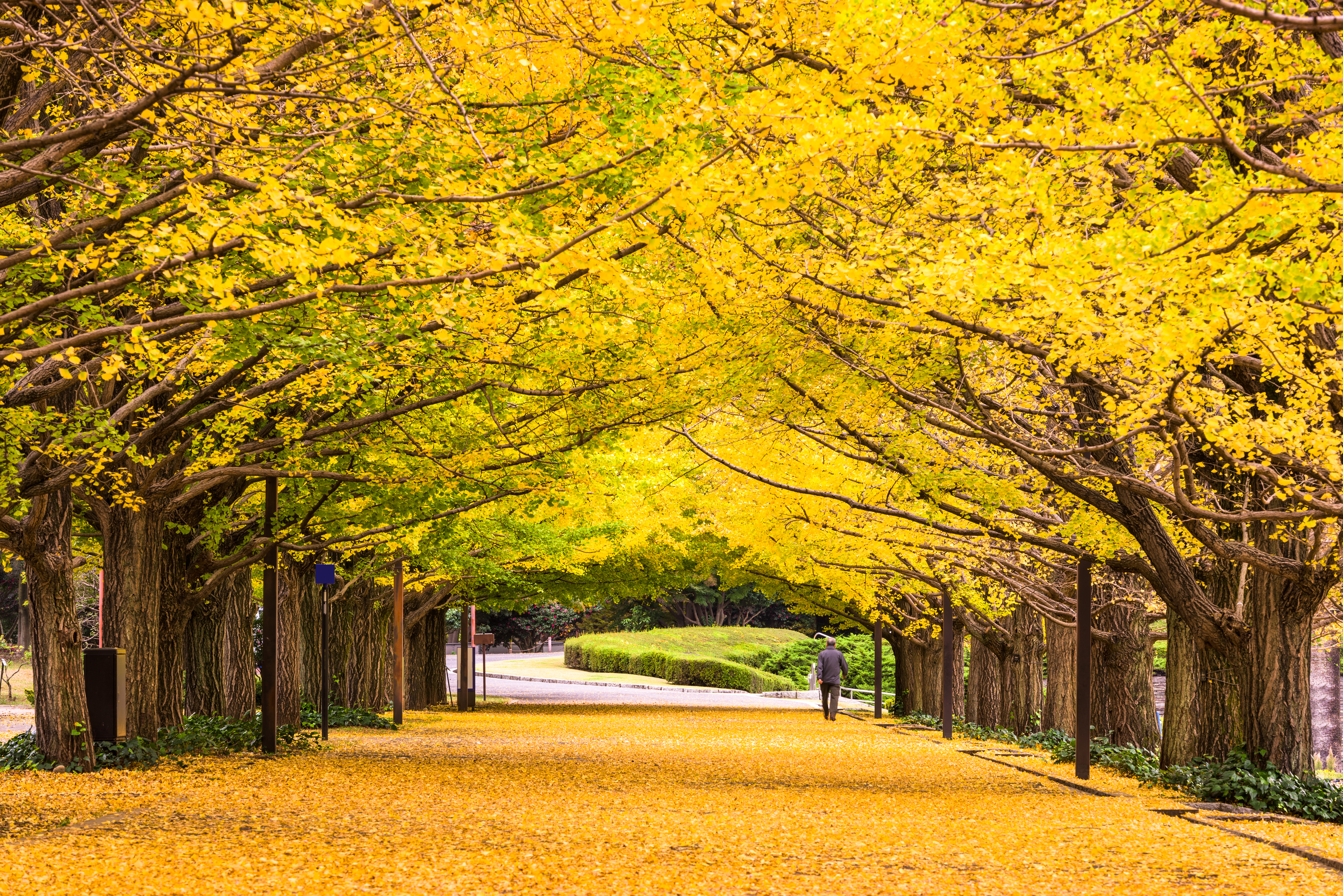
Fall color is one of the rewards. Ginkgo leaves can turn clear yellow and sometimes drop within a short period, creating a dramatic seasonal moment rather than a prolonged leaf-shedding season.
Stake only when the tree needs it
A newly planted ginkgo should be stable enough to stand on its own in normal conditions. If wind or a loose root ball makes staking necessary, use flexible ties and remove the support once the root system can hold the tree upright. Permanent tight staking can restrict trunk movement and create weak attachment points rather than helping the tree mature.