
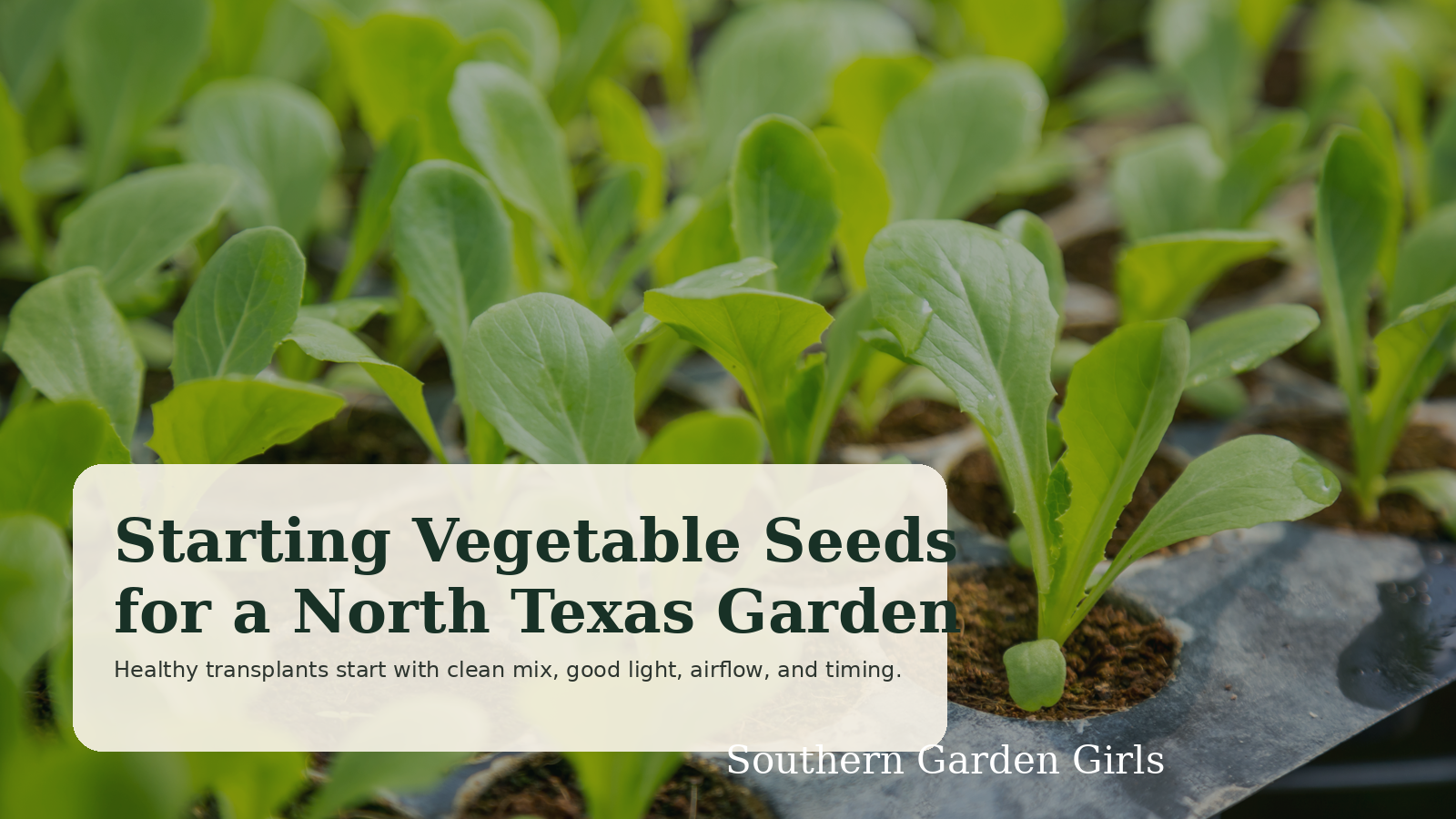
Seed starting is useful when you want specific varieties, need transplants ready before stores carry them, or want enough plants to make buying individual nursery starts expensive.
Use a clean seed-starting mix
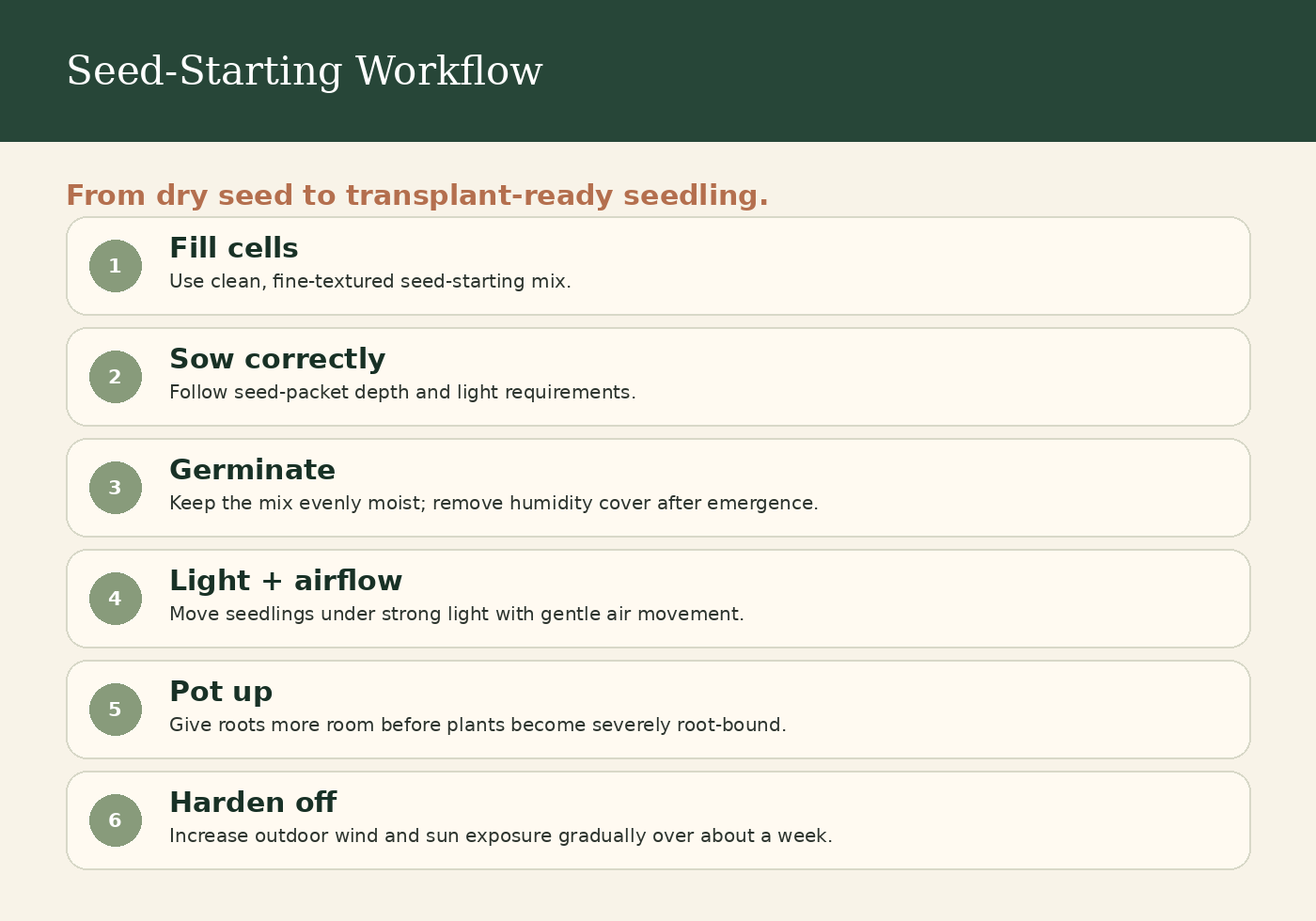
Do not use heavy garden soil in small seed cells. A clean, fine-textured seed-starting mix holds moisture while still allowing air around new roots.
Plant at the correct depth
Seed packets are the best reference because seed size and light requirements vary. Tiny seeds are generally planted much shallower than beans or peas.
Humidity is temporary
A dome or loose plastic cover can help keep the medium moist during germination. Remove the cover once seedlings emerge. Constant high humidity around new seedlings encourages damping-off and weak growth.
Give seedlings enough light
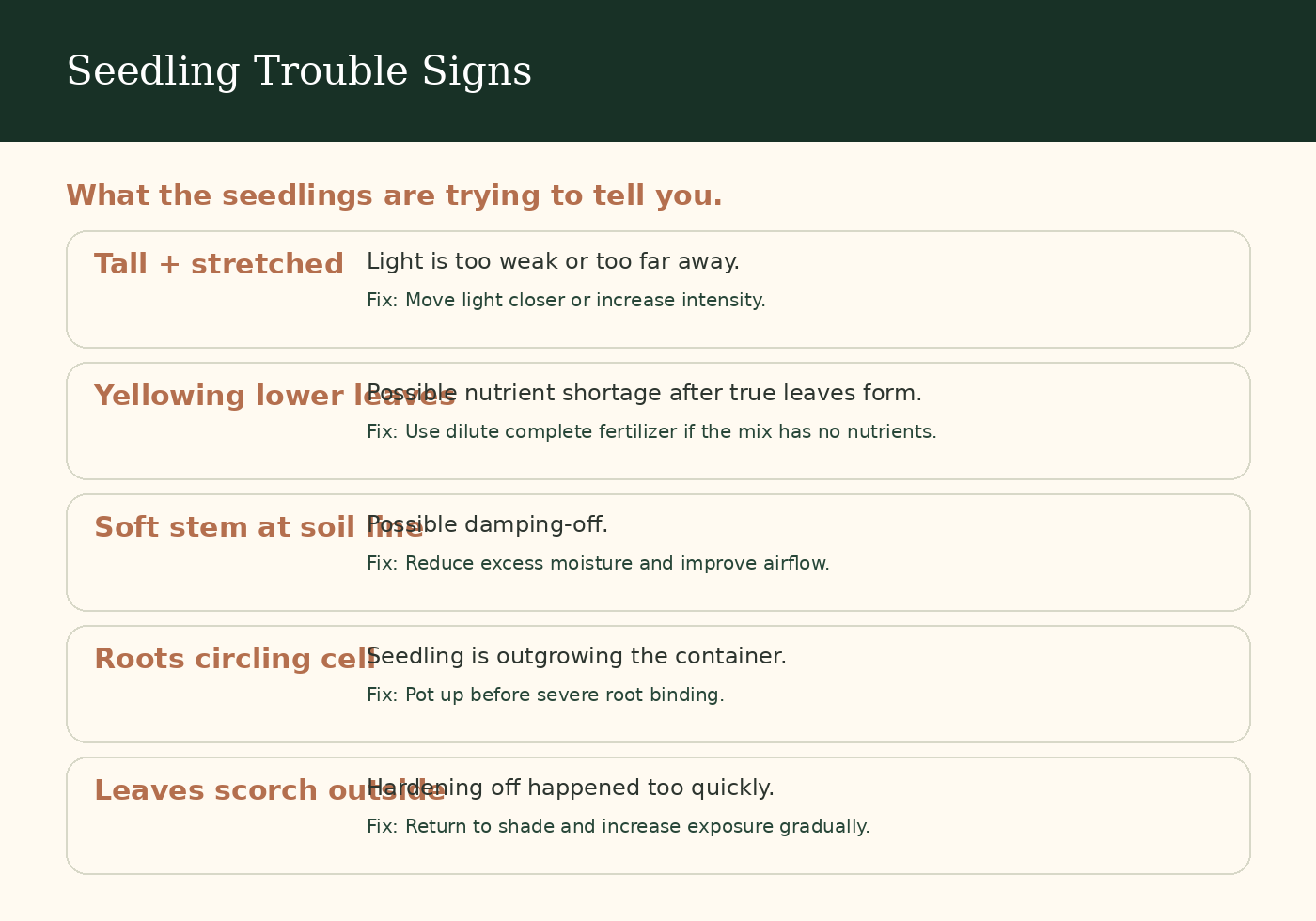
Once seedlings emerge, move them under strong light. For seedlings grown primarily under artificial light, about 16 to 18 hours of light per day is a practical target. Keep the fixture at the distance recommended for that specific light.
Airflow helps
A small fan on a gentle setting reduces stagnant humidity and helps seedlings develop stronger stems. You want slight leaf movement, not a wind tunnel.
Water from the medium, not a schedule
Seed cells can dry quickly, but keeping them continuously saturated is just as damaging. Check moisture and water when needed. Bottom watering can work well once seedlings are established enough to wick moisture upward.
When to feed
Seeds contain enough stored energy to begin germination. Once true leaves are established, seedlings growing in a nutrient-free mix may benefit from a dilute complete fertilizer.
Potting up
Move seedlings into larger containers when roots and top growth have outgrown the cell. Do not wait until plants are severely root-bound and stressed.
Hardening off
Indoor seedlings are not ready for full Texas sun just because the weather is warm. Gradually expose them to outdoor wind and sunlight over about a week, beginning with protected shade and increasing exposure.
- The planting window is actually open.
- The plants have been hardened off.
- The root ball is moist but not saturated.
- The bed or container is prepared before transplanting.
- Cold protection is ready if the forecast is questionable.
Start with a clean, predictable mix
Garden soil is usually too dense and inconsistent for small seed-starting cells. A fine, clean seed-starting mix holds moisture while still providing air around young roots. Pre-moisten the mix before filling trays so dry material does not float or become difficult to wet evenly after sowing. Firm it gently rather than packing it tightly.
Germination and seedling growth are different stages
Some seeds benefit from warmth before they emerge, but once seedlings are up, strong light becomes the priority. Remove humidity covers after germination so tender stems are not trapped in constantly saturated air. A gentle fan can improve airflow and encourage stronger stems. Keep labels with each variety because seedlings that look identical at two weeks old can have very different planting schedules later.
Pot up before plants become severely root-bound
If roots fill the cell and growth is slowing, move the seedling into a slightly larger container rather than jumping immediately into an enormous pot. Handle plants by the leaves when possible instead of squeezing delicate stems. Tomatoes tolerate deeper transplanting well; many other vegetables should stay at approximately the same depth they were growing before.
Hardening off is not optional
Indoor seedlings have not experienced full sun, strong wind, or rapid moisture loss. Begin with protected outdoor exposure and gradually increase the time and light over about a week. Watch the forecast during this period. One cold night or a few hours of harsh afternoon sun can damage seedlings that looked perfect under lights.
Do not start everything too early
A giant transplant is not automatically a better transplant. Seedlings kept indoors too long can become root-bound, stretched, difficult to water, and harder to harden off. Work backward from the realistic outdoor planting window and the crop's normal indoor growing time. Faster crops may need only a few weeks, while slower peppers and some flowers benefit from a longer start.
Label more than you think you need to
Seedlings become surprisingly difficult to tell apart once trays are moved, rotated, or potted up. Label the variety and sowing date at minimum. If you are testing several planting dates or light setups, note that too. Good labels turn seed starting into useful information instead of a memory test.