
The worst watering advice is a rigid schedule that ignores the soil. “Water every day” can rot roots in heavy clay. “One inch a week” can be too little during extreme heat for containers and shallow-rooted crops. The soil and the plant’s growth stage matter.
Check the soil first
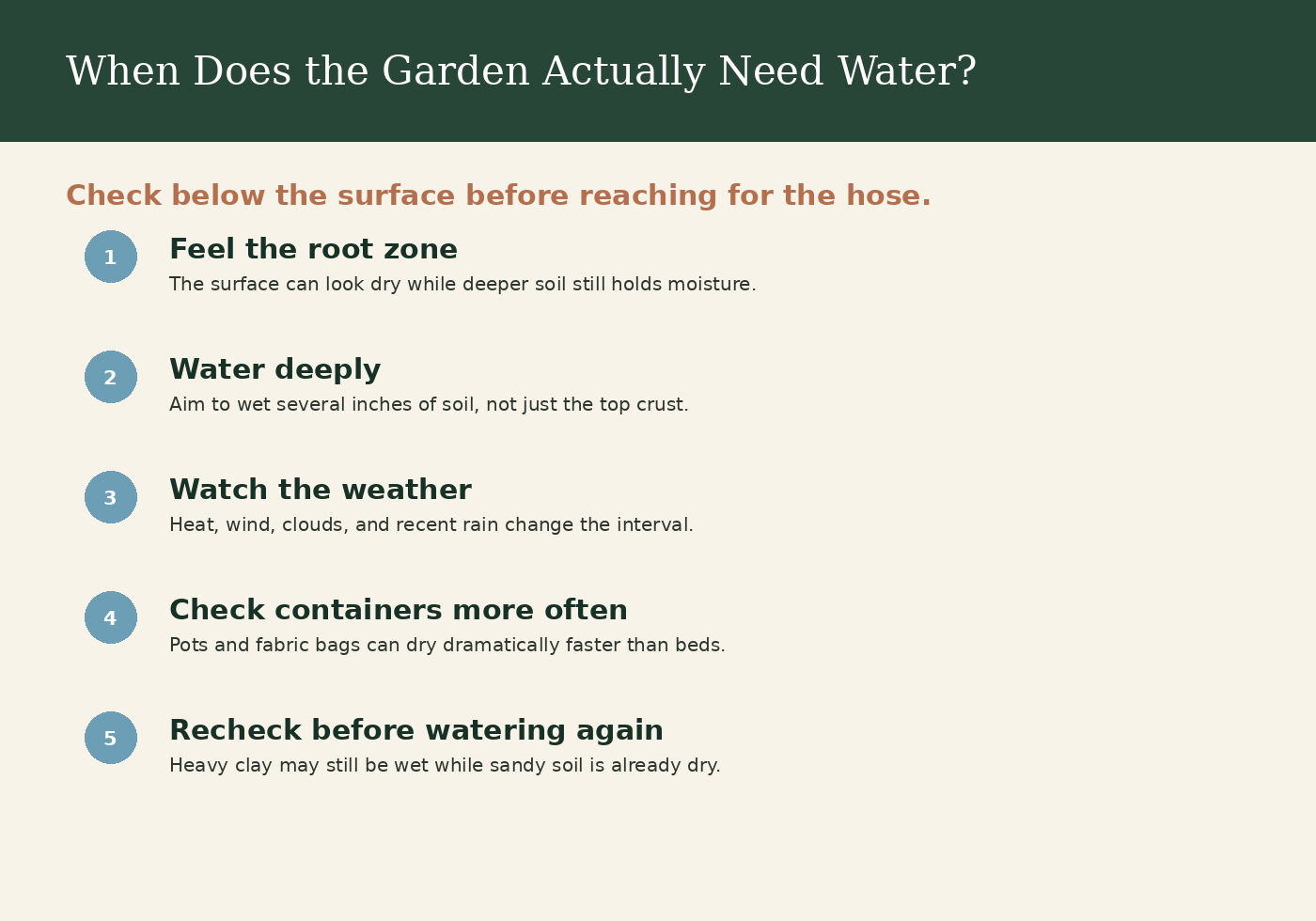
Texas A&M recommends checking below the surface instead of deciding based only on how dry the top looks. In established garden beds, scratch or dig down and see whether the root zone still has moisture.
Water deeply enough
The general goal is to wet the soil several inches deep rather than dampening only the surface. Texas A&M’s home-gardening guide recommends watering deeply enough to wet soil to about six inches.
Drip irrigation is worth it
Drip irrigation applies water slowly and directly to the root zone. When it is adjusted well, it reduces runoff, puddling, and repeated wetting of leaves.
Heavy clay and sandy soil behave differently
Sandy soil drains quickly and usually needs more frequent checks. Heavy clay holds water longer, which means watering too often can become the bigger problem.
Morning is the easiest time for overhead watering
If you use sprinklers, morning irrigation gives leaves time to dry before night. That reduces the long periods of leaf wetness that favor many diseases.
Mulch buys you time
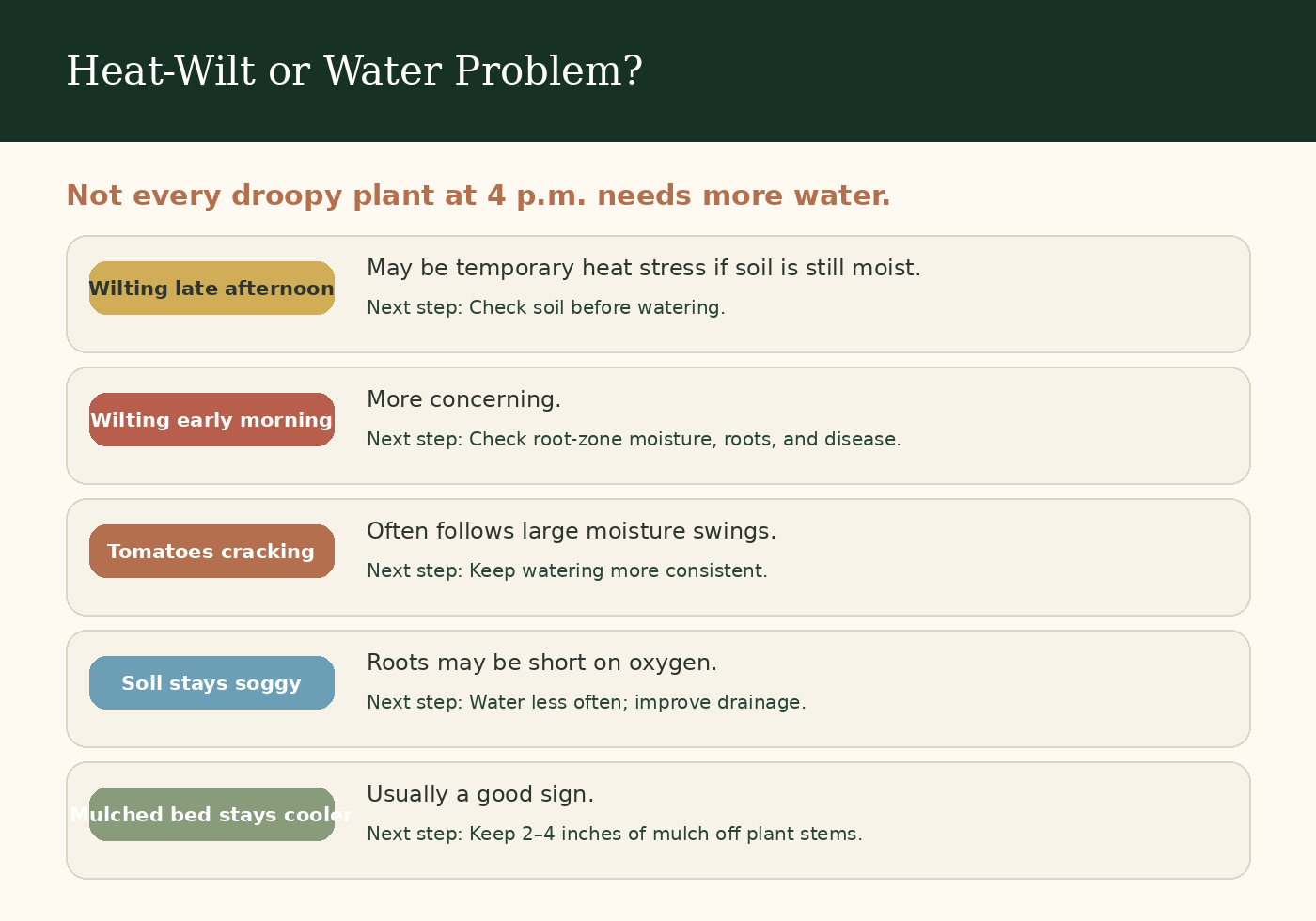
Mulch slows evaporation, reduces weed competition, protects the soil surface, and keeps soil temperature more stable. Texas gardens lose water quickly when bare soil is exposed to heat and wind.
Containers are a separate category
Raised containers and fabric grow bags can dry much faster than in-ground beds. Check them more often during hot, windy weather. A large tomato in a container can use water dramatically faster than a small herb plant in the same weather.
Water demand changes as plants grow
A newly planted seedling does not use water like a mature tomato carrying fruit. Increase the amount delivered as root systems and plant canopies expand, but still let soil conditions—not habit—tell you when to water again.
Water the root zone, not the calendar
The useful question is not whether it is “watering day,” but whether the soil where the roots are growing is becoming dry. Push a finger, trowel, or soil probe several inches down and check more than one place in the bed. Mulched soil can stay moist below a dry surface, while containers may already be dry even when a nearby raised bed is fine.
Morning watering is usually easiest to manage
Watering early gives moisture time to soak into the root zone before the hottest part of the day and lets accidentally wet foliage dry normally. Drip irrigation and soaker lines reduce evaporation by applying water close to the soil. Overhead watering is not automatically disastrous, but soaking foliage every evening can keep leaves wet for long periods and increase disease pressure.
Containers are a different system
Pots, grow bags, and hanging containers have less soil volume and more exposed surface area, so they can dry much faster than in-ground beds. During extreme heat, a container may need attention even when the main garden does not. Larger containers, mulch, afternoon shade for suitable crops, and self-watering systems can reduce the amount of emergency watering required.
Too much water can look like not enough
Plants with damaged or oxygen-starved roots may wilt even though the soil is wet. Before adding more water to a drooping plant, feel the root zone. Constantly saturated soil can produce yellowing, slow growth, edema, root rot, and nutrient problems. The goal is a cycle of deep moisture followed by normal drying—not permanently wet soil.
Design irrigation around the hottest week, then adjust
A system that barely reaches the root zone in May may become inadequate by July when plants are larger and evaporation is higher. Check how long drip lines or soakers actually need to run to wet the soil several inches deep, then adjust frequency as weather changes. Periodically dig or probe after watering to verify that water is reaching the area where roots are growing instead of only dampening the surface.