
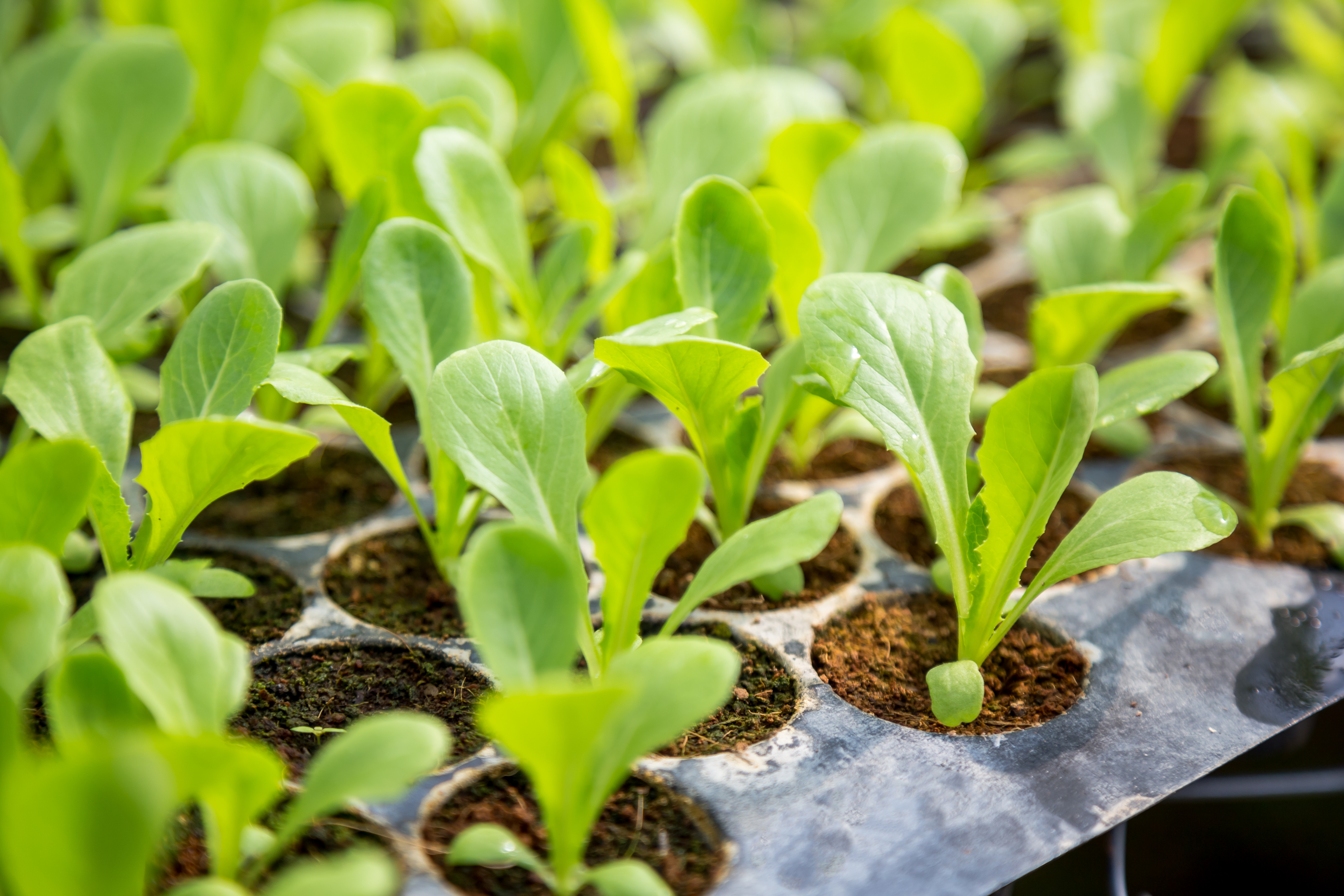
It was only a few days after Valentine’s Day, and spring was already trying to wake up. In Texas, that can mean chilly mornings followed by afternoons warm enough to make you wonder whether winter is actually over.
For seedlings, those swings matter. Young plants do not care that the calendar says spring is coming. They care about temperature, moisture, wind, sun, and whether I remembered that a warm afternoon can dry a tiny pot much faster than I expected.
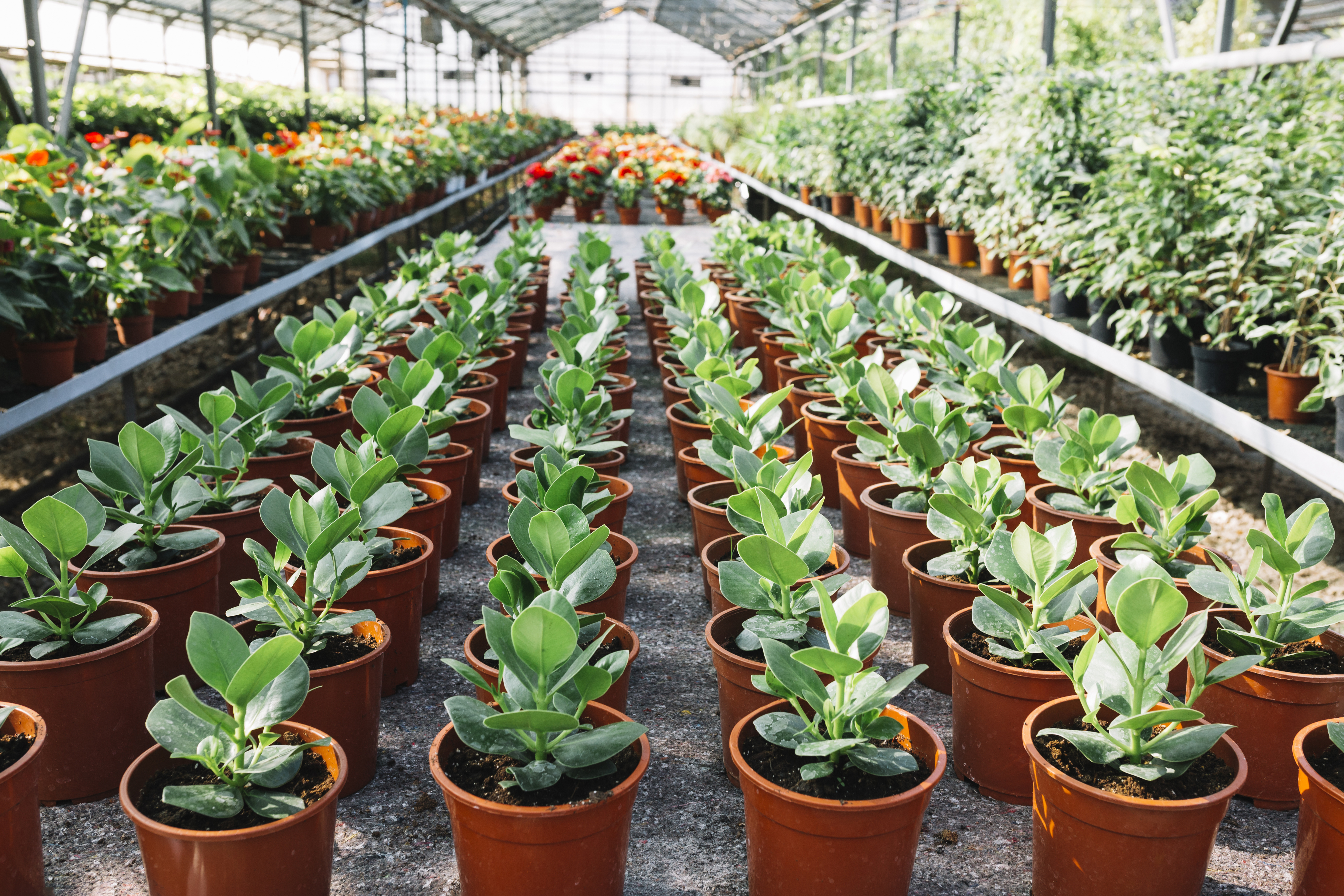
The idea started with one question
How could I keep growing the plants I loved without spending a fortune buying them already started?
That question eventually turned into the idea of growing enough plants to sell some, too. Before anything went into a tray, I spent a lot of time researching what I could realistically grow, what people around me actually wanted, and what it would take to care for that many plants well.
The last part turned out to be the most important.
I wanted to grow everything
Choosing plants was harder than starting them. I wanted ornamentals. I wanted vegetables. I wanted anything that looked interesting and would grow in my area.
But I already knew from gardening for my family that growing everything is not the same thing as growing everything well. Every crop has its own timing, watering needs, pests, transplanting quirks, and space requirements. The more varieties I added, the more details I had to keep straight.
So I narrowed the list.
For edibles, I focused on things people around me actually ate: tomatoes, green beans, soup beans, cilantro, lettuces, beets, carrots, zucchini, summer squash, and a few others. That made much more sense than choosing plants just because I personally thought they were interesting.
A shorter list of healthy, well-cared-for plants is better than a huge list you cannot keep up with.
Then came 720 seed cells
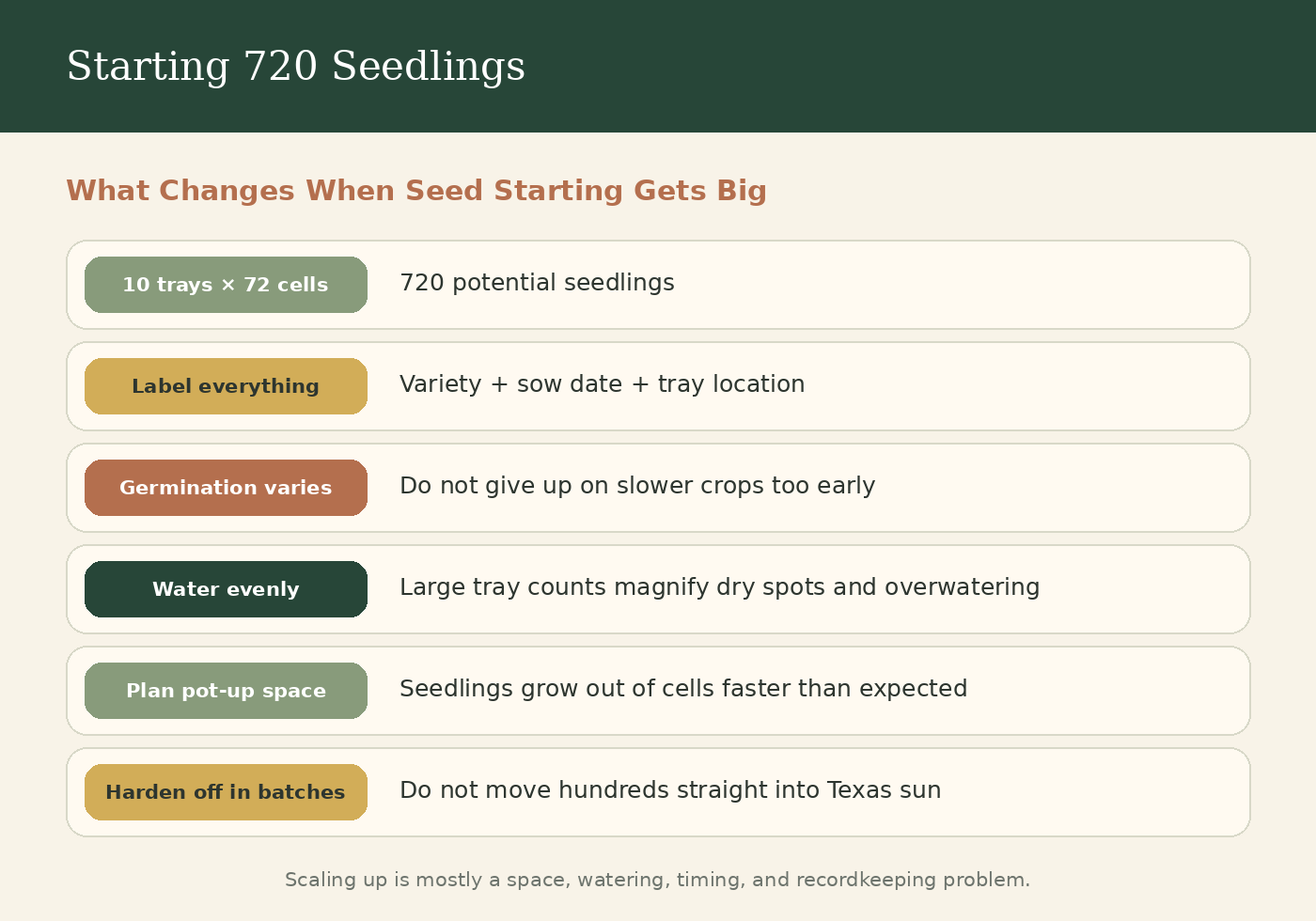
I had ten trays with 72 cells each: 720 opportunities for something to sprout.
Most of the seeds were soaked for about 24 hours before planting. In that particular round, most germinated within several days and nearly everything that was going to sprout was up within about a week. The black beans were slower, which I remembered from the season before, so I resisted the urge to declare them dead too early.
That was another useful reminder: different seeds move at different speeds. A tray that looks disappointing on day four may look completely different a few days later.
Know the normal germination window for what you planted before assuming a seed failed.
Germination was the easy part
Once the seedlings were up, the real work started.
The next step was moving them into larger pots and gradually acclimating them to outdoor conditions. That sounds simple until Texas weather decides to swing from cold mornings to hot afternoons in the same day.
Inside, I could control moisture fairly easily. Outside, wind, stronger light, warmer temperatures, and smaller containers could change watering needs quickly. I also had to think about freeze protection and whether setting up irrigation made sense if I might have to drain the system again overnight.
Starting hundreds of seedlings taught me that germination is only the beginning. The space, water, weather protection, and time required increase fast once those tiny plants start growing.
Before sowing hundreds of seeds, know where the transplants will go and how you will water and protect them.
The numbers never work perfectly
When you start a large batch of seeds, it is tempting to look at the number of cells and imagine that same number of finished plants. Gardening does not work that neatly.
Not every seed germinates. Not every seedling thrives. Some plants get damaged. Some simply grow better than others. And if you are growing for other people, not every healthy plant will necessarily be the one someone wants.
That is not failure. It is normal production loss, and it is one of the reasons starting extra plants makes sense when you have the room to care for them.
The biggest lesson was not about selling plants
What stayed with me most was how quickly a fun gardening idea becomes a system once you scale it up.
You need labels. You need space. You need a watering routine. You need a plan for transplanting. You need to watch the weather. You need to know which plants can wait and which ones need attention today.
And most of all, you need to resist planting more than you can realistically maintain just because you have empty seed cells.
I still love the moment a tray starts turning green. But that nursery season made me much more interested in growing intentionally instead of simply growing more.
For the detailed seed-starting process, see the North Texas Seed Starting Guide →