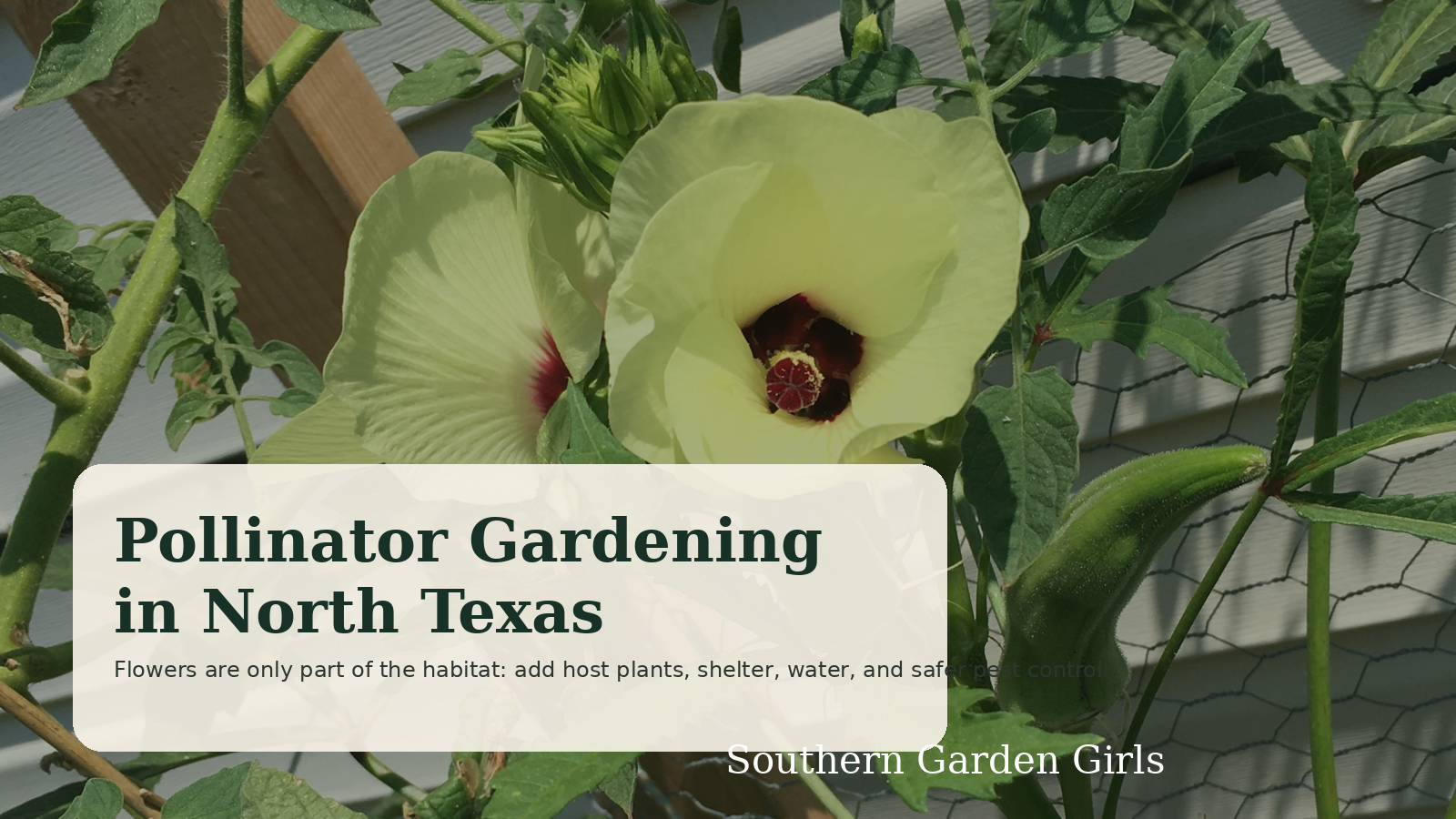
A vegetable garden works better when it is part of a living landscape instead of an isolated patch of food plants. Bees, butterflies, wasps, flies, beetles, and other beneficial insects help with pollination and pest control.
Grow flowers across the season
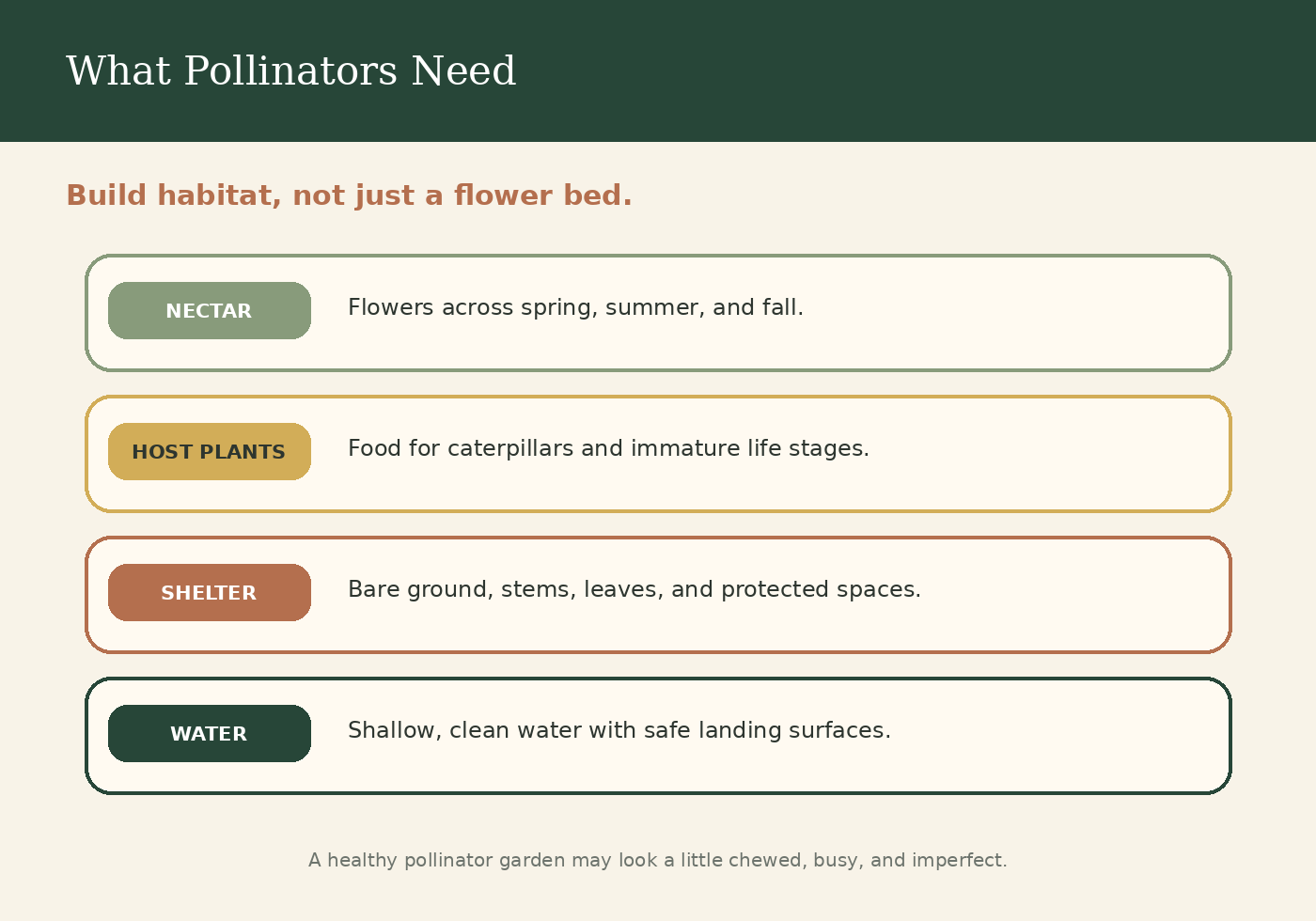
The easiest way to support pollinators is to avoid having one short bloom explosion followed by months of nothing. Include plants that flower in spring, summer, and fall.
Use more than one flower shape
Different pollinators feed differently. A mix of open daisy-like flowers, tubular flowers, clusters, and small composite blooms supports a wider range of insects than a bed dominated by one flower type.
Include host plants, not just nectar plants
Butterflies need more than flowers. Caterpillars often depend on very specific host plants. A pollinator garden that supports the full life cycle may look a little more chewed than a decorative flower bed—and that is part of the point.
Leave some shelter
Not every part of the garden has to be stripped clean. Some native bees nest in bare ground or hollow stems, and beneficial insects use plant debris and protected spaces for shelter.
Water without creating a mosquito nursery
Shallow water with stones or landing surfaces can provide drinking water, but change it regularly. Avoid containers that become stagnant breeding sites.
Use pesticides selectively
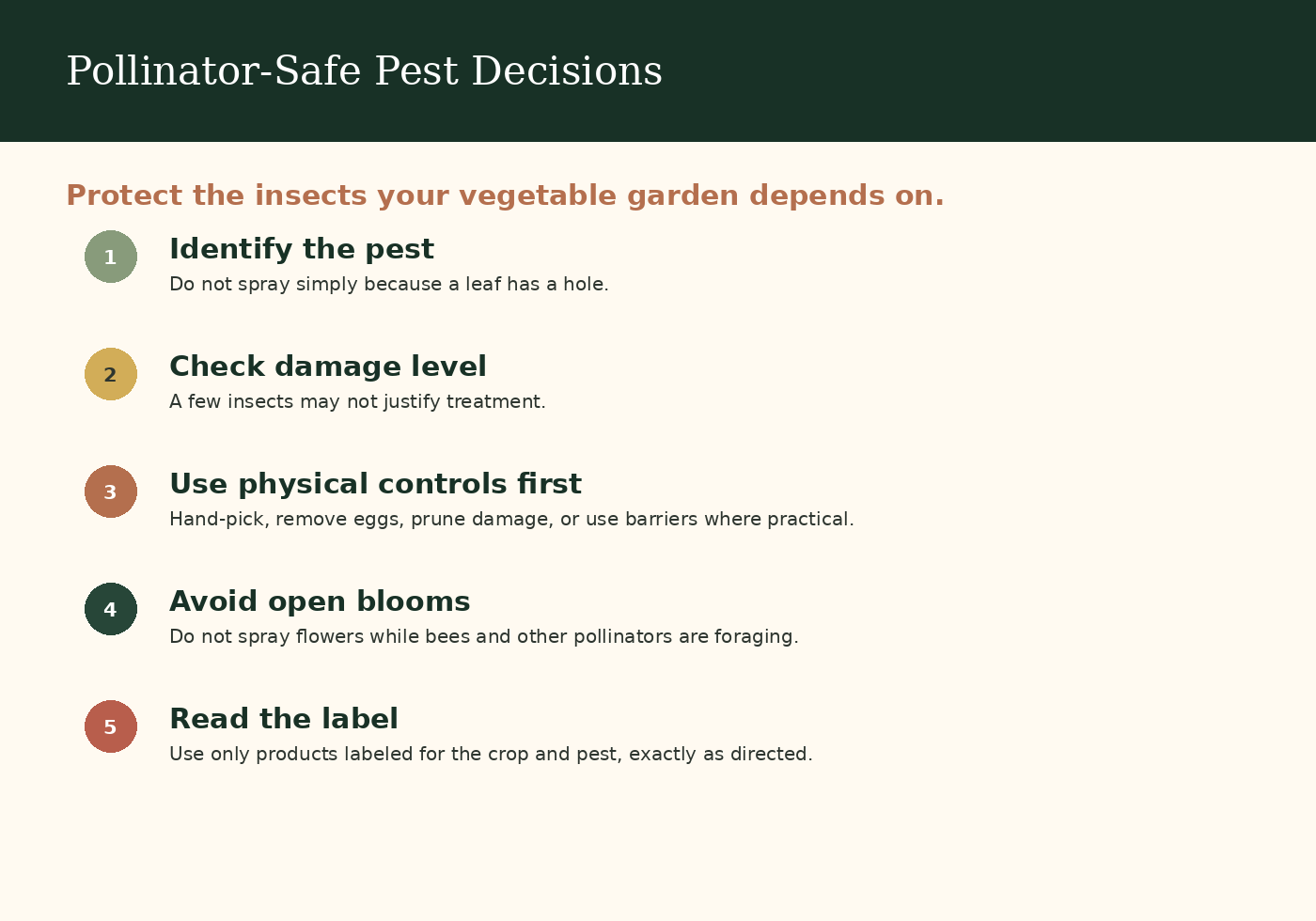
If you need to treat a pest, identify it first. Avoid spraying open blooms while pollinators are active. Broad-spectrum treatments can kill the beneficial insects you are trying to attract.
Why this matters in the vegetable garden
Squash, cucumbers, melons, and many other crops depend heavily on insect pollination. Poor pollination can look like a “fruit problem” when the real issue is that flowers were not adequately visited.
Plan for a season of bloom, not one spectacular week
A bed full of flowers in April is helpful, but pollinators need resources across a much longer season. Combine plants that bloom at different times so something is providing nectar or pollen from spring into fall. Vegetable flowers count too: squash, cucumbers, beans, okra, herbs allowed to flower, and many fruiting crops can all become part of the pollinator plan.
Host plants matter even when they get chewed
Butterflies and moths need plants their caterpillars can actually eat. That means a useful pollinator garden may contain leaves with holes. If every caterpillar is treated as a pest, the garden cannot support the full life cycle of those insects. Decide which plants are being grown for appearance and which are intentionally available as habitat so a little damage does not feel like failure.
Leave some habitat in place
Not every stem needs to be cut to the ground the moment flowering ends. Hollow stems, leaf litter, loose soil, and protected corners can provide nesting or overwintering sites for beneficial insects. The goal is not a neglected garden; it is a garden that is not sterilized at the end of every season. Where appearance matters, concentrate the messier habitat in less visible sections.
Use pesticides as a last, targeted tool
If treatment is necessary, identify the pest first and choose the least disruptive option that actually addresses it. Avoid spraying open blooms while pollinators are visiting. Broad-spectrum products can kill beneficial insects along with the target pest. Physical removal, barriers, pruning, and timing are often worth trying before a whole-bed spray.
Native plants can make the job easier
North Texas native and well-adapted plants are often valuable because they are already suited to local heat, rainfall patterns, and insects. You do not need an all-native garden for pollinator value, but including regionally appropriate plants can strengthen habitat while reducing the amount of irrigation and intervention required. Choose plants for your actual sun, soil, and drainage rather than buying solely from a “pollinator” label.
Let the vegetable garden participate
You do not need a separate ornamental pollinator bed to create habitat. Allow basil, cilantro, dill, onions, and other herbs to flower where practical, and include flowering borders near vegetables. Pollinators drawn to those blooms often move directly into squash, cucumbers, beans, melons, and other food crops.