
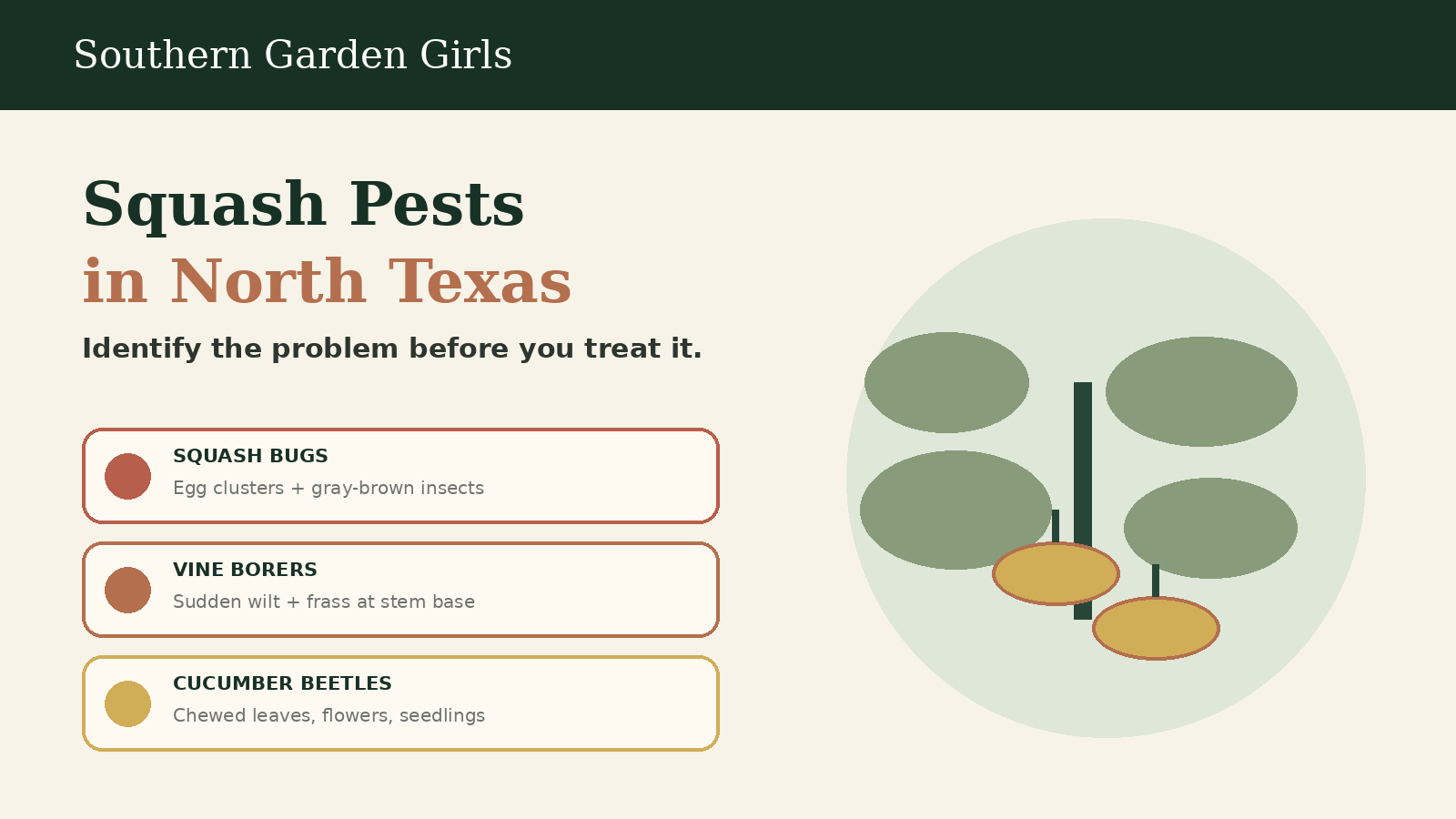
Squash can go from “I am going to have enough zucchini for the entire neighborhood” to a wilted mess with alarming speed. The best defense is learning which pest you are actually dealing with before reaching for a spray bottle.
Squash bugs
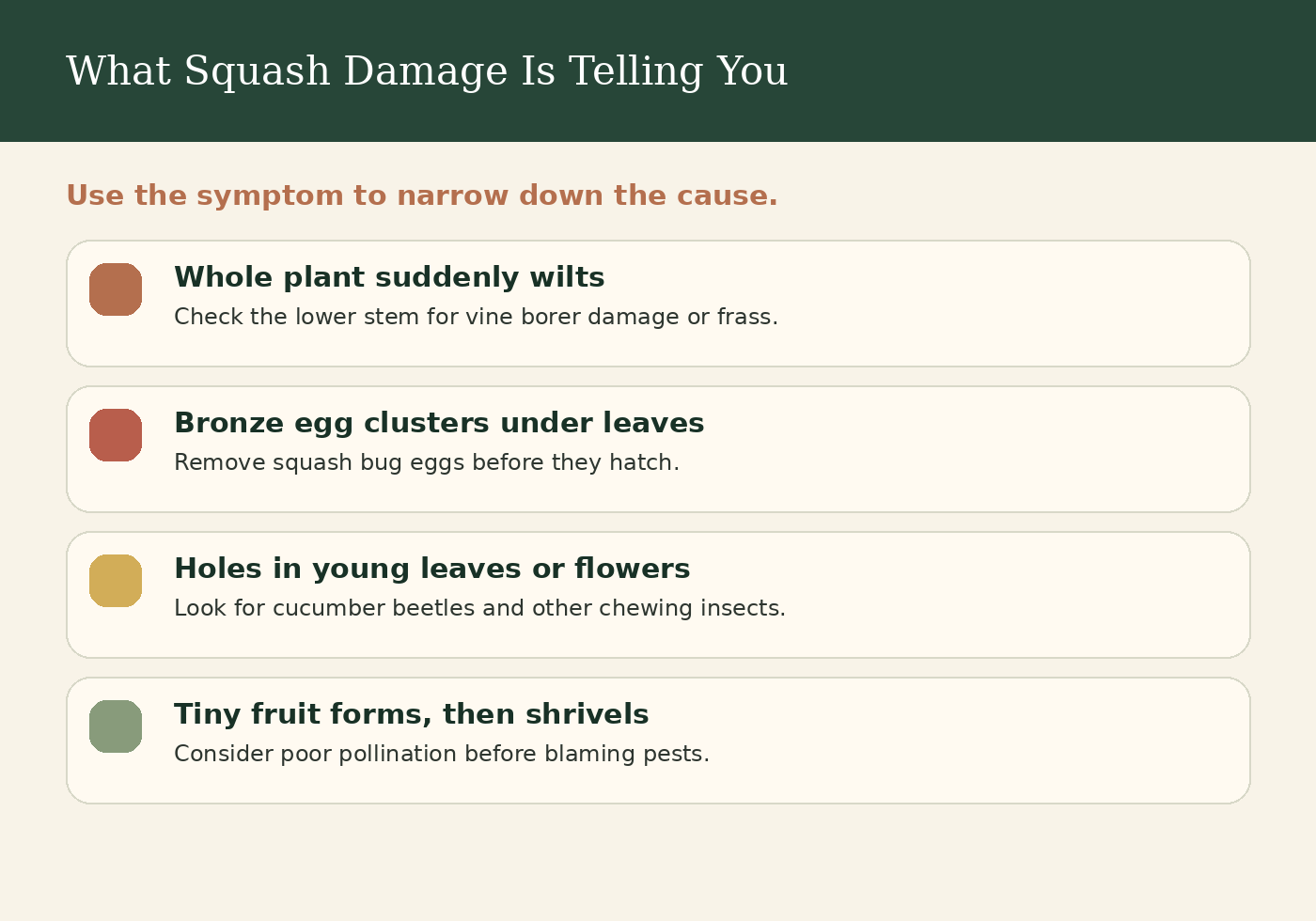
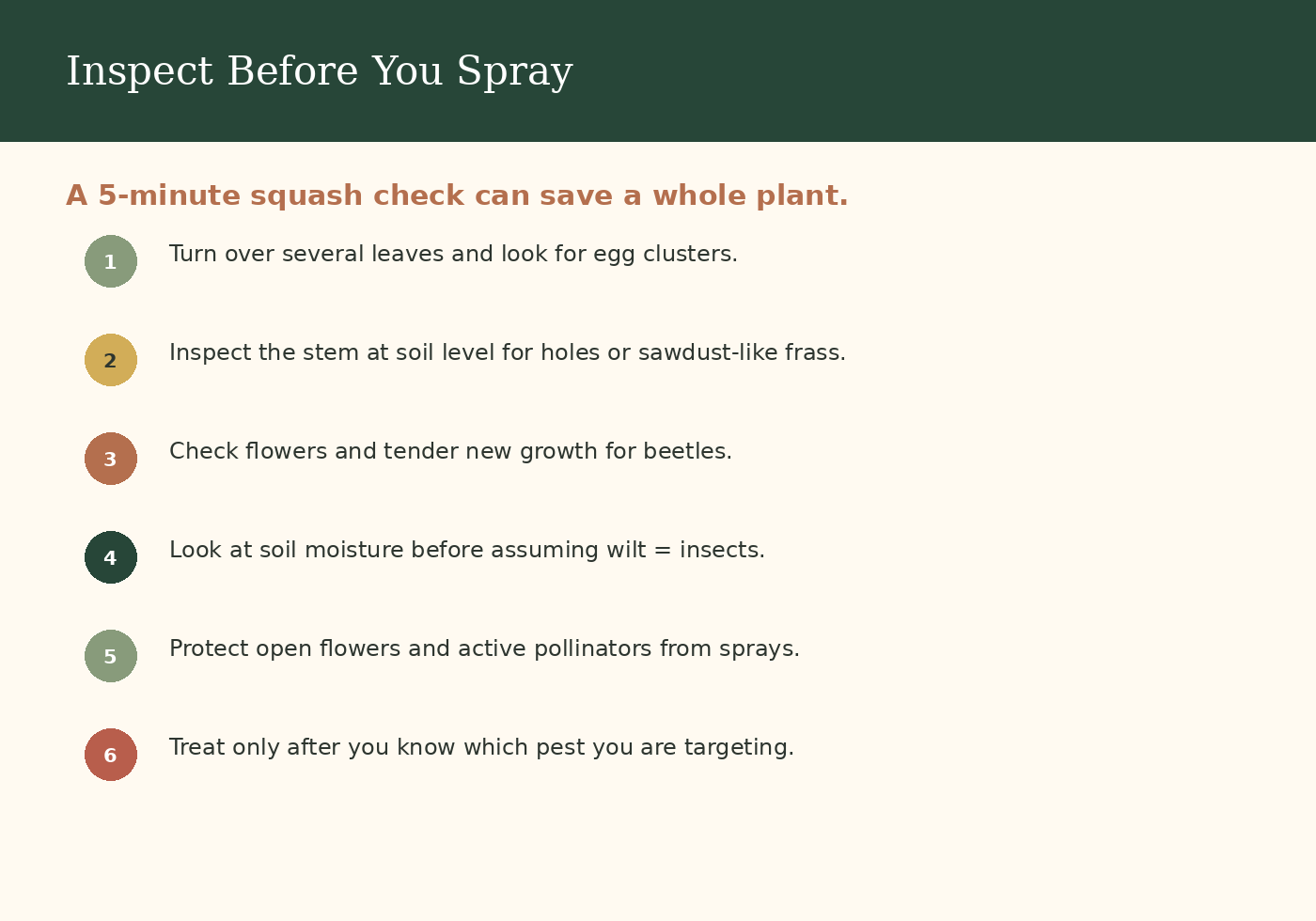
Squash bugs are gray-brown insects that feed on squash-family plants. Look under leaves for clusters of bronze-colored eggs and watch young plants closely for wilting or feeding damage.
Hand-picking adults and nymphs, removing egg clusters, cleaning up old vines, and reducing hiding places can help keep populations from exploding.
Squash vine borer
Squash vine borer larvae tunnel inside stems. A plant may look fine and then suddenly wilt because the stem has been damaged from the inside.
Look near the base of the plant for a hole and sawdust-like frass. Once the larva is well inside the stem, surface sprays are unlikely to solve the problem. Prevention and early detection matter much more.
Cucumber beetles
Cucumber beetles chew foliage and flowers and can also spread plant disease. Young seedlings can be damaged quickly when beetle pressure is high.
Use row cover carefully
Physical barriers can be useful early in the season, but squash needs pollination. Remove or open covers once female flowers begin appearing unless you are hand-pollinating consistently.
Protect the pollinators you need
Squash relies heavily on bee activity. Avoid spraying insecticides on open flowers or while bees are actively foraging. If a pesticide is necessary, identify the pest first, choose a product labeled for that crop and pest, and follow the label exactly.
What I would not do
I would not automatically spray neem, pyrethrin, Sevin, or anything else just because a squash leaf has a hole. Different pests require different strategies, and broad spraying can kill beneficial insects while leaving the real problem unresolved.
Scout before the plant looks sick
Squash pests are much easier to manage when you catch eggs or small insects rather than waiting for a mature plant to collapse. Check the undersides of leaves, leaf stems, flowers, and the base of the main stem several times a week during active growth. Squash bug egg clusters are often bronze-colored and neatly grouped, while vine-borer damage may first show as a hole and sawdust-like frass near the stem base.
Wilt is a symptom, not a pest name
A wilted squash plant may be suffering from vine borer injury, damaged roots, drought, saturated soil, bacterial disease, or simply intense afternoon heat. Check soil moisture and inspect the stem before assuming insects are responsible. A plant that recovers in the evening but wilts during the hottest hours is giving a different signal than one that remains collapsed the next morning.
Barriers work best before flowers open
Row cover can protect young squash from insects early in the season, but squash needs pollination once female flowers begin opening. Covers must be removed during bloom or managed so pollinators can reach the flowers. That timing is why row cover is a preventive tool, not something that can be thrown over a badly infested mature plant and expected to solve the problem.
Succession planting can be part of pest management
Sometimes an aging squash plant with heavy pest pressure is not worth heroic treatment. Removing a declining plant and starting another crop at the appropriate time can be more productive. Rotate planting areas when practical, clean up infested debris, and avoid leaving dead squash vines in the garden where pests can continue developing.
Healthy plants tolerate some damage
A few chewed leaves or visible insects do not always justify treatment. Squash grows quickly when conditions are good, and a vigorous plant can tolerate some leaf loss. The threshold changes when damage is expanding rapidly, the growing tip is affected, fruit is being damaged, or the plant begins losing vigor. That is why regular scouting is more useful than waiting until the garden looks obviously infested.