
Plant now
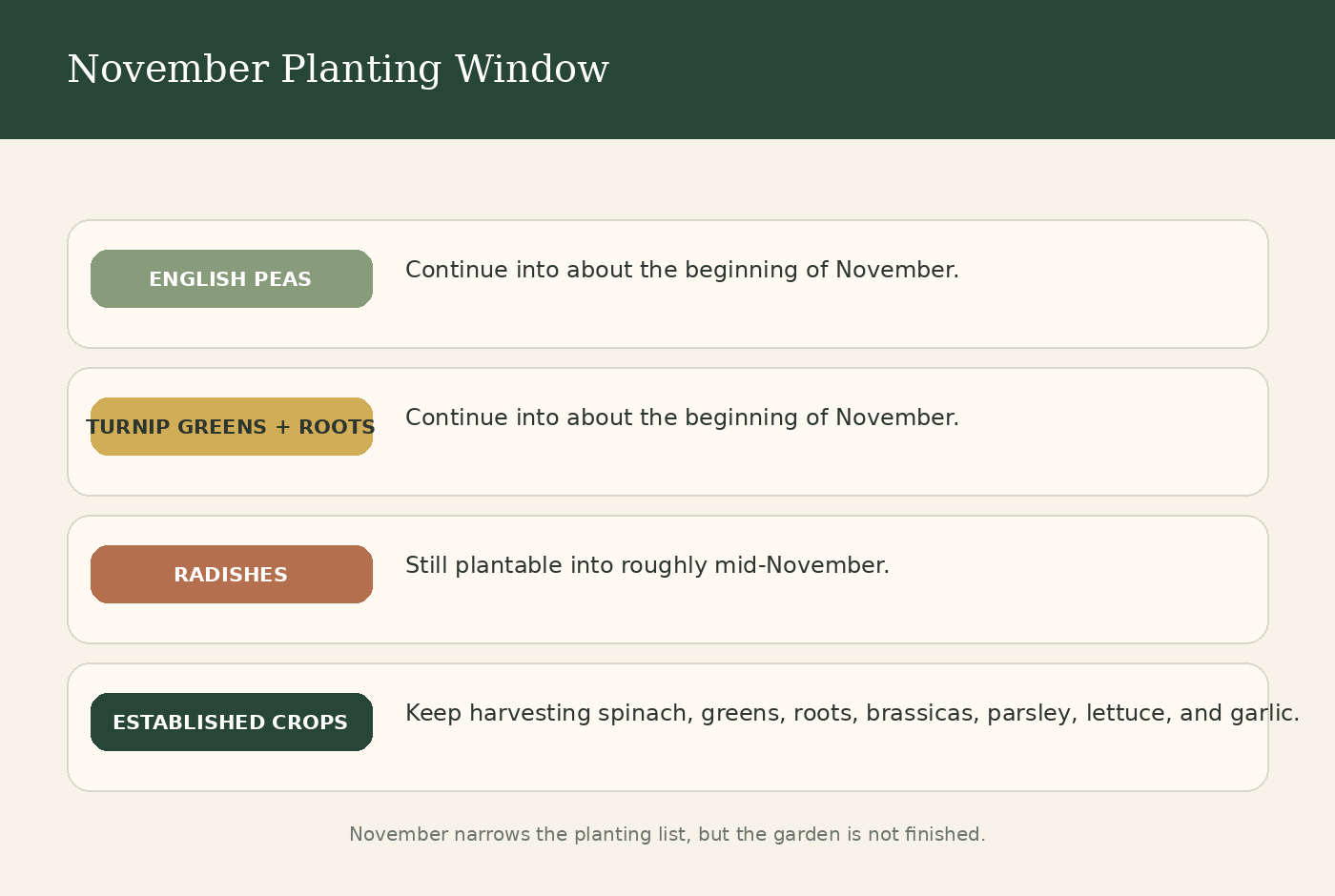
- English peas can continue into about the beginning of November.
- Turnip greens and roots can continue into about the beginning of November.
- Radishes remain plantable into roughly mid-November in the North Central Texas guide.
- Continue harvesting established spinach, greens, roots, brassicas, parsley, lettuce, and garlic as appropriate.
Prepare next
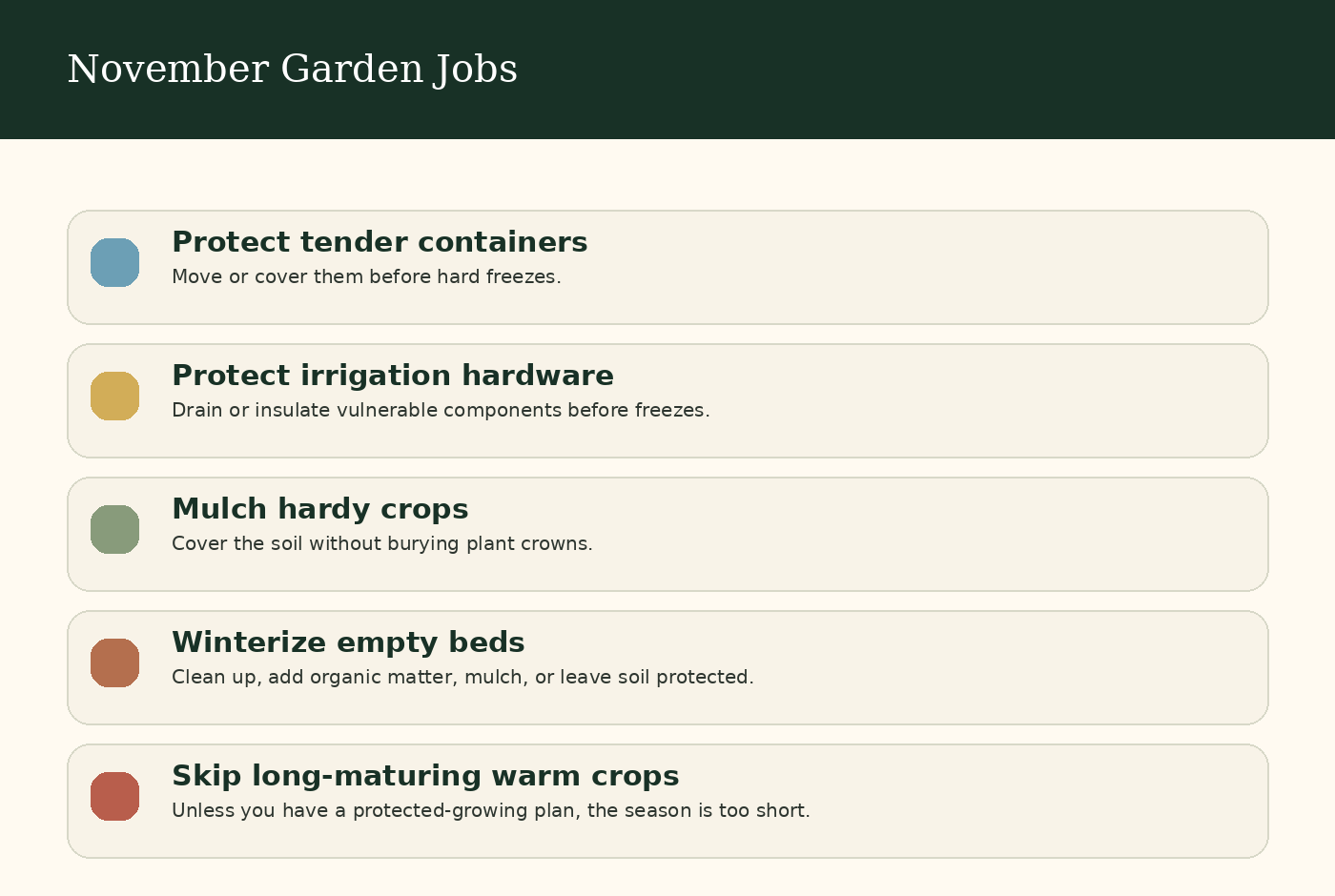
- Protect tender containers and irrigation hardware before hard freezes.
- Mulch around hardy crops without burying crowns.
- Winterize beds that will remain empty.
Wait on these
- Most new warm-season planting is finished.
- Do not start long-maturing crops now unless you have a specific protected-growing plan.
Garden jobs for November
November is about extending what is already growing well and protecting the soil where the garden is resting.
November narrows the planting list
The garden is not finished, but the margin for error is smaller. Fast-growing roots, peas, turnips, radishes, and established cool-season crops can continue, while long-maturing warm-season vegetables no longer have enough weather ahead of them. Focus on crops that match short days and cool soil rather than trying to recreate the spring garden.
Protect the crops already earning their space
Established spinach, brassicas, greens, roots, herbs, garlic, and lettuce may be more valuable than starting something new. Weed beds, maintain mulch, harvest regularly, and keep frost protection available for the crops that need it. Healthy established plants can continue producing for a long time when the root zone is protected and watering stays appropriate.
Prepare irrigation and containers for colder weather
Drain or insulate vulnerable irrigation components when freezes are expected. Container roots cool faster than roots in the ground, so movable pots may need a protected location. Do not leave saucers full of water where a freeze can create ice around the base of a pot.
Use protection to preserve, not to create summer
Frost cloth and low tunnels can extend the life of suitable crops, but they do not turn November into May. Use protection to help hardy and semi-hardy vegetables through cold snaps, not to keep heat-loving plants indefinitely. That distinction saves a lot of effort and lets the garden transition naturally into winter.
Continue harvesting before severe weather. Mature roots, herbs, and greens are often easier to pick ahead of a hard freeze than to recover from frozen soil or damaged foliage afterward.
Common November mistakes
The biggest is overwatering. Cooler soil dries slowly, and automatic irrigation that was appropriate in September may now keep beds constantly wet. Check before watering. The second is leaving frost protection until the last minute. Covers are much easier to install before dark, wind, and dropping temperatures arrive.
Harvest around cold weather
Some cool-season crops tolerate frost well, but a severe freeze can still damage exposed leaves or make root crops difficult to pull. Harvest mature produce ahead of major cold events and leave younger, hardier crops protected for later.
Use empty beds instead of ignoring them
If a bed is finished, clean out problem debris, add a modest compost top-dressing if needed, and cover the soil with mulch or an appropriate winter cover. Bare soil gains nothing from sitting exposed until spring.
November checklist
Harvest before hard freezes, secure row covers, protect containers, drain vulnerable irrigation hardware, and keep empty beds covered. Check soil moisture before watering because winter beds can remain wet far longer than summer beds. Continue pulling weeds while they are small; cool weather does not stop every weed from growing.
Use this month to note which fall crops earned another season in the garden. Flavor, pest resistance, growth rate, and cold tolerance are all worth recording while the details are fresh.
Keep the garden visible
Shorter days make it easy to stop noticing small problems. Keep labels readable, paths clear, and covers organized so you can see what is happening in each bed. A tidy winter garden is easier to protect because you can quickly identify which crops are hardy, which need cover, and which are already finished.
← October All months December →