
Plant now
- Focus on established cool-season crops that are still producing.
- Use protected spaces for experiments, but do not treat December as a broad open-ground planting month.
- Container herbs and greens can be managed in protected locations when temperatures allow.
Prepare next
- Add compost and mulch to empty beds.
- Review notes from the year and decide what earned space next season.
- Order seed early enough to avoid scrambling in January and February.
Wait on these
- Hold most new outdoor vegetable planting for the January and February cool-season windows.
- Warm-season crops are months away; use the downtime to prepare instead of forcing the season.
Garden jobs for December
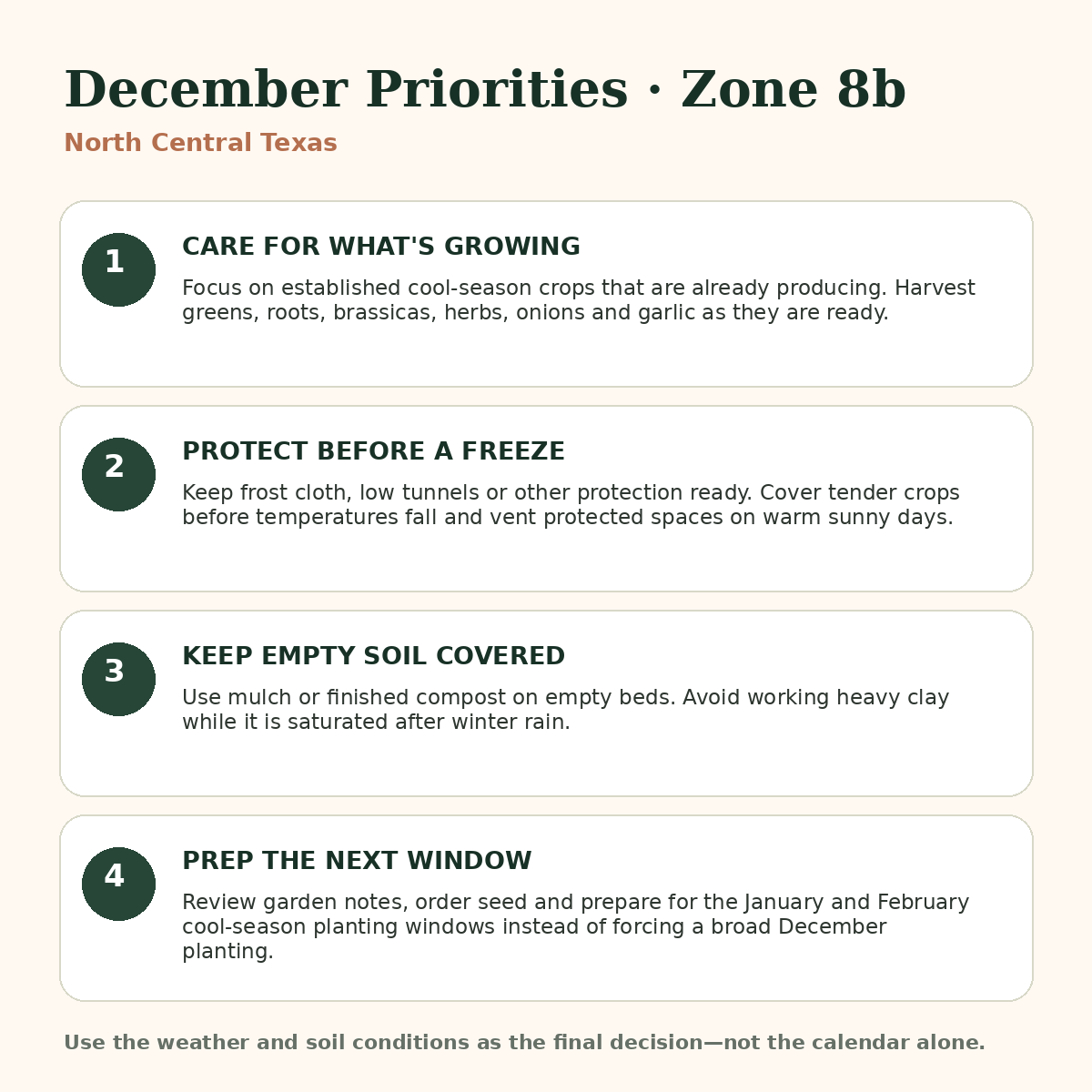
December is where the next garden begins on paper: clean beds, protect soil, review failures and wins, and make a realistic planting plan.
December is more about managing than filling beds
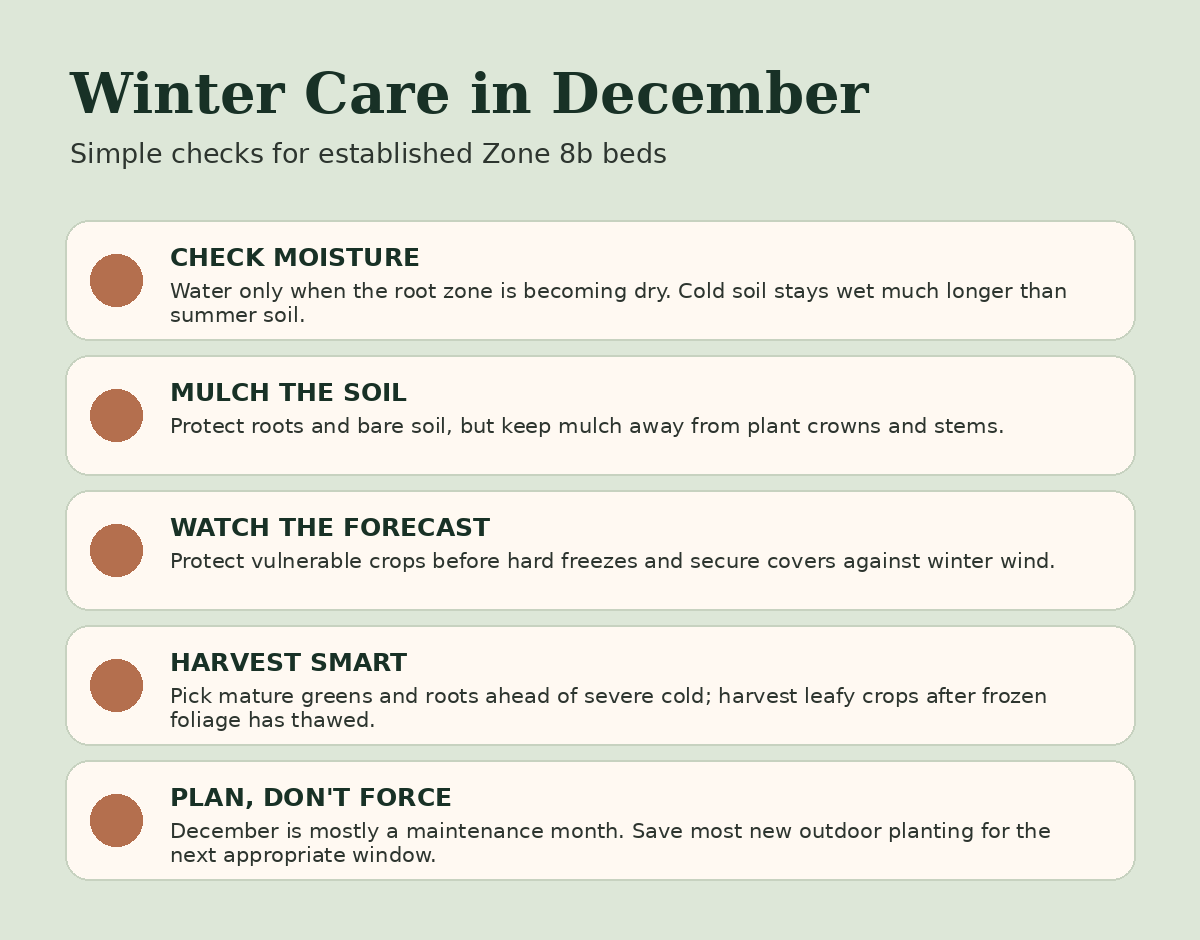
Short days and cold soil slow growth, so the most productive strategy is usually caring for established cool-season crops rather than treating December like a major planting month. Harvest spinach, lettuce, roots, brassicas, herbs, and other hardy crops as they are ready and keep beds weeded so winter growth is not competing for limited light and nutrients.
Use protected spaces intentionally
Cold frames, low tunnels, frost cloth, and sheltered containers can extend the season, but they also require attention. Covers may need to be opened on sunny days to prevent overheating and closed again before temperatures fall. Protected growing works best when you can actually monitor it rather than sealing plants up and forgetting them.
Water less often, but do not forget to check
Winter gardens use water slowly, especially under mulch. Check moisture several inches down and water when the root zone is becoming dry. Avoid leaving soil saturated during cold weather. Containers still need closer attention because they have less soil volume and more exposure to drying wind.
Use December to evaluate the whole year
Winter is a useful time to review what actually earned space in the garden. Which tomato produced through heat? Which bean variety handled pests? Which bed stayed too wet? Which planting dates worked best? Write those answers down while the season is still fresh enough to remember details.
That record turns December into more than a dormant month. Seed orders, bed repairs, crop rotation, irrigation changes, and variety choices all become easier when they are based on what happened in your own garden rather than starting from zero again in spring.
Common December mistakes
The first is treating winter dormancy as a reason to stop checking the garden. Frost cloth can blow loose, containers can dry in wind, and pests can still hide in sheltered areas. A quick weekly inspection is enough to catch most problems without turning winter gardening into a daily chore.
Harvest with the weather in mind
Leafy greens can often be harvested through winter, but pick them when leaves are thawed and flexible rather than brittle with frost. Root crops can remain in the ground in many situations, but very cold weather can make harvest inconvenient. Pull what you need before severe cold and leave the rest protected.
Keep winter soil covered
Mulch helps buffer temperature swings, reduces crusting from winter rain, and keeps weeds from taking over empty spaces. Do not bury plant crowns or pile mulch against stems. Think of it as a protective blanket over the soil surface, not a mound around the plant itself.
December checklist
Keep covers ready, monitor protected spaces on sunny days, water only when the root zone is becoming dry, and harvest mature greens before severe cold. Check mulch around garlic, onions, and perennial herbs and replace what wind has moved. Keep the garden clean enough to monitor without stripping away every bit of winter habitat.
Finally, use the slower pace to organize seed, update garden notes, and decide what deserves space next year. The best December garden task may be the planning decision that prevents a crowded or badly timed planting three months later.
← November All months January →