

Plant now
- Plant snap bush beans and Lima beans early enough to stay inside their fall windows.
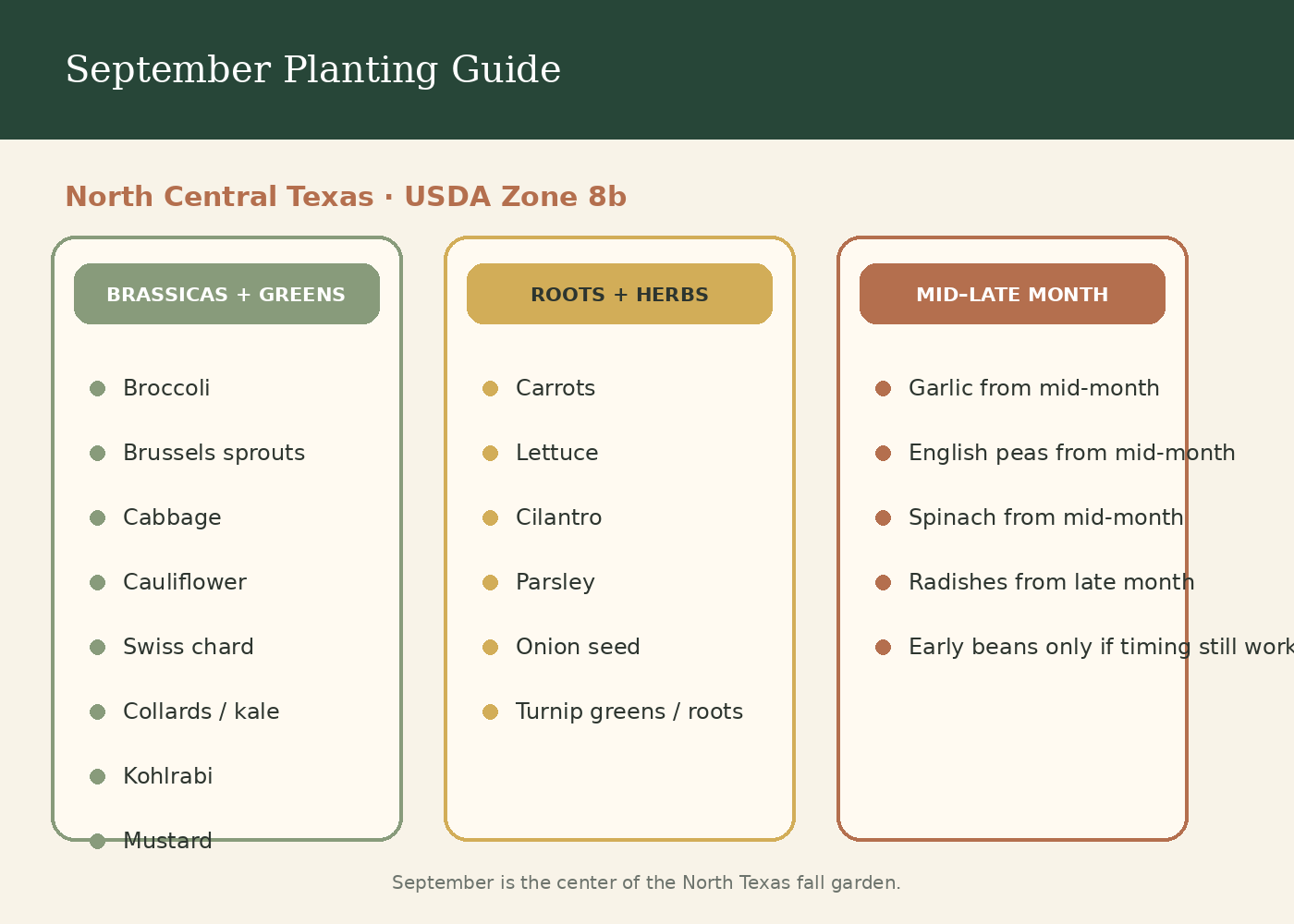
- Plant broccoli, Brussels sprouts, cabbage, cauliflower, Swiss chard, collards/kale, kohlrabi, carrots, lettuce, cilantro, mustard, parsley, and onion seed within their September windows.
- Plant garlic beginning around mid-September.
- Plant English peas and spinach beginning around mid-September.
- Plant radishes beginning around late September.
- Turnip greens and roots can continue through September and into fall.
Prepare next
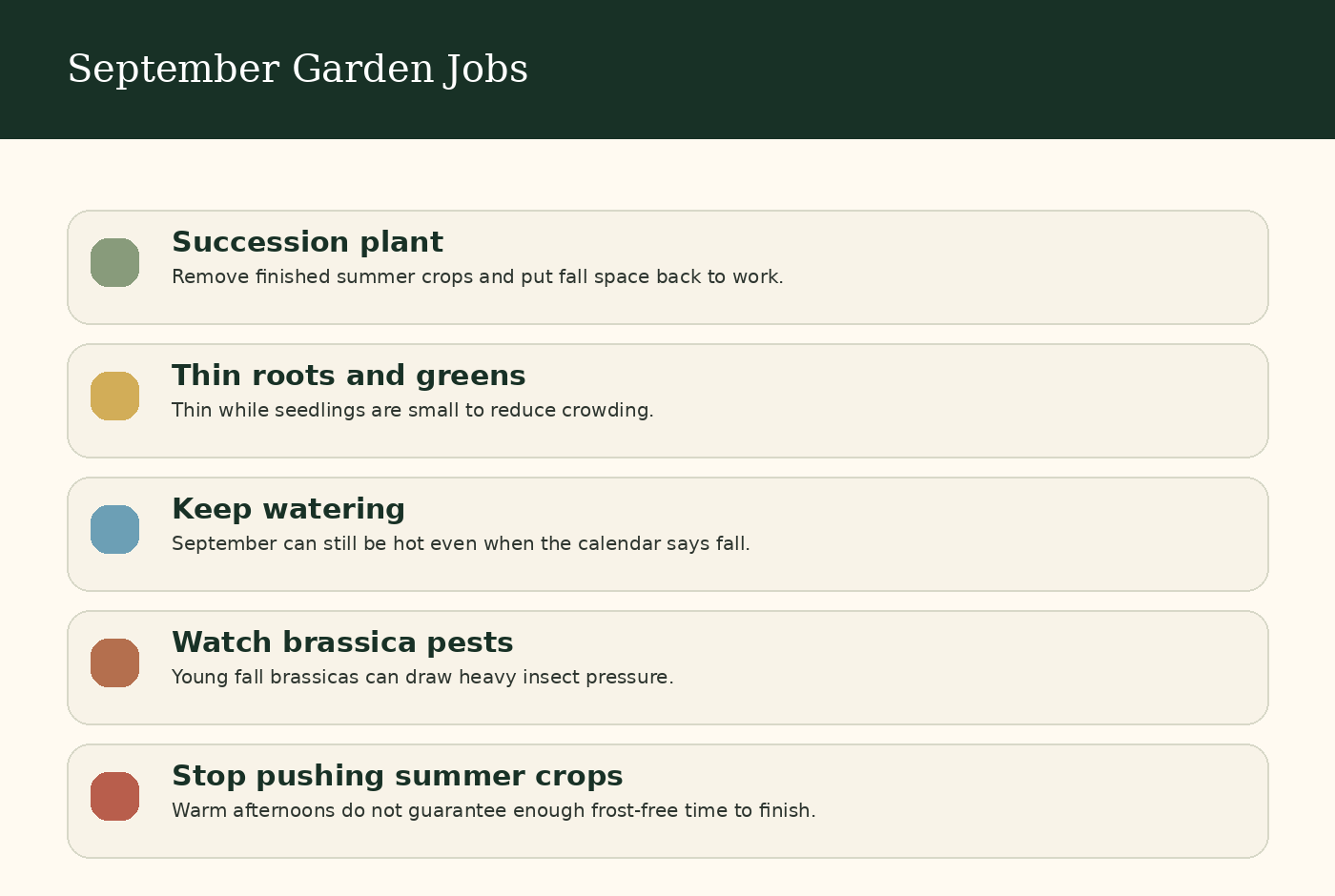
- Thin direct-sown roots and greens while plants are small.
- Watch moisture closely; September can still be hot even when the calendar says fall.
- Keep insect pressure in mind on young brassicas.
Wait on these
- Do not keep pushing frost-tender summer crops later just because daytime temperatures are still warm.
Garden jobs for September
September is a succession month: remove finished summer crops and immediately put productive fall space back to work.
September is the heart of the fall garden
More cool-season crops become realistic as days shorten and nights begin easing, but North Texas can still be hot. Keep newly planted beds evenly moist and continue using mulch. Fall seedlings can suffer from drought and heat just as easily as spring transplants, especially during the first week after planting.
Use succession planting for faster crops
Radishes, lettuce, spinach, turnips, and other quick crops can be planted in smaller batches rather than all at once. Repeated sowings spread harvest and reduce the chance that one weather event or pest outbreak affects the entire crop. Label dates so you know which planting is performing best.
Do not keep declining summer crops out of sentiment
A tomato or squash plant that is barely producing can occupy exactly the space your fall garden needs. Keep genuinely productive plants, but remove those that are diseased, exhausted, or unlikely to recover. Fall windows are short enough that waiting several extra weeks can cost an entire crop.
Thin seedlings before crowding becomes permanent
Carrots, beets, radishes, turnips, lettuce, and greens often emerge too densely when seed is sown by hand. Thin while plants are small so the remaining roots and leaves have room to develop. Waiting until plants are crowded wastes water and light and makes it harder to pull extras without disturbing their neighbors.
Keep row covers or insect netting available for brassicas if pest pressure is heavy. Barriers can reduce damage dramatically when installed before insects find the crop.
Common September mistakes
September looks like fall on the calendar but can still behave like summer. Newly planted greens and brassicas may need the same careful establishment watering you would give a summer transplant. Do not remove shade protection or mulch too quickly just because mornings feel cooler.
Watch for caterpillars on brassicas
Broccoli, cabbage, cauliflower, kale, collards, and related crops can attract chewing caterpillars quickly. Inspect leaf undersides and growing points before damage becomes extensive. Row cover or insect netting installed early can reduce pressure dramatically if it is secured well.
Keep sowing records
Fall germination can vary widely with weather. Record the date each batch was planted and how well it emerged. If one sowing fails in heat and the next succeeds two weeks later, that information becomes a valuable local planting reference for the following year.
September checklist
Thin roots and greens, water new plantings consistently, inspect brassicas for caterpillars, succession sow fast crops, and keep summer plants only if they are still productive. Continue mulching even as mornings cool. North Texas soil can remain hot and drying long after the calendar begins looking like fall.
Use labels for garlic, peas, roots, and repeated lettuce or radish sowings. Fall gardens often contain several generations of the same crop, and clear dates make it much easier to know what should be harvested, thinned, or replanted.
Use cooler mornings for garden work
September afternoons can still be exhausting even when mornings feel like fall. Use the cooler part of the day for transplanting, thinning, mulching, and pest checks. Seedlings handled when conditions are milder lose less moisture and usually settle into the bed with less stress.