
Plant now
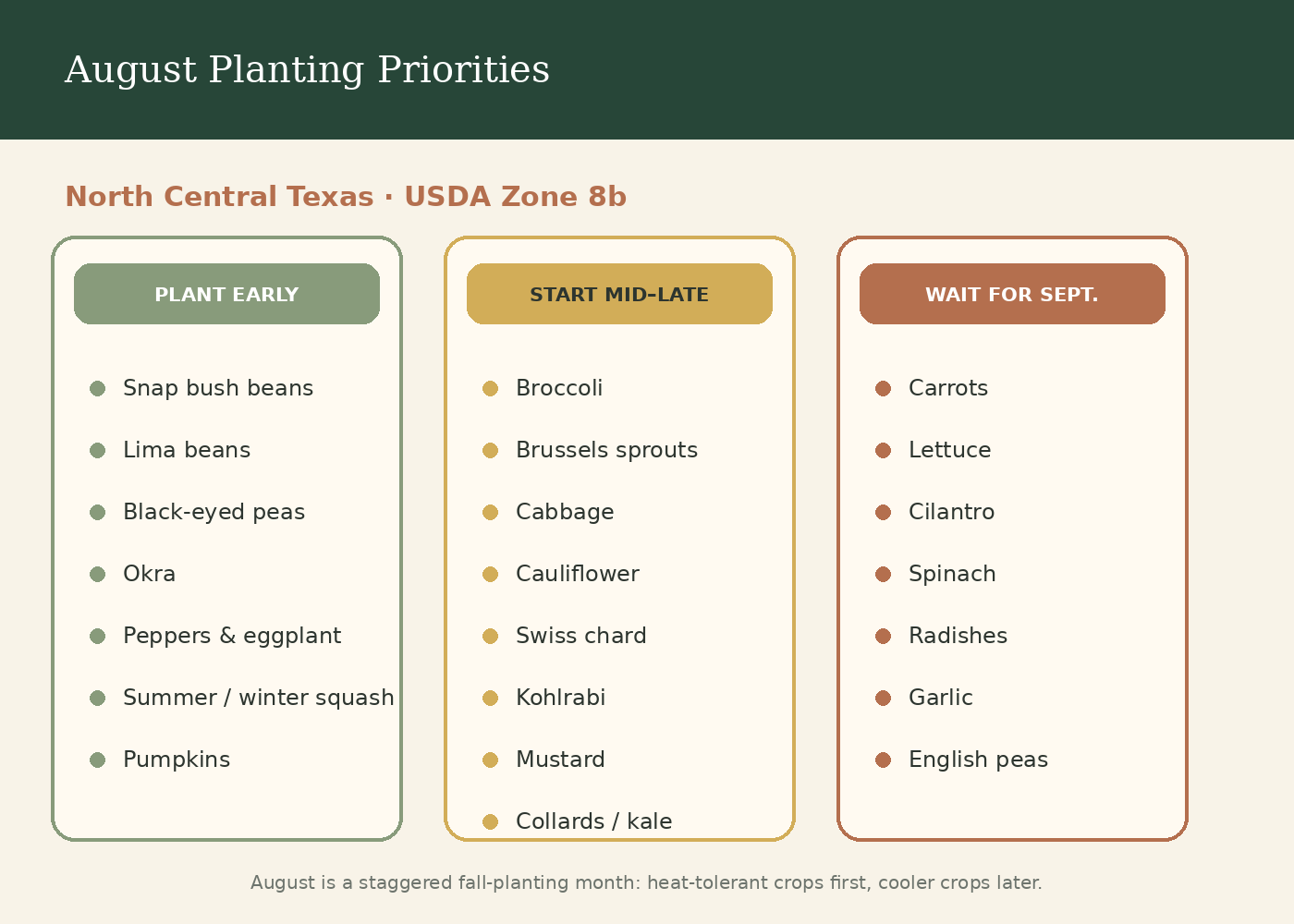
- Plant snap bush beans through August and into early September; pole beans have a much shorter late-July/early-August fall window.
- Plant Lima beans, black-eyed peas, okra, peppers, eggplant, summer squash, winter squash, and pumpkins within their August windows.
- Early August can still work for cantaloupe, watermelon, and Irish potatoes depending on the exact date.
- From mid-August, begin broccoli, Brussels sprouts, cabbage, cauliflower, Swiss chard, kohlrabi, parsley, onion plants, and mustard.
- Late August opens collards/kale, cucumbers, and turnip greens/roots.
Prepare next
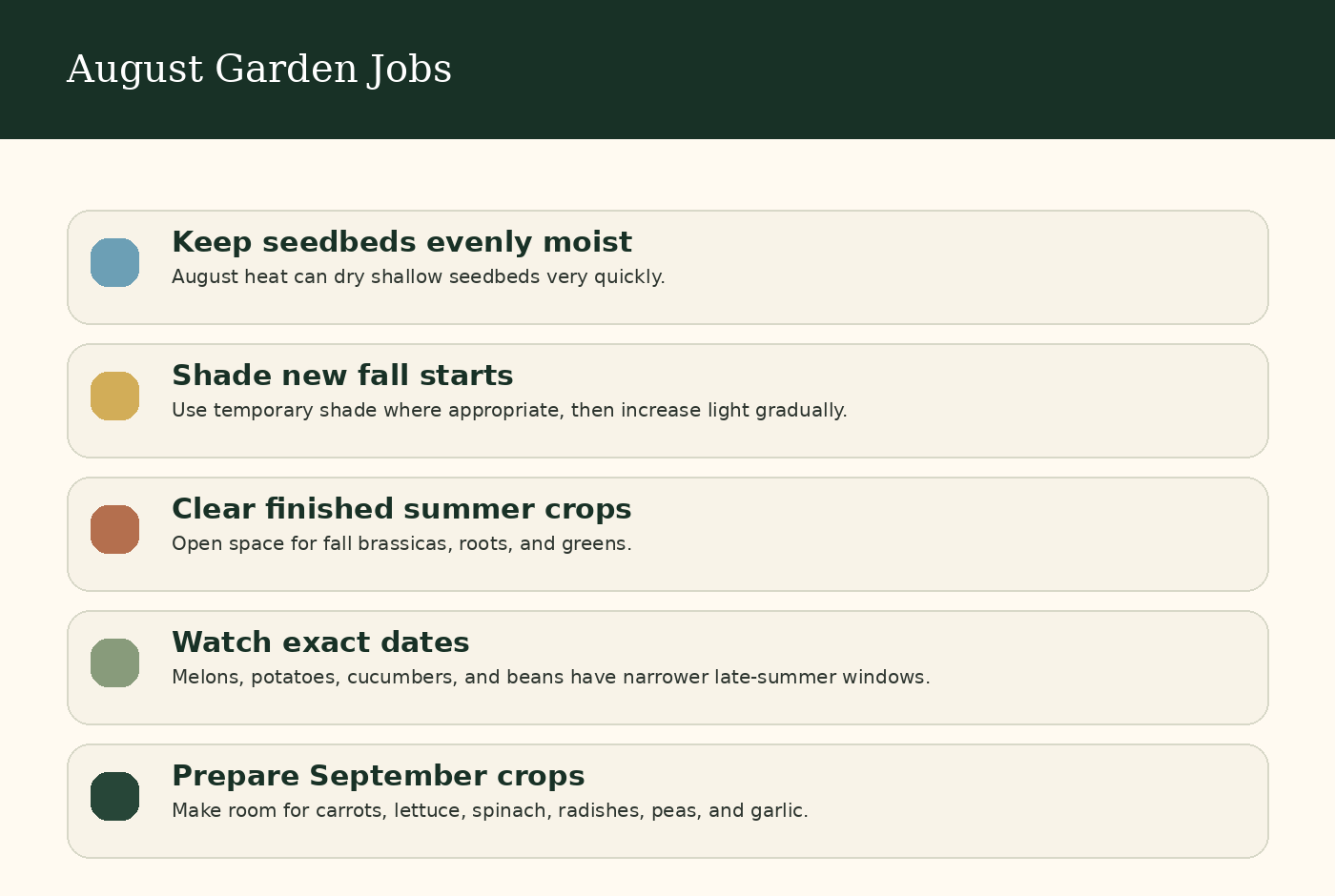
- Make room for September carrots, lettuce, cilantro, onion seed, garlic, spinach, radish, and English peas.
- Keep newly planted fall crops evenly moist; August heat can dry a seedbed astonishingly fast.
- Use shade during establishment where appropriate, then gradually increase light.
Wait on these
- Carrots, lettuce, cilantro, spinach, and radishes have better North Central Texas fall windows in September rather than early August.
- Garlic is better treated as a September-October crop here, not an August rush.
Garden jobs for August
North Central Texas fall planting is already underway in August, but crop timing is staggered. Plant heat-tolerant fall crops first and save cooler-season crops for their later windows.
August planting is mostly an establishment challenge
Many fall crops begin during weather that still feels like midsummer. Germination and transplant survival can be more difficult than the crop's eventual fall growth. Keep shallow seedbeds evenly moist, use temporary shade where appropriate, and plant at times when the forecast gives seedlings a realistic chance to establish before another extreme heat event.
Stagger the fall garden
Heat-tolerant fall crops can begin first, while crops that prefer genuinely cooler conditions should wait for their later window. This staggered approach avoids forcing lettuce, spinach, peas, or other cool-weather crops into soil that is still too hot. Use the monthly calendar as a sequence rather than a checklist that has to be completed on August 1.
Clear summer crops with a purpose
Remove declining plants when they are no longer earning their space, but do not empty the whole garden at once if productive summer crops are still healthy. Decide which beds are needed for fall brassicas, roots, herbs, and greens, then transition those areas first.
Use small plantings to manage risk
Fall seed can be expensive to waste in overheated soil. Instead of sowing an entire packet at once, make a smaller first planting and watch germination. If conditions are still too harsh, you have seed left to try again when weather improves. This approach is especially useful for greens and roots with narrow temperature preferences.
Keep seedlings visible. Tiny fall plants can disappear beneath summer vines or weeds if beds are crowded. Give new rows clear labels and enough open space that watering, thinning, and pest checks are easy.
Common August mistakes
The most common problem is treating the fall garden like spring and sowing everything at once. August soil can still be brutally hot. Crops that germinate poorly in heat may fail even when the calendar says their season is approaching. Use the timing windows as a sequence and let actual weather decide when the cooler crops begin.
Create a nursery zone for fall seedlings
A small area with morning sun, afternoon protection, easy access to water, and good airflow can make fall seed starting much more reliable. Gradually increase sun as seedlings strengthen. This is especially useful when the final garden bed is still occupied by productive summer crops.
Balance summer harvest with fall space
You do not have to remove a healthy pepper or okra plant simply because fall is coming. Keep high-value summer crops where they are productive, and transition the weakest beds first. The goal is overlap—not an abrupt seasonal reset.
August checklist
Keep seedbeds moist, protect tender fall starts from brutal afternoon sun when necessary, transition finished summer beds, and label every fall sowing date. Check the forecast before transplanting. A few cloudy days or a break in extreme heat can make establishment much easier than forcing seedlings into the hottest stretch of the month.