
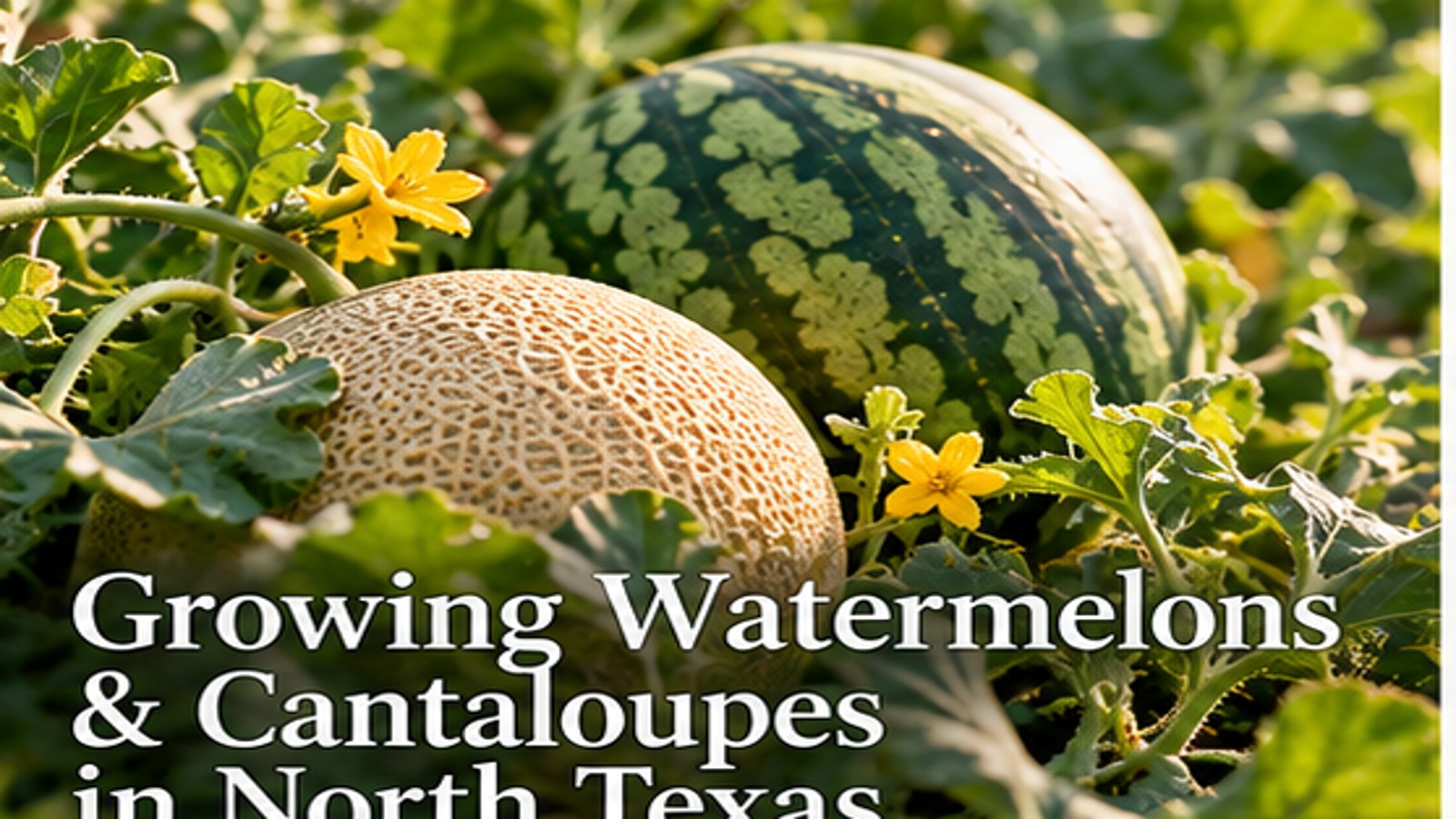
Watermelon and cantaloupe love heat, but that does not mean they can be planted whenever Texas feels warm. They still need enough frost-free time to mature, good pollination, and steady moisture while vines and fruit are developing.
Give them sun and space
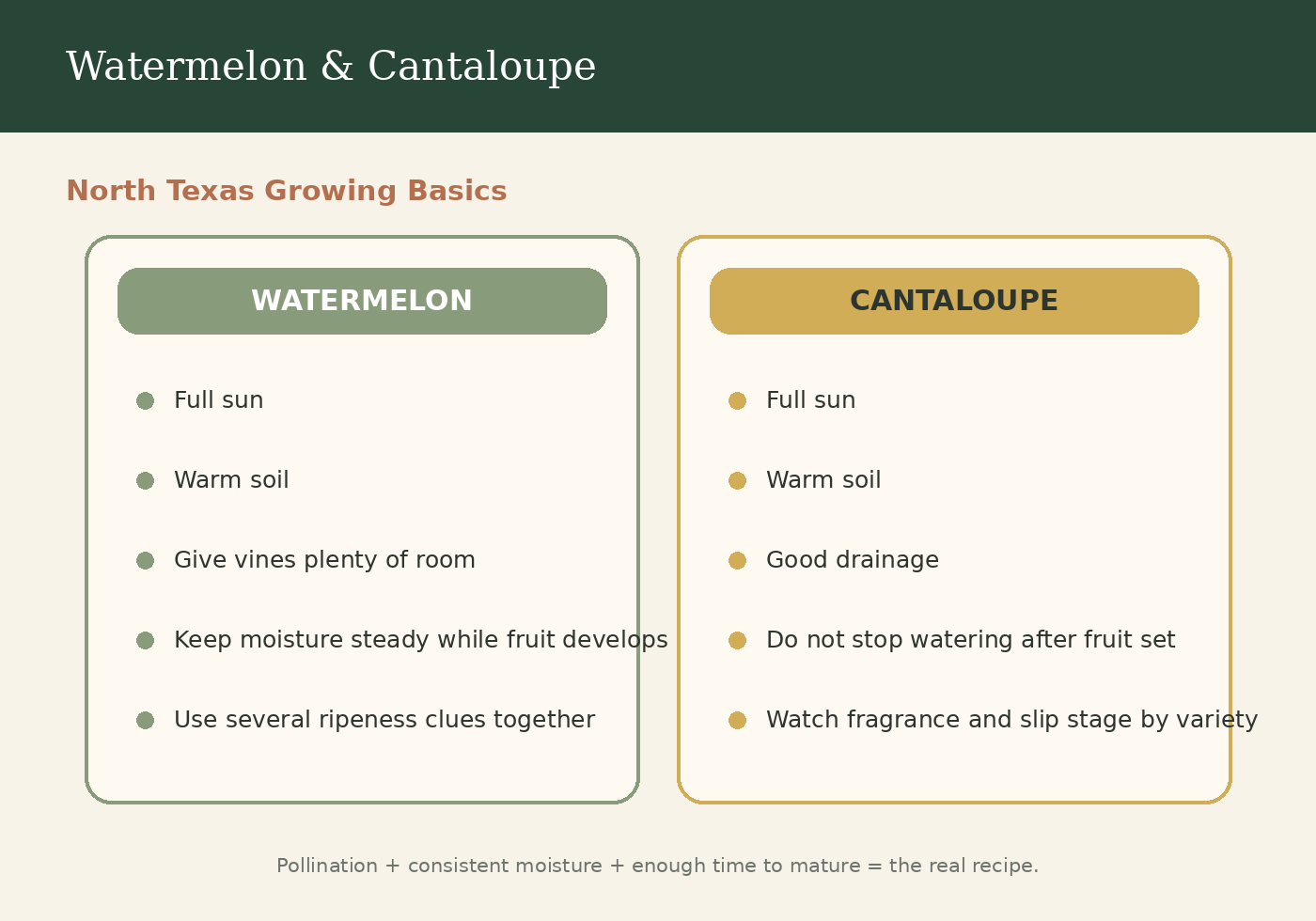
Plant melons in full sun with well-drained soil. Vines spread quickly, so plan where they are going before they start running through every neighboring bed.
Water deeply and consistently
Melons need water while vines and fruit are developing. Do not stop watering simply because fruit has formed. The better goal is steady moisture without saturating the soil or creating huge wet-dry swings.
Ground-grown vs. trellised melons
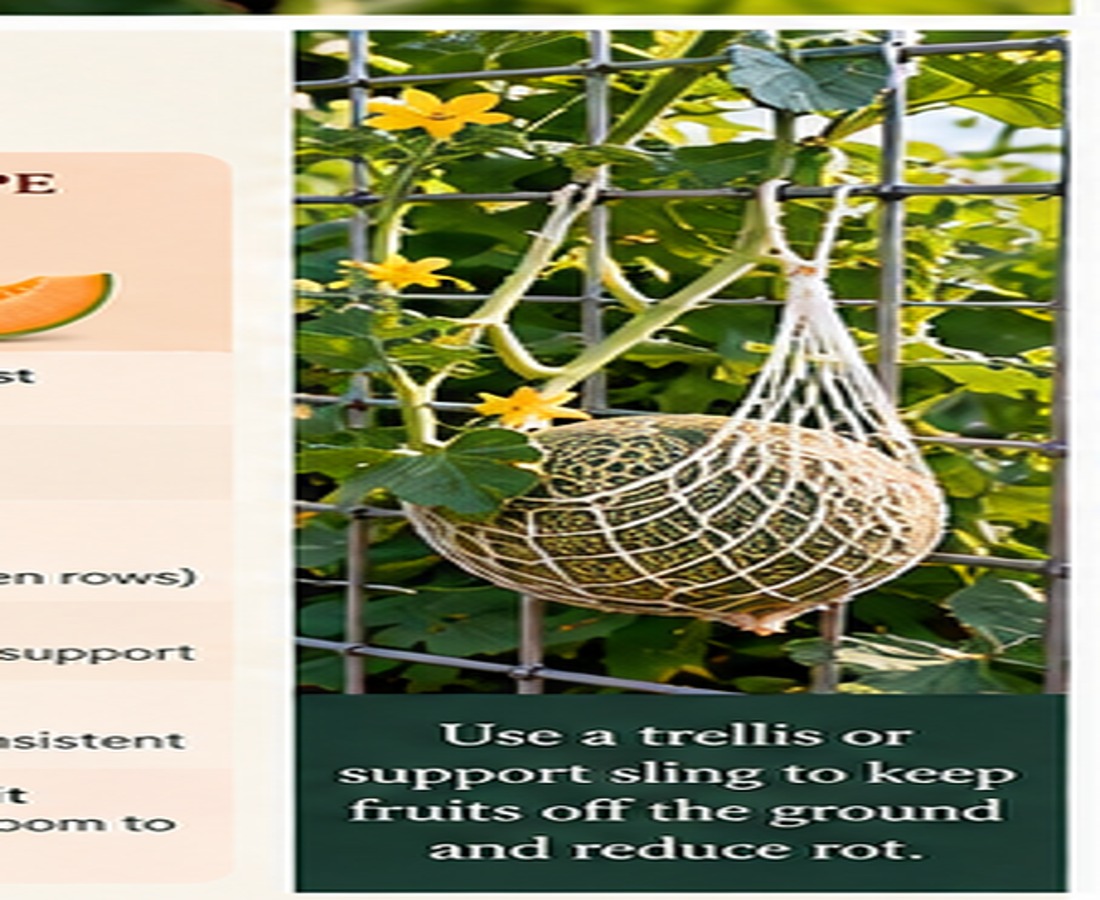
Smaller-fruited varieties can sometimes be trellised. If you grow fruit vertically, use a sling or other support as it gains weight. Fruit on the ground can be placed on a dry barrier to reduce direct soil contact.
Pollination matters
Melons depend on insect pollination. If flowers are abundant but fruit starts and then shrivels, poor pollination may be part of the problem.
Watermelon ripeness
Do not depend on the thump test alone. Use several clues together: the variety’s maturity range, the tendril nearest the fruit, the ground spot, and changes in rind appearance.
Cantaloupe ripeness
Many muskmelons become fragrant and begin to “slip” from the stem as they ripen, but harvest cues vary by variety. The seed packet or cultivar description is still useful.
Give vines enough space before they become a problem
Melon vines can cover more ground than they appear to need when seedlings are small. Plan paths and neighboring crops with mature vines in mind. Smaller-fruited varieties can sometimes be trained vertically on a sturdy trellis, but the structure needs to support the vine and developing fruit. Large watermelons are usually easier to manage on the ground unless you have a very strong support system.
Pollination is part of fruit production
Melon plants produce male and female flowers, and insects move pollen between them. It is normal to see early flowers drop without making fruit, especially when the plant is still producing mostly male blooms. If female flowers repeatedly form tiny fruit that shrivels, poor pollination may be involved. A garden with flowering herbs and pollinator-friendly plants nearby can help bring more insect activity into the melon patch.
Keep moisture steady while fruit develops
Melons need water to establish vines and fill developing fruit, but they do not benefit from alternating between drought and flooding. Deep, consistent watering is more useful than frequent surface sprinkling. Mulch can reduce evaporation and keep fruit from resting directly on bare soil. As harvest approaches, avoid unnecessary heavy watering that leaves the root zone saturated.
Ripeness looks different by crop and variety
Watermelon is commonly judged using several clues together: the tendril nearest the fruit may dry, the ground spot changes color, and the rind becomes less glossy. Cantaloupe often becomes fragrant and many varieties loosen naturally from the stem when ripe. Seed packets and variety descriptions are worth keeping because harvest clues are not identical across every melon.
Reduce fruit problems by keeping the canopy healthy
Melons need enough leaf area to feed developing fruit, so the goal is not aggressive pruning. Instead, remove clearly diseased leaves, keep vines from becoming a dense tangled mat, and direct runners where you can reach them. Watch for powdery mildew, chewing insects, and wilt symptoms as summer progresses. A plant that loses too much healthy foliage before fruit is mature may struggle to finish the crop.
Expect a learning curve with ripeness
Harvesting melons is one of those garden skills that becomes easier after you have grown the same variety more than once. Take notes on days to maturity, rind color, tendril condition, aroma, stem slip, and how the fruit tasted when opened. Those notes are far more useful next season than trying to remember whether a melon “looked ready.”
Keep developing fruit off trouble spots
Fruit resting in a wet depression can rot or attract pests. Gently position melons on dry mulch, a board, or another breathable surface if the soil stays damp. Avoid repeatedly turning large fruit once it has settled because twisting can damage the stem. The goal is simply to keep the rind clean and dry while the fruit matures.