
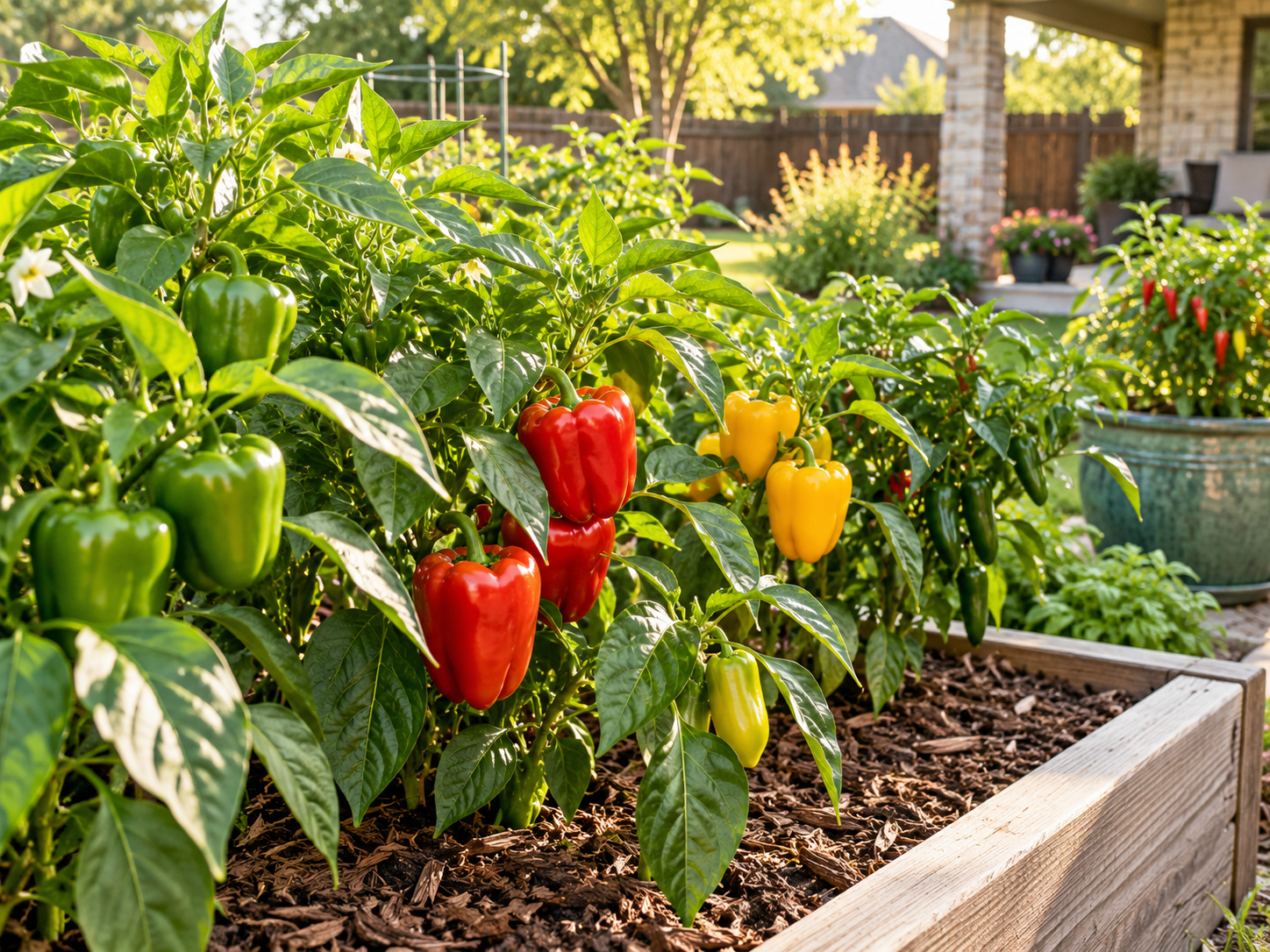
Peppers like warm weather, which makes them sound perfectly suited to Texas. They are—but they still have limits. Cold soil slows them down, extreme heat can interfere with fruit set, and inconsistent watering can create small fruit or physiological problems.
Start with healthy transplants
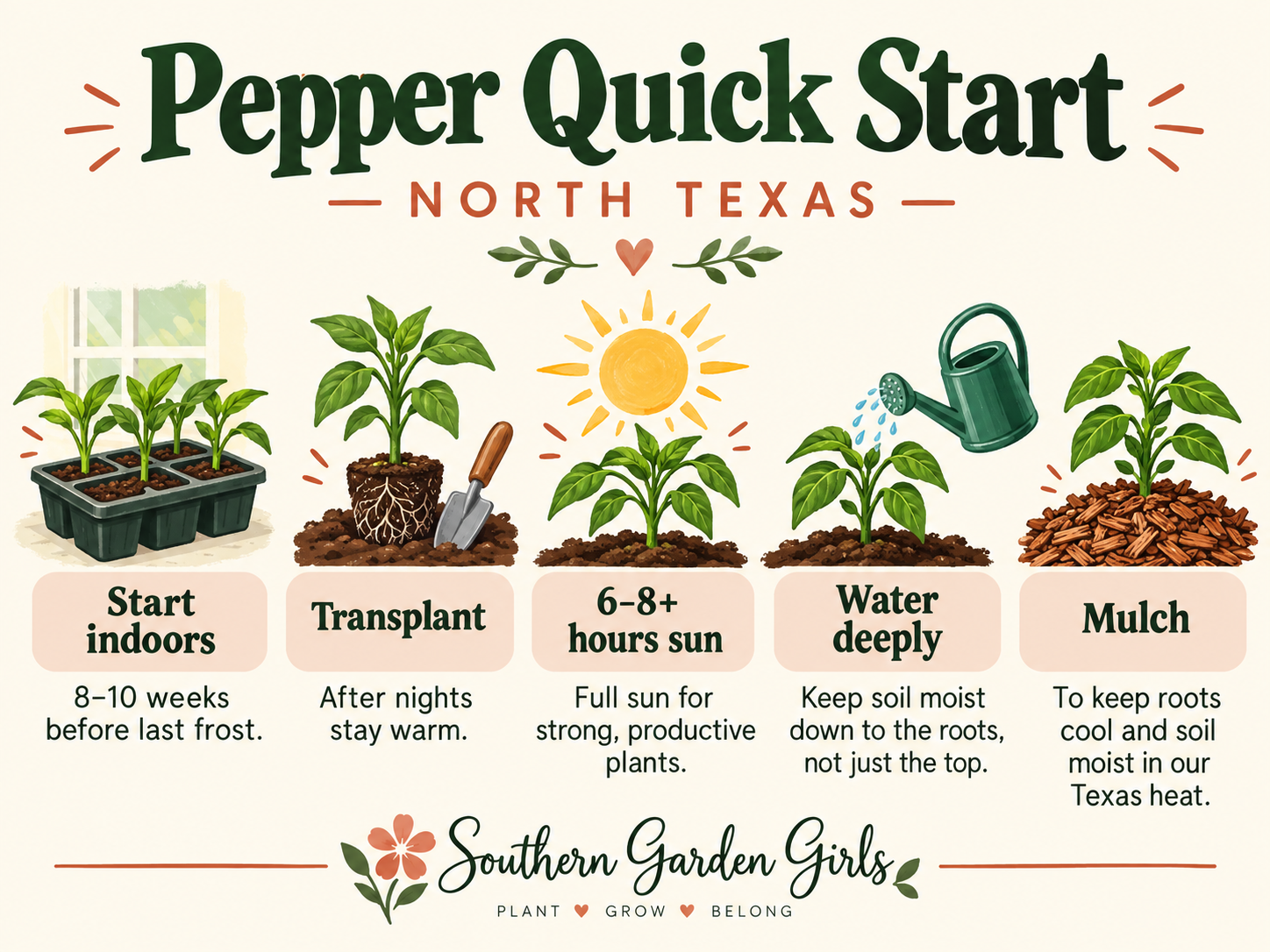
Peppers are slower than many garden vegetables, so buying sturdy transplants is often the simplest option for a home garden. Choose compact plants with healthy leaves rather than tall, stretched plants that have already become root-bound.
Wait for warm conditions
Peppers are warm-season crops. Planting them into cold soil does not give them a useful “head start.” It usually gives them stress. Use the local planting calendar instead of a random warm afternoon.
Sun, soil, and spacing
Texas A&M recommends at least six hours of sunlight and well-drained soil. Peppers can grow in many soil types, but heavy clay benefits from added organic matter and good bed preparation.
Water evenly
Keep the root zone evenly moist without saturating it. Peppers can develop blossom-end rot just like tomatoes when soil moisture swings interfere with calcium movement inside the plant.
Fertilize carefully
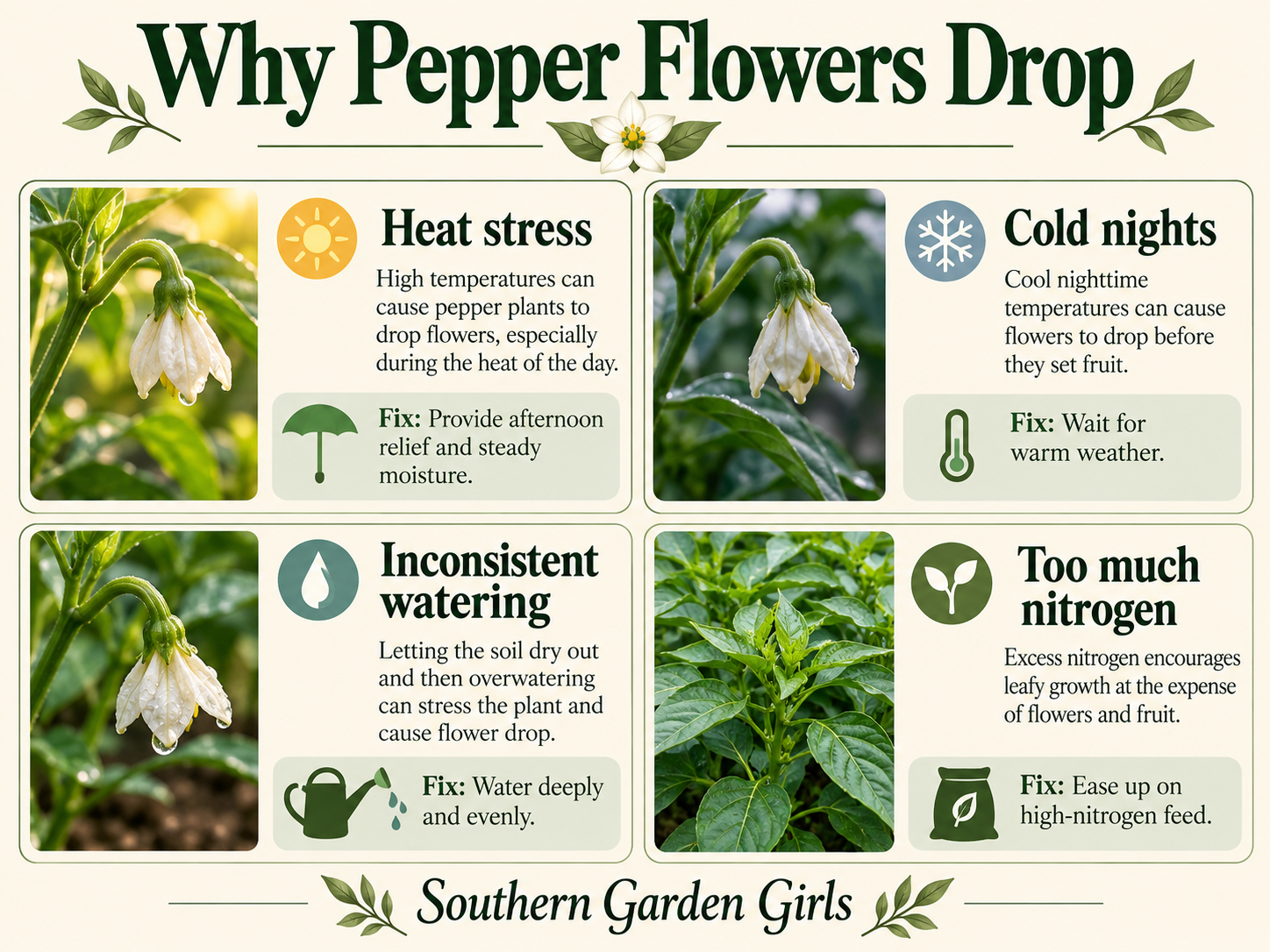
Use a soil test when possible. Heavy nitrogen can push leafy growth at the expense of fruiting. Once plants are established, steady moderate fertility is more useful than aggressive feeding.
Hot weather can slow fruit set
Peppers enjoy heat, but flowers can still abort when conditions become excessively hot or dry. Shade during the harshest afternoon exposure can sometimes reduce stress, but do not turn a pepper bed into deep shade.
Harvesting
Many peppers can be eaten either green or fully colored. Leaving them on the plant longer usually increases sweetness in bell peppers and can deepen flavor and heat characteristics in hot varieties, but it also means the plant is carrying the fruit longer.
- Plant after the soil has warmed.
- Use mulch to moderate moisture loss.
- Water the root zone instead of repeatedly wetting foliage.
- Support heavily loaded plants if branches begin to bend.
- Harvest regularly once fruit reaches usable size.
Peppers want warm soil, not just warm afternoons
A sunny day can make spring feel settled before nighttime temperatures and soil have truly warmed. Peppers often stall when transplanted too early, and a plant that sits cold and stressed for weeks does not necessarily gain an advantage over one planted a little later into better conditions. Harden transplants gradually and protect them from sudden wind and strong sun during the first days outside.
Heat changes flower production
Peppers love warmth, but extreme heat can still interfere with pollination and fruit set. During the hottest part of summer, plants may remain healthy and green while dropping flowers. That does not always mean they need fertilizer. Keep the root zone evenly moist, maintain mulch, and let temperatures moderate before assuming the plant has a nutrient problem.
Support plants before branches get heavy
Large bell peppers and heavily loaded plants can pull branches downward or split them at the main stem. A small cage, stake, or support ring installed while the plant is young is much easier than trying to tie up brittle branches later. Harvesting mature fruit regularly also reduces weight on the plant and encourages continued production.
Feed for fruit, not just leaves
Peppers need nutrients, but repeated heavy applications of high-nitrogen fertilizer can encourage leafy growth at the expense of flowering and fruiting. Start with decent soil, follow fertilizer labels, and look at the whole plant before adding more. Pale growth, slow development, or poor fruit set can come from roots, heat, moisture, or soil conditions—not only from a lack of fertilizer.
Harvest stage changes flavor and yield
Many peppers can be harvested green or allowed to ripen to red, yellow, orange, purple, or another mature color depending on the variety. Fully ripe fruit is often sweeter or more flavorful, but leaving every pepper on the plant until full color can slow the pace of new production. Harvest some earlier and let selected fruit fully ripen if you want both steady yield and mature flavor.