
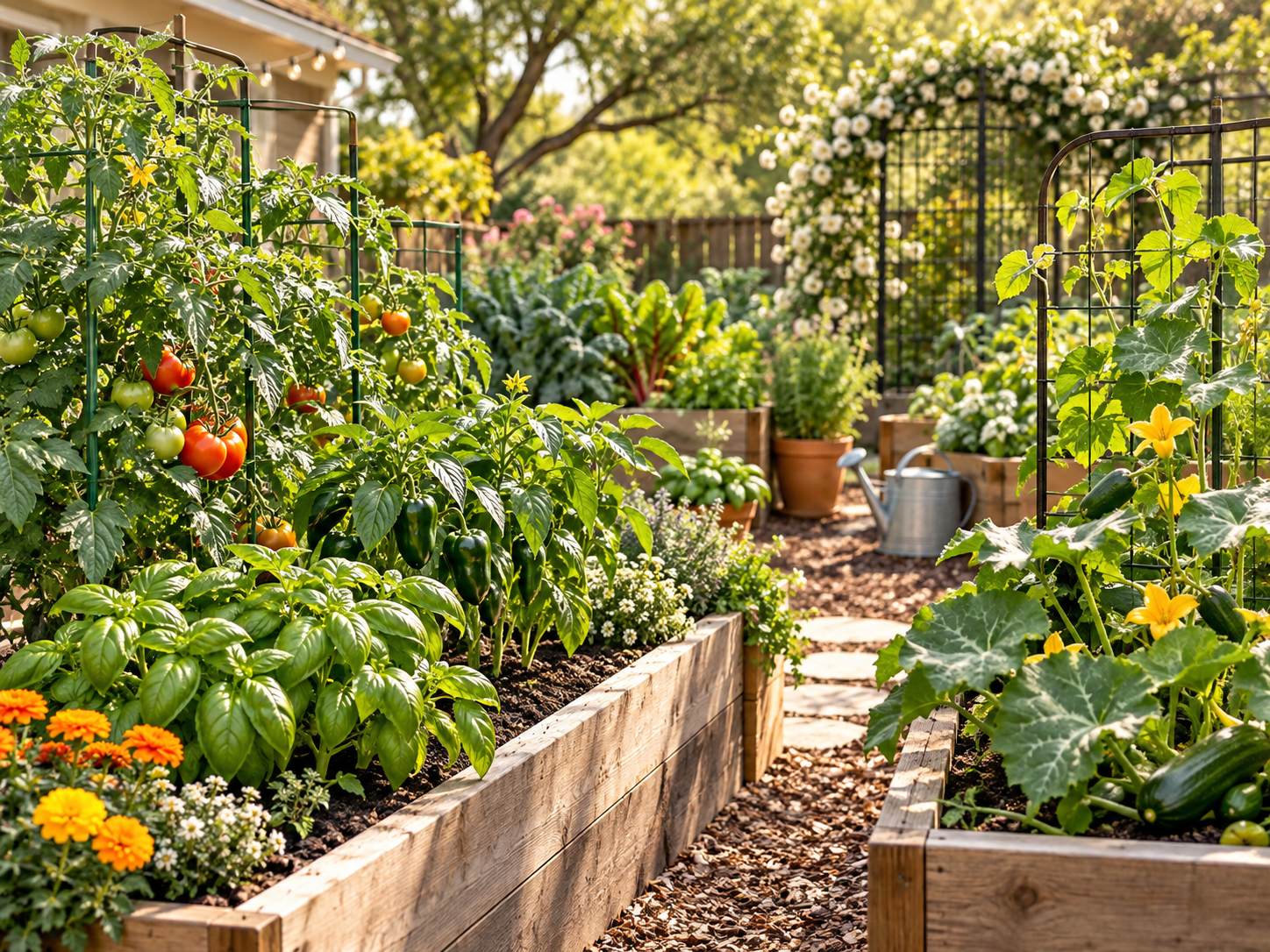
Plant now
- Plant snap and Lima beans early in the month while their spring windows are still open.
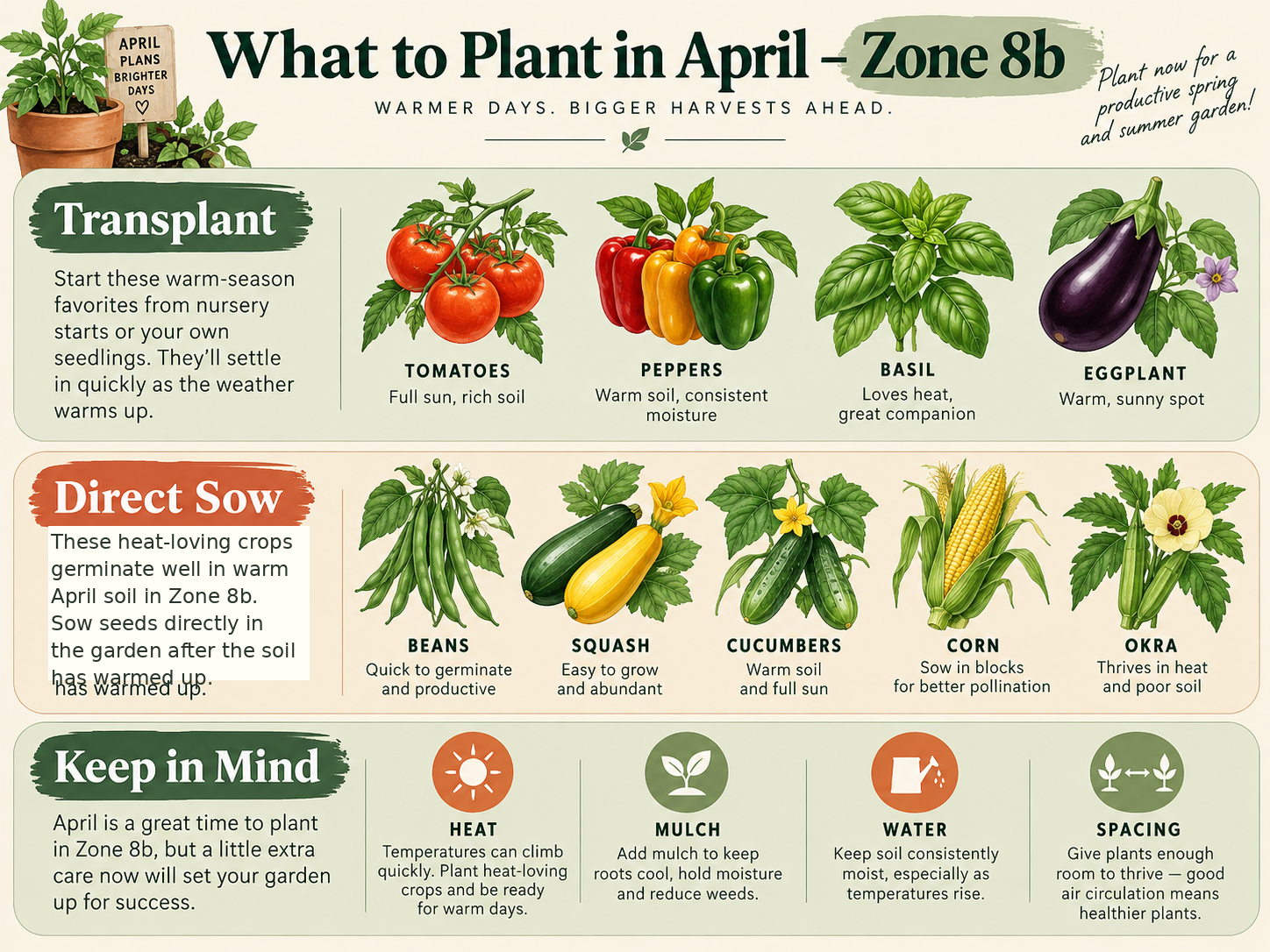
- Plant cucumbers, sweet corn, tomatoes, peppers, eggplant, okra, cantaloupe, watermelon, pumpkin, and summer/winter squash within their spring windows.
- Begin sweet potato slips around mid-April.
- Radishes can continue into mid-April; cilantro generally finishes its spring window early in the month.
Prepare next
- Mulch after the soil has warmed enough to slow moisture loss and weeds.
- Set up drip irrigation before hot weather makes watering less forgiving.
- Succession plant quick crops only when there is enough season left for them to mature.
Wait on these
- Do not crowd the garden just because everything can suddenly be planted. Leave air and harvest access.
Garden jobs for April
April is less about starting everything and more about spacing, trellising, watering, and getting warm-season crops established before summer stress.
April is when the garden begins filling quickly
Once frost risk drops and soil warms, tomatoes, peppers, beans, squash, cucumbers, corn, okra, basil, and other warm-season crops can begin occupying the spaces that winter crops used earlier. Planting everything on the same day is not required. Staggering crops can make watering, pest control, and harvest easier to manage.
Mulch before summer arrives
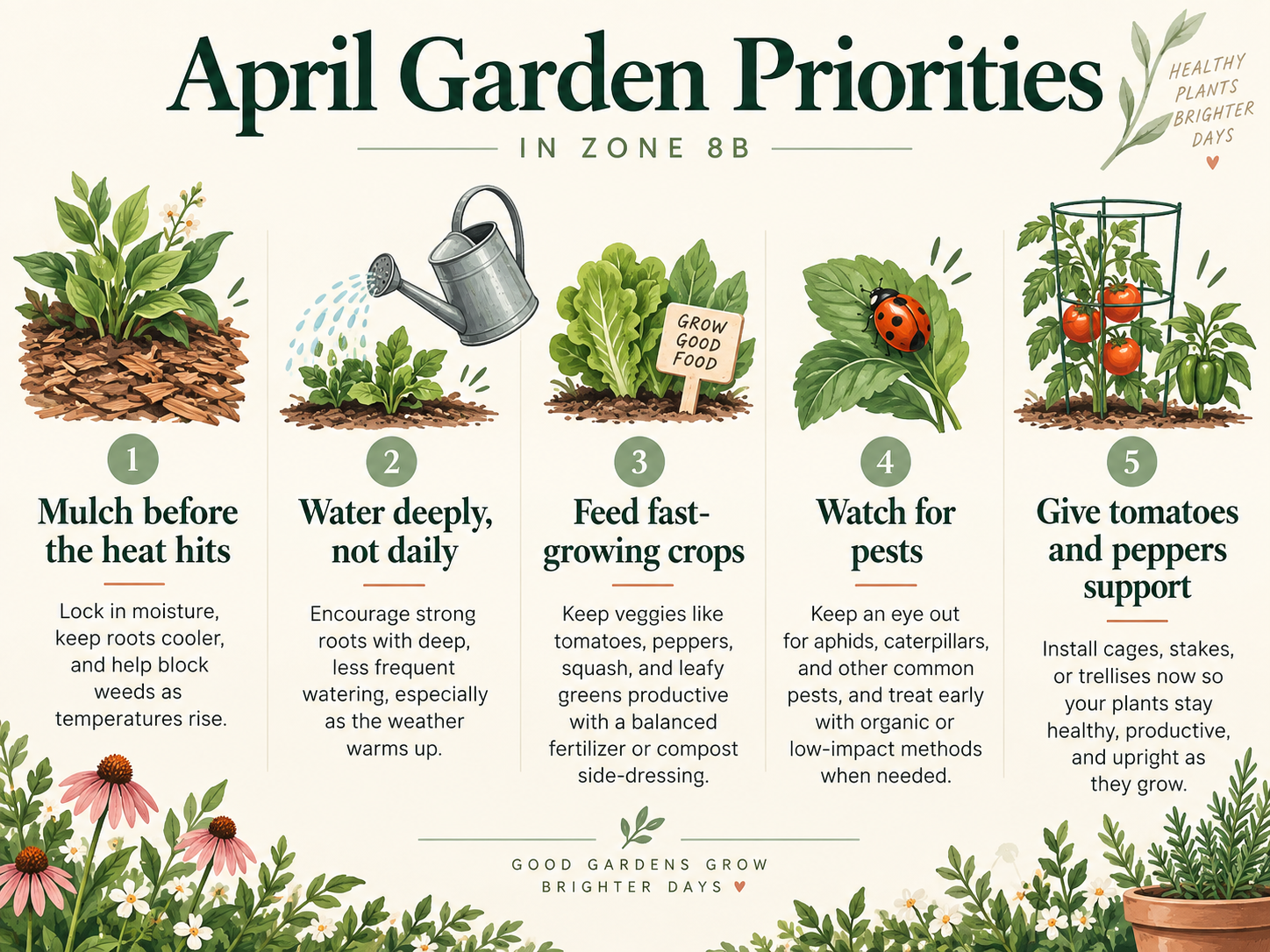
April is a useful time to establish mulch while soil still has spring moisture and temperatures are moderate. Mulch reduces evaporation, protects the soil surface, and slows weeds, but keep it away from plant stems and crowns. Installing drip lines or soaker hoses beneath mulch now prevents a much harder irrigation project after plants become large.
Do not mistake fast growth for unlimited feeding
Warm weather can make vegetables grow dramatically in a short period. Follow a sensible fertility plan rather than adding fertilizer every time plants look vigorous. Too much nitrogen can create oversized leafy plants with weak flowering or delayed fruit. Use plant appearance, soil history, and label directions together.
Scout early for insects and disease
Warm weather wakes up more than vegetables. Check new growth for aphids, beetles, caterpillars, and eggs, and look at the lower leaves of tomatoes and squash for early spotting. Small problems are easier to manage with hand-picking, pruning, barriers, or targeted treatment before pests spread across the bed.
Also watch how plants respond to irrigation. Spring rain can make a normal watering schedule unnecessary for several days, while warm wind can dry beds faster than expected. Automatic systems are helpful, but they should not replace checking the soil.
Common April mistakes
Warm weather makes it easy to overplant. Tomatoes, squash, cucumbers, peppers, corn, beans, herbs, and flowers all look small when they go into the ground, but many become large plants within weeks. Give them mature spacing now instead of planning to “fix it later.” Crowding makes harvesting harder and increases shade and disease pressure.
Another mistake is assuming spring rain means irrigation does not need to be checked. New transplants have shallow root systems, and one windy day can dry the root ball even when deeper soil remains moist.
Build a support system before the plants hide it
Cages, trellises, stakes, and string systems should go in early. Installing them later means pushing posts through active roots and wrestling with branches. Beans and cucumbers also climb more cleanly when they find support before sprawling across neighboring crops.
Start harvesting as soon as crops are ready
Herbs, lettuce, radishes, peas, and early warm-season vegetables should be picked regularly. Harvesting keeps plants productive and prevents good food from aging in the garden while you wait for a “big harvest day.”
April checklist
Confirm irrigation, mulch around established plants, install supports, scout for pests, and keep succession sowings organized. Label varieties while you still remember what went where. April growth happens quickly, and a bed that looks roomy at planting can become crowded before the end of the month.
Use April to establish routines
The habits you build now—checking soil moisture, harvesting regularly, tying plants, and scouting leaves—are what keep the garden manageable later. April is easier than July, so use the comfortable weather to make those routines automatic before the garden becomes larger and hotter.