
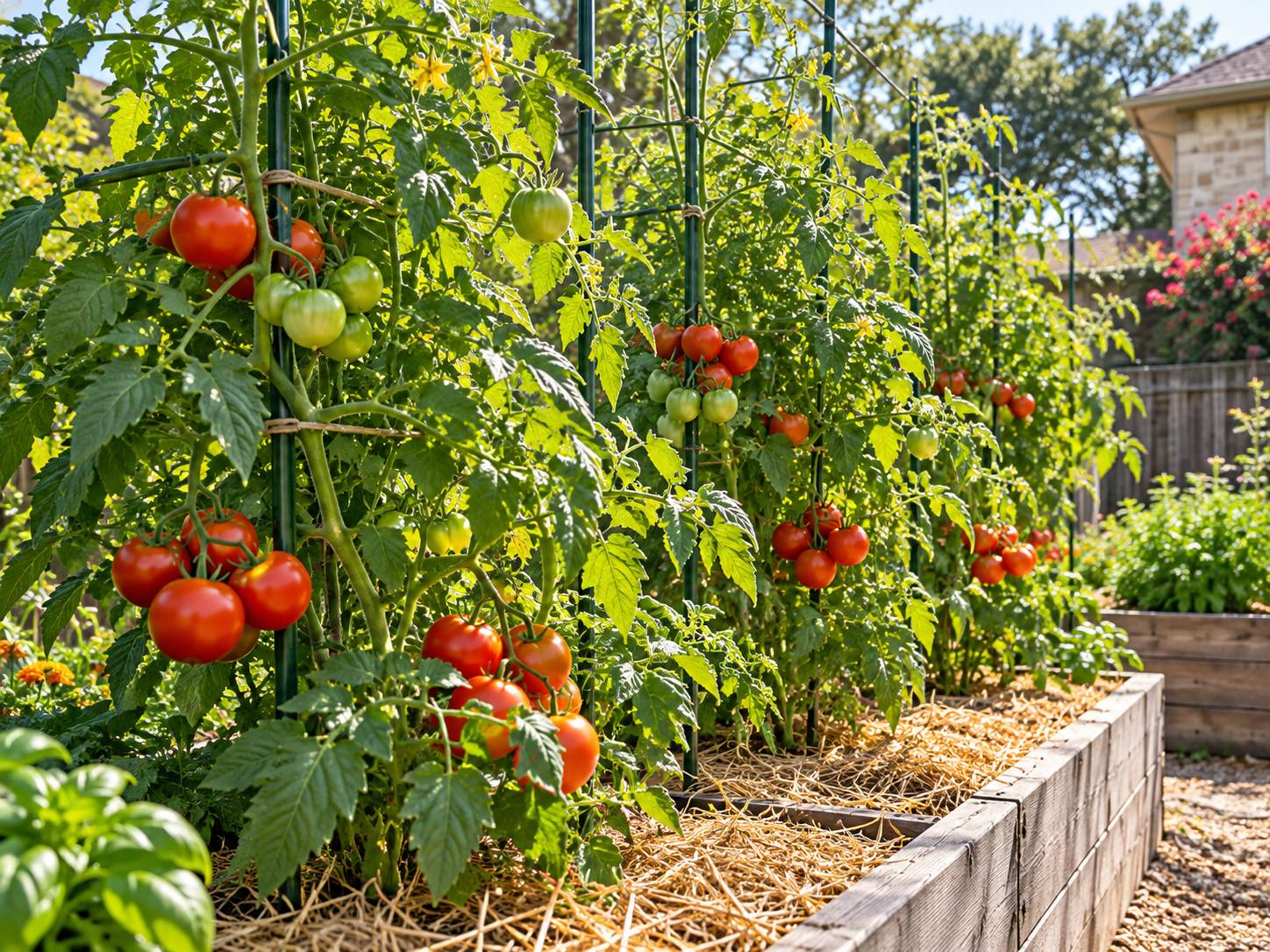
Tomatoes are probably the crop most likely to make a Texas gardener feel brilliant in April and personally betrayed by July. They are not impossible here. They are just much more sensitive to timing, heat, drainage, and uneven watering than a lot of other vegetables.
Start with timing
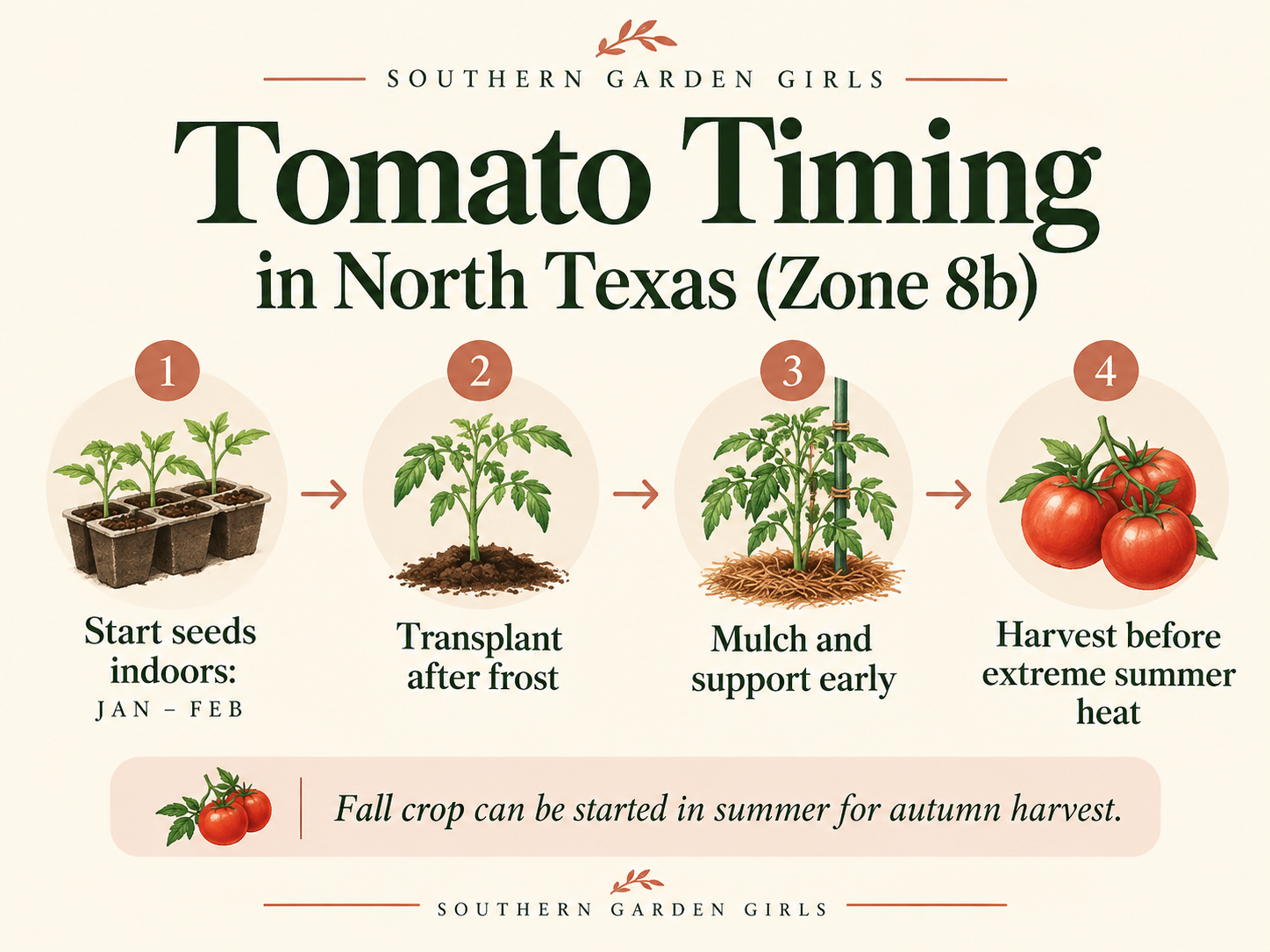
Tomatoes need warm soil and frost-free weather, but they also need enough mild weather to flower and set fruit before extreme summer heat becomes the main event. That is why getting spring transplants in during the correct local window matters so much.
North Central Texas also gets a second chance with a fall tomato crop. The trick is planting fall transplants early enough that they can establish and produce before the first hard freeze.
Pick varieties with Texas in mind
Choose varieties that fit both your space and your season length. Smaller-fruited tomatoes often mature faster than large slicing types, which can be useful when you are trying to harvest before the weather becomes hostile.
Determinate tomatoes stay more compact and tend to produce a heavier crop over a shorter period. Indeterminate tomatoes keep growing and producing as long as conditions allow, which means they need stronger support and more room.
Give them sun and drainage
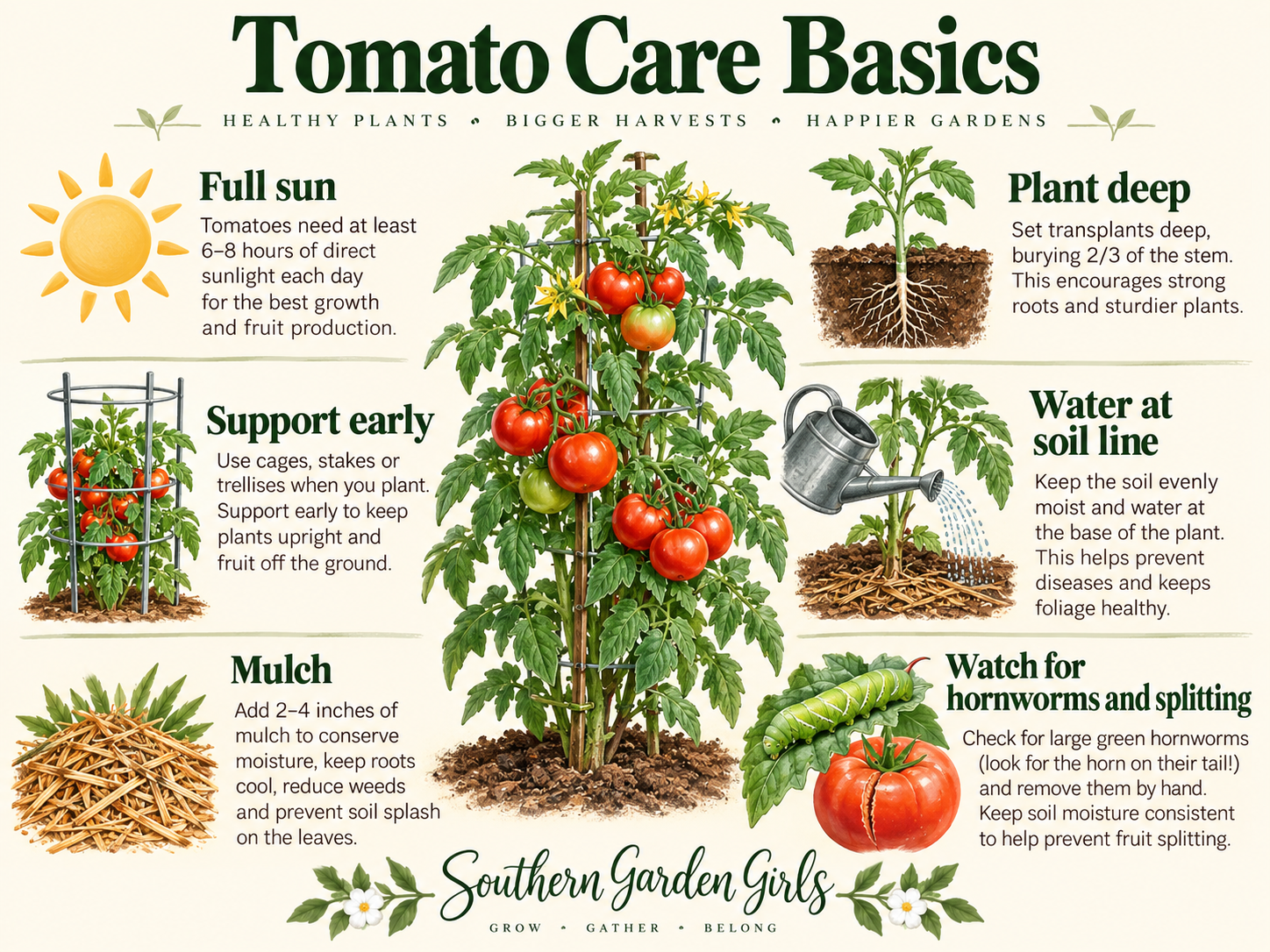
Use a site with abundant direct sun and soil that drains well. Tomatoes do poorly in soggy soil, and poor drainage can create root problems long before the foliage tells you what is wrong.
Support them at planting time
Install cages, stakes, or trellis systems when the plants are young. It is much easier than trying to force a cage over a sprawling tomato later.
Water consistently
Tomatoes are one of the crops that punish erratic watering. Long dry periods followed by heavy watering can contribute to cracking and other fruit problems. Keep soil moisture reasonably even and water deeply enough to wet the root zone.
Drip irrigation is especially useful because it delivers water slowly to the root zone without repeatedly wetting the leaves. Mulch helps reduce evaporation and makes moisture swings less dramatic.
Do not overfeed
Too much nitrogen can create a giant green plant with disappointing fruit production. A soil test is the best guide. If you fertilize without one, follow a vegetable fertilizer label rather than repeatedly feeding because the plant looks impressive.
Harvest before wildlife does
Texas A&M notes that tomatoes can be harvested at the pink stage and allowed to finish ripening indoors without hurting flavor. That can be useful when birds, insects, cracking, or weather are becoming a problem.
Support is easier before the plant needs it
Indeterminate tomatoes can quickly outgrow lightweight cages. Install sturdy cages, stakes, trellises, or another support system at planting time so roots and branches are not disturbed later. Tie stems loosely with soft material and keep checking as the plant grows; a tie that was comfortable in April can become restrictive by June.
North Texas tomatoes have more than one season
Spring plants are racing against summer heat, while a fall crop is racing against the first damaging cold. That is why variety choice and maturity time matter so much here. Smaller-fruited or earlier varieties often set and ripen more reliably within a limited weather window. A giant slicer can be worth growing, but it should not be the only tomato in the garden if dependable harvest is the goal.
Sanitation slows problems from piling up
Remove badly diseased leaves, keep foliage off the soil when possible, and avoid leaving rotting fruit beneath plants. Good airflow does not prevent every disease, but crowded, constantly wet foliage creates conditions where problems spread faster. At the end of the season, remove heavily diseased vines rather than automatically composting them in a cool backyard pile.
Harvest before the weather takes the fruit
Tomatoes do not always need to remain on the vine until they are completely soft and fully colored. Fruit that has begun the ripening process can finish indoors, which is useful when birds, cracking rain, extreme heat, or an approaching storm threaten the crop. Handle partially ripe tomatoes gently and keep them at room temperature rather than refrigerating them immediately.