
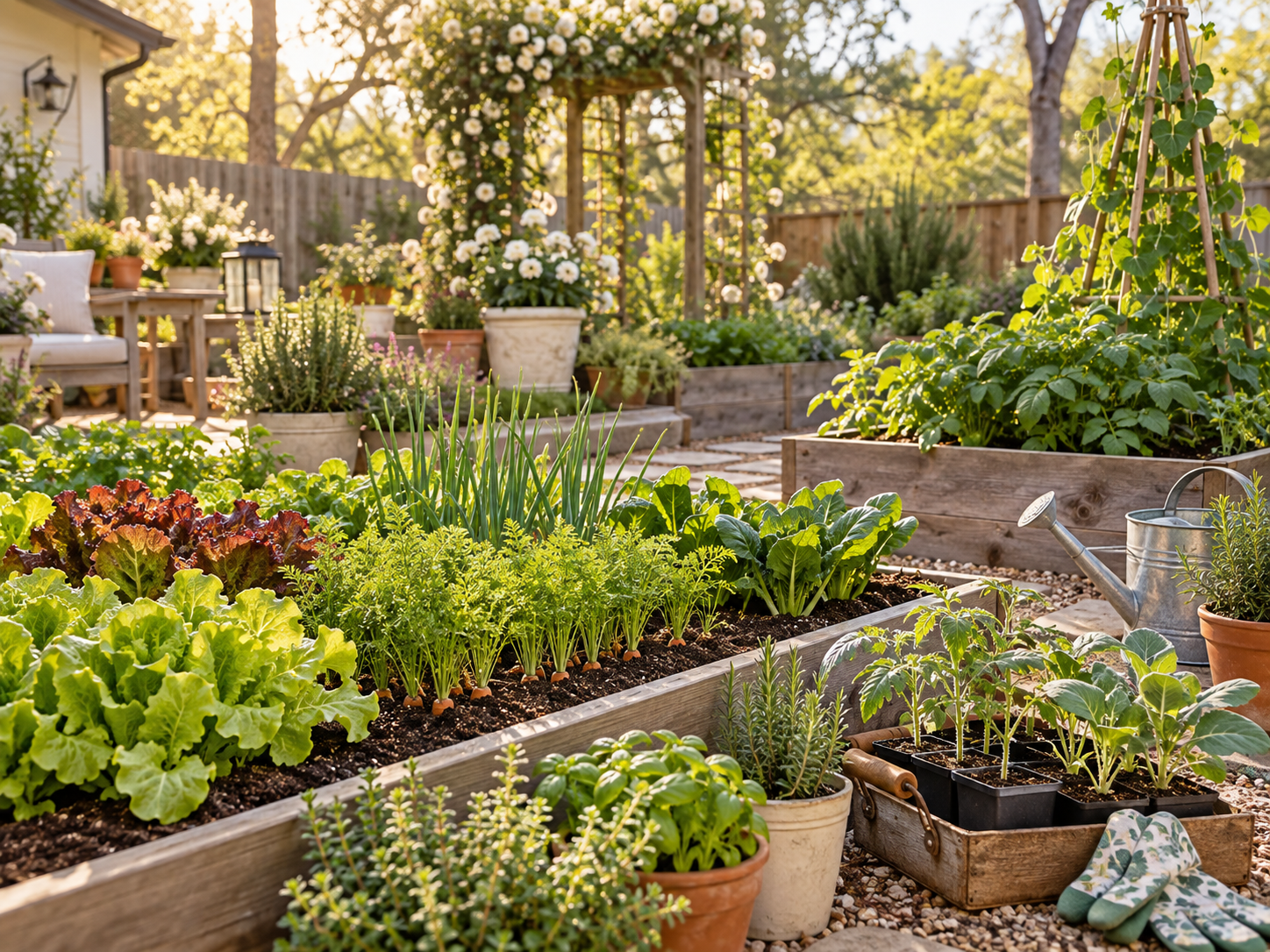
Plant now
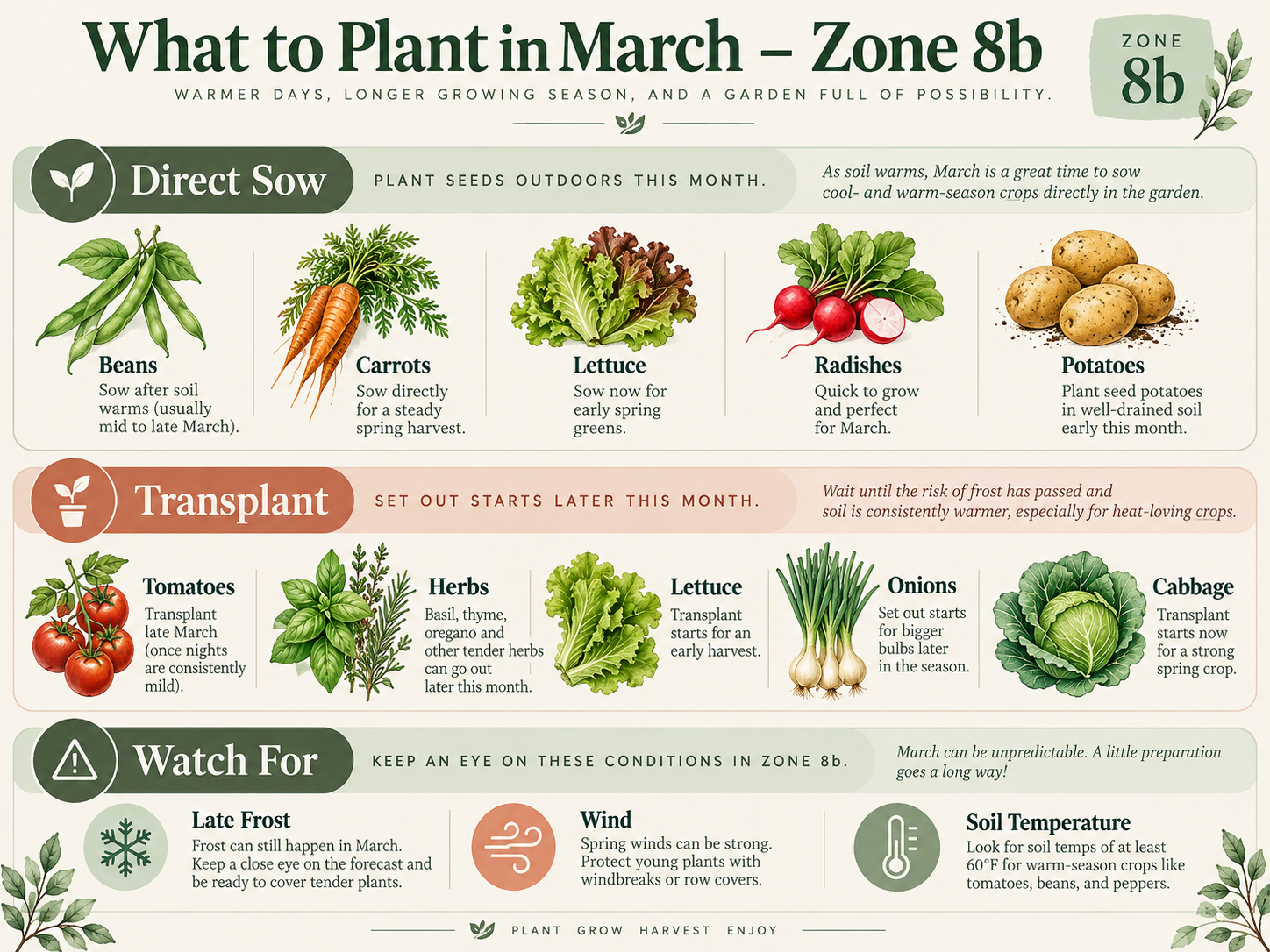
- Continue Swiss chard, cilantro, collards/kale, kohlrabi, lettuce, parsley, radish, spinach, and turnips early in the month where their windows remain open.
- Begin tomato transplants in March, with frost protection ready if needed.
- From around mid-March, sweet corn begins its spring window.
- After roughly mid-March, snap beans, Lima beans, cucumbers, mustard, and other warm-season crops begin opening up as soil warms.
- Late March brings summer squash, winter squash, pumpkin, black-eyed peas, peppers, and watermelon into range.
Prepare next
- Check actual soil temperature instead of relying only on the air temperature.
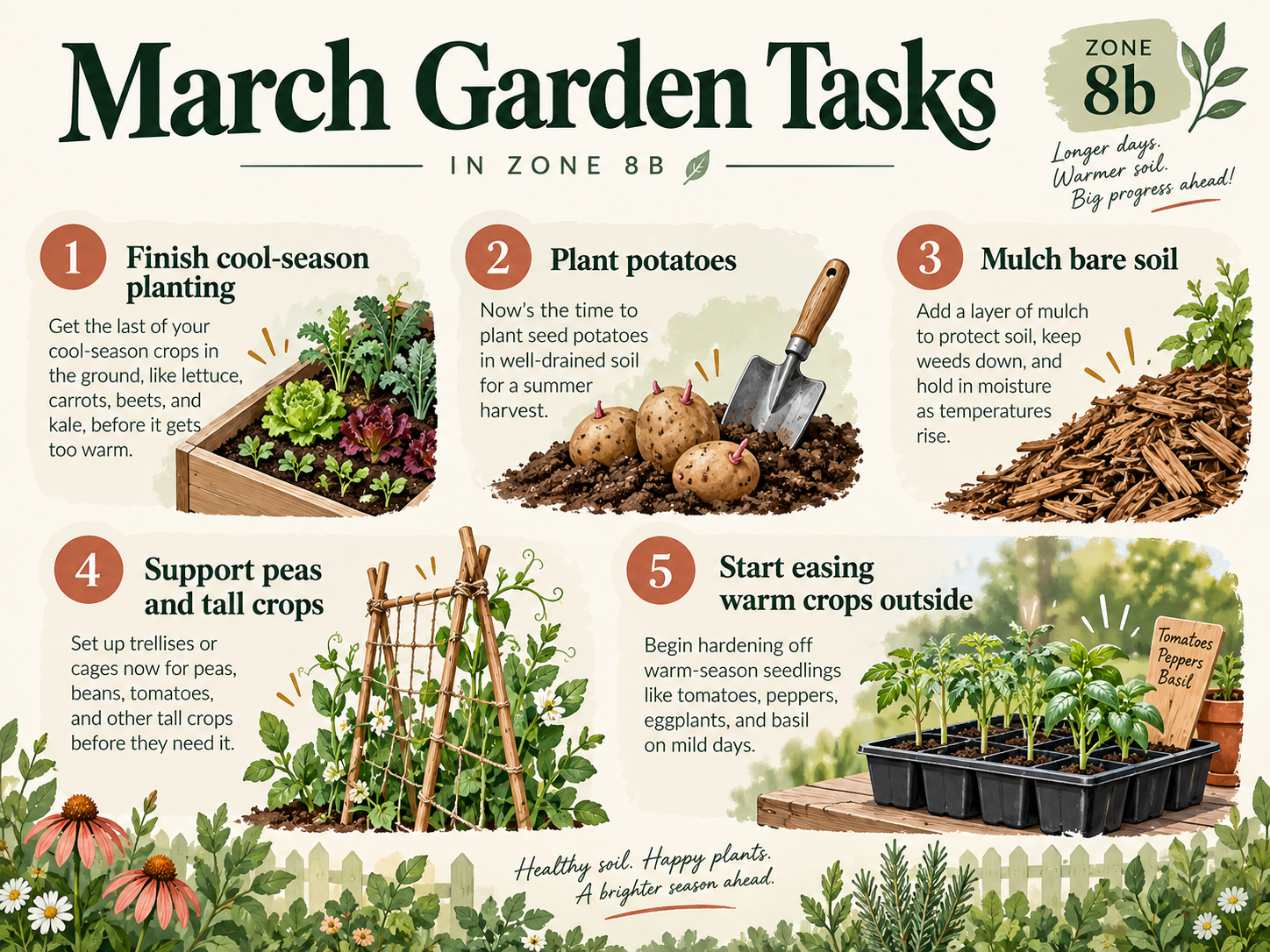
- Put trellises and cages in place before fast-growing spring crops take over.
- Keep row cover or another frost-protection plan handy.
Wait on these
- Okra, eggplant, cantaloupe, and sweet potatoes generally do better once April warmth is more established.
Garden jobs for March
March rewards flexibility. Plant in stages instead of trying to put the entire warm-season garden in on one weekend.
March rewards patience more than enthusiasm
North Texas can deliver warm afternoons followed by another cold night, so March planting is a balance between opportunity and restraint. Cool-season crops can keep moving, potatoes and other spring crops can go in during their proper window, and warm-season transplants can begin hardening off. That does not mean every tomato or pepper belongs in the ground the first sunny weekend.
Watch soil temperature and wind
Warm-season plants respond to the conditions around their roots, not just the daytime air temperature. Cold, wet soil can stall growth even when afternoons feel pleasant. March wind can also dry small transplants surprisingly fast. Harden plants gradually, secure tall seedlings, and check moisture after windy days rather than waiting for leaves to wilt.
Install support before growth accelerates
Peas, tomatoes, beans, and other climbing or sprawling crops are easier to manage when trellises and cages are already in place. Spring growth can accelerate quickly once temperatures stabilize. Installing structures early also prevents you from damaging roots later while forcing stakes through a crowded bed.
Use March to finish cool-season crops cleanly
As temperatures rise, lettuce, spinach, cilantro, peas, and other cool-season crops may begin growing faster and then move toward bolting. Harvest aggressively while quality is good. Removing a crop at the right time is part of successful succession planting; keeping it until it is bitter or exhausted can cost valuable spring space.
Prepare warm-season beds as crops come out. Add a modest layer of compost if needed, restore mulch after planting, and confirm irrigation reaches every transplant. This gradual turnover is easier on the gardener and the soil than clearing everything and rebuilding the garden in one weekend.
Common March mistakes
The biggest one is planting tender crops during the first warm spell. A tomato that spends two weeks cold and stalled has not really gained time. The second is forgetting wind. March can dry young transplants quickly and can snap tall seedlings that were grown indoors without much air movement.
Hardening off solves both problems gradually. Start plants in a protected spot, increase exposure over several days, and bring them back inside or cover them if a cold night appears in the forecast.
Use empty spaces temporarily
If a warm-season bed will not be planted for several weeks, quick radishes, baby greens, or another fast cool-season crop can sometimes use the space first. The key is choosing something that will be harvested before the next crop needs the bed. Temporary use is productive; creating a traffic jam is not.
Begin the pest routine now
As temperatures rise, aphids, caterpillars, beetles, and other insects become more active. Start looking under leaves before damage is obvious. Early scouting makes it possible to use simple controls—hand removal, pruning, barriers, or targeted treatment—before the problem spreads across the garden.
March checklist
Watch nighttime lows, harden warm-season seedlings, finish harvesting cool-season crops as quality declines, plant support structures early, and keep mulch ready for newly planted beds. If a weather window looks questionable, waiting several days is usually easier than protecting an entire bed of tender transplants from an avoidable cold snap.