
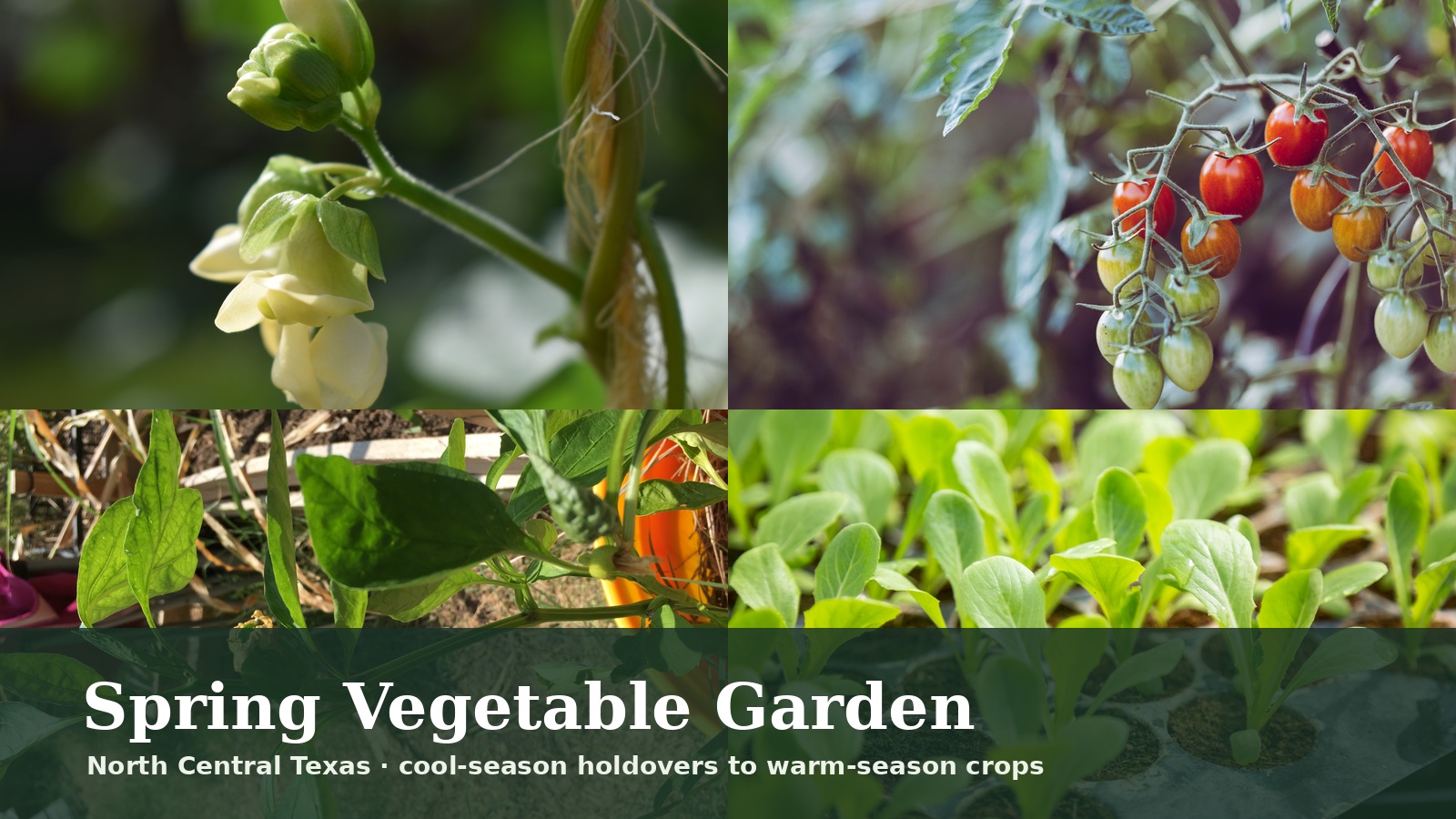
A spring garden can include beans, peas, squash, tomatoes, peppers, melons, pumpkins, cilantro, and more—but they do not all need the same timing, spacing, watering, or pest strategy.
Cool-season holdovers: peas and cilantro
Peas and cilantro belong to the cooler side of spring. Plant them in their local windows and expect heat to end the season faster than it would in a cooler climate. Give peas support when the variety needs it, and succession sow cilantro if you want a longer harvest.
Beans
Beans are straightforward once the soil warms, but bush and pole types grow differently enough that they deserve their own guide.
Spring is a sequence, not a single planting date
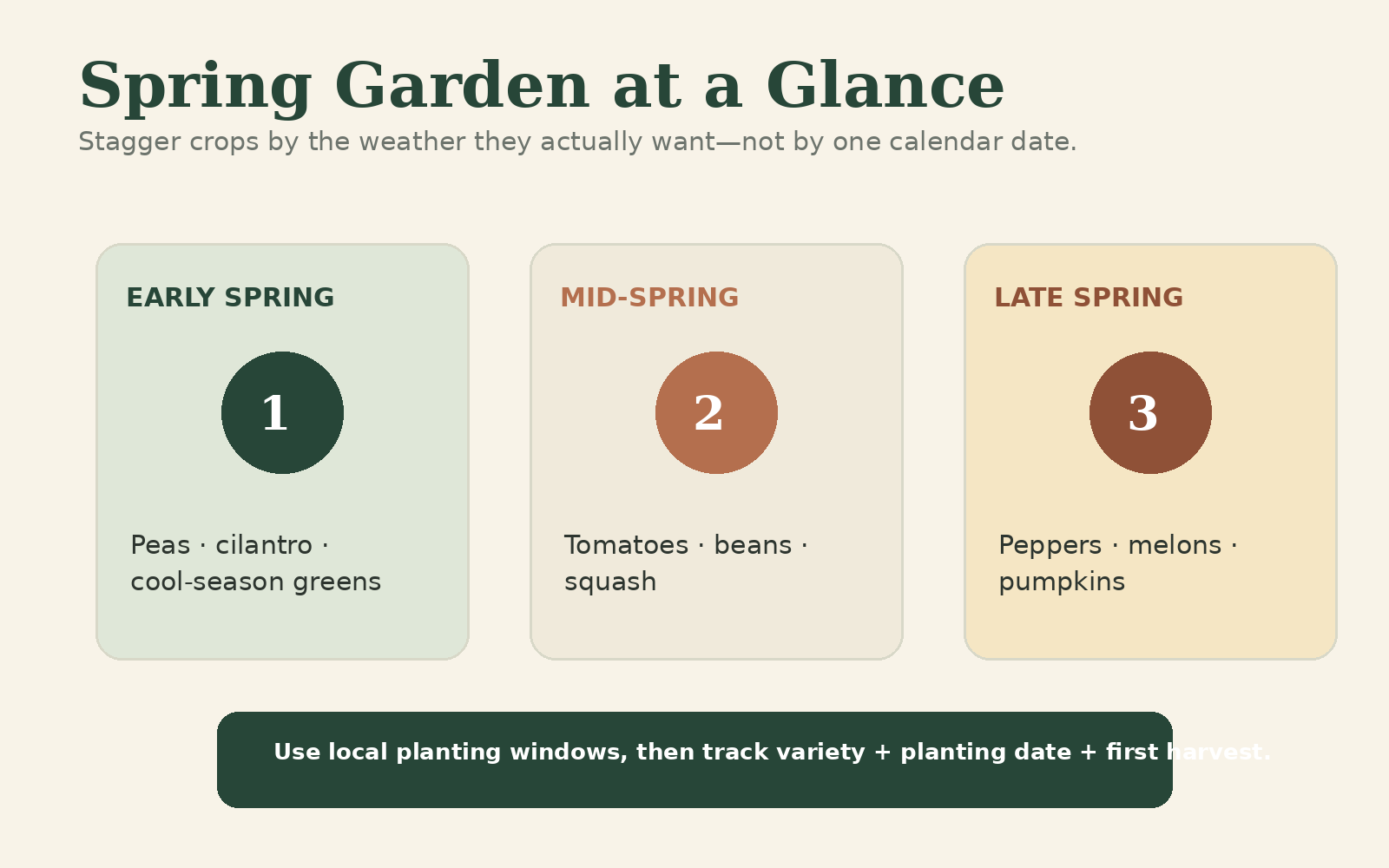
Cool-season crops may still be producing while tomatoes are being hardened off and beans are waiting for warmer soil. Treating spring as one big planting weekend creates unnecessary risk. Use the beds in stages: harvest or remove finished cool-season plants, prepare that space, then move the next crop in when its conditions are actually right.
Decide which crops deserve the best space
Tomatoes, peppers, squash, cucumbers, and melons all compete for sunny areas, but they do not use space the same way. Put tall trellised crops where they will not shade shorter plants and give sprawling vines a direction to travel. Herbs and flowers can fill smaller edges and gaps without sacrificing the center of the bed. A simple sketch before planting prevents crowded midsummer beds.
Plan for summer while planting spring
Mulch, irrigation, sturdy support, and access paths are much easier to install before plants become large. A spring garden that looks slightly open may be perfectly spaced for June. Resist filling every empty patch just because seedlings are small. Mature tomatoes and squash can quickly occupy several times their original footprint.
Keep fall in the back of your mind
North Texas does not end with summer crops. By late summer, space will be needed again for brassicas, roots, greens, herbs, garlic, and peas. Note which spring crops are likely to finish first so those beds can transition cleanly instead of sitting full of declining plants when the fall planting window opens.
Track the weather pattern, not one forecast screen
Spring decisions are easier when you watch the trend for several days rather than reacting to one unusually warm afternoon. Nighttime temperatures, soil warmth, wind, and rainfall matter just as much as the daytime high. A stable run of suitable weather gives warm-season transplants a much better start than planting into a temporary warm spell followed by cold, wet conditions.
Use the spring garden as a trial, not a verdict
One poor variety or one badly timed planting does not mean a crop cannot grow in North Texas. Record the variety, timing, weather, and major problems before deciding whether to give up on it. Sometimes the lesson is to plant earlier, choose a faster variety, improve support, or move the crop to a different bed rather than abandoning it altogether.
Tomatoes and peppers
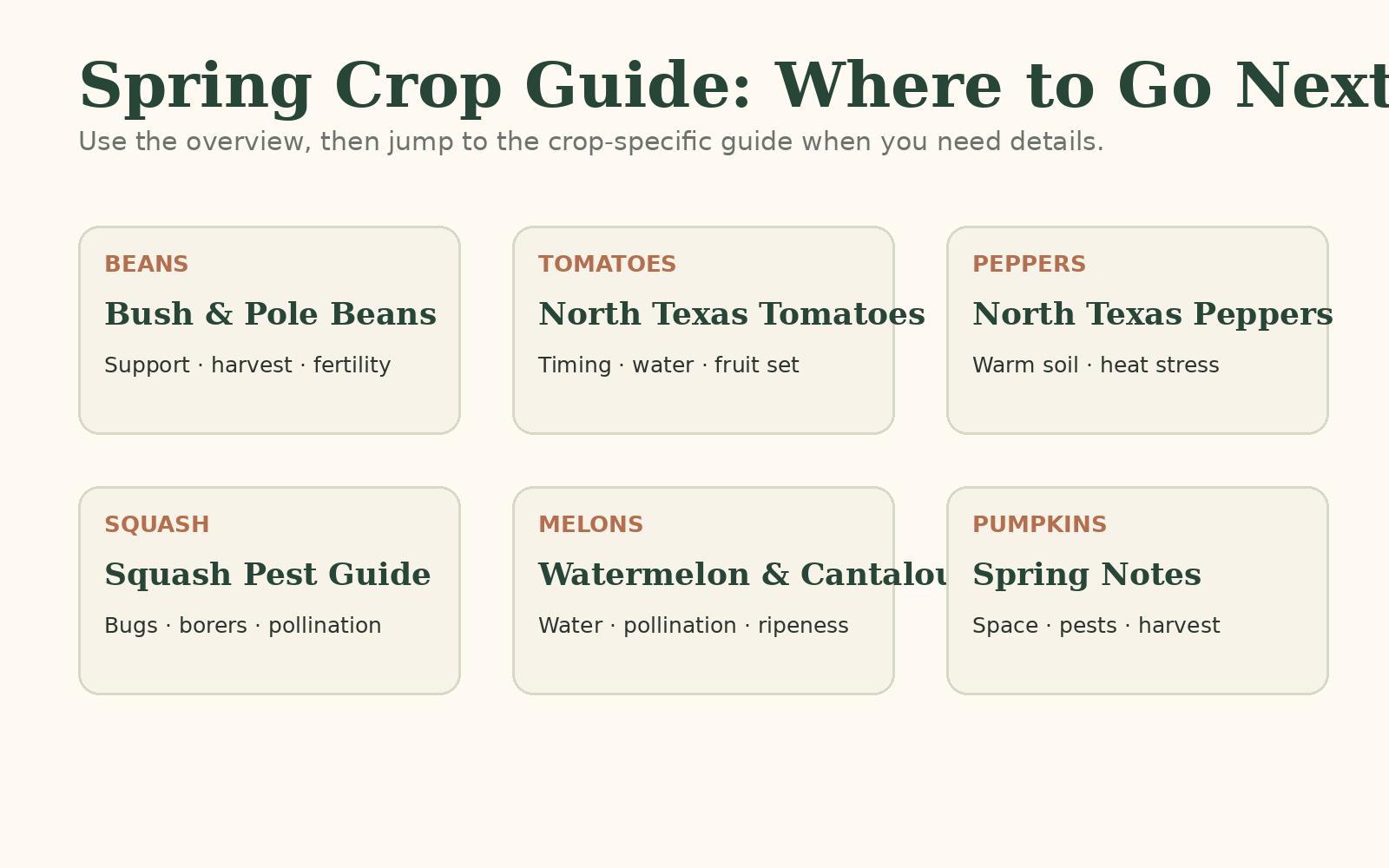
Both crops depend heavily on timing, steady moisture, and getting established before extreme summer heat. Rather than repeat those details here, use the dedicated guides.
Squash and zucchini
They grow fast and can be extremely productive, but pests can also take them down quickly. Give plants room, water at the soil line when possible, and inspect leaves and stems regularly.
Squash bugs, vine borers & other squash problems →
Watermelon and cantaloupe
Both need full sun, warm soil, room for vines, and reasonably consistent moisture while fruit develops. Their harvest cues are different enough that I moved the full discussion into a separate melon guide.
Growing Watermelon & Cantaloupe in North Texas →
Pumpkins
Pumpkins need full sun, enough room for the variety, and close pest monitoring. Small-fruited types can sometimes be trellised with proper support. Harvest when the fruit reaches mature color and the rind has hardened.
The best way to plan the spring garden
Do not plant every spring crop on the same day. Use the planting calendar, stagger crops by season, and keep a simple record of the variety, planting date, first harvest, pest problems, and whether it earned space again.