
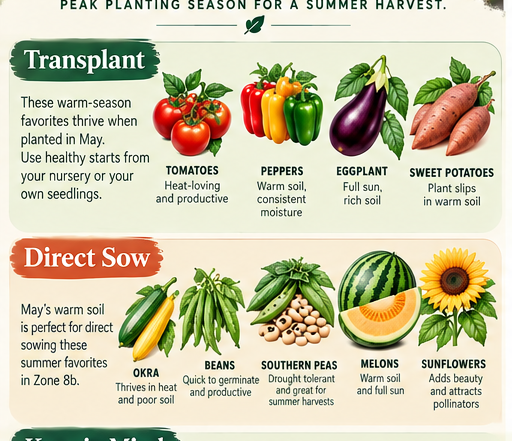
Plant now
- Finish peppers within their spring window through late May.
- Continue sweet potato slips through roughly the end of May or very early June.
- If you are planting a late warm-season crop, choose fast-maturing varieties and make sure irrigation is reliable.
Prepare next
- Start watching for spider mites, squash bugs, aphids, and other heat-season pests before they become a large infestation.
- Mulch bare soil and check emitters before temperatures climb further.
- Plan where exhausted spring crops will be removed and what, if anything, will replace them.
Wait on these
- Do not keep replanting cool-season crops that are already bolting in the heat.
- Many spring planting windows are closing, so 'the nursery still has it' is not the same thing as 'this is ideal planting time.'
Garden jobs for May
Harvest often, keep weeds from stealing water, and protect soil moisture. May is where good spring setup starts paying off.
May is the bridge into summer management
By May, most warm-season crops are actively growing and the garden begins using water much faster. Tomatoes and peppers need support, beans and cucumbers may already be climbing, and squash can go from small plants to broad canopies in a matter of days. Walk the garden often enough to catch tying, thinning, and pest problems while they are still simple.
Keep new plantings from drying out
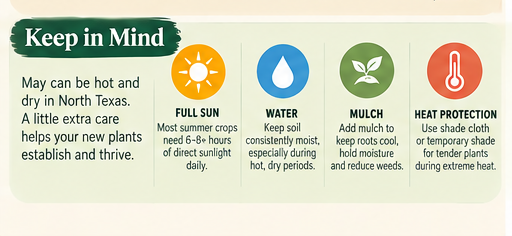
Freshly sown seeds and young transplants have smaller root systems than established plants and cannot reach deep moisture as well. Keep the upper root zone consistently moist during establishment, then transition to deeper watering as roots expand. Mulch after seedlings are large enough that it will not bury them.
Prepare for the heat rather than reacting to it
Shade cloth, irrigation repairs, mulch, and sturdy trellises are easier to deal with before the first prolonged hot spell. Plants that enter summer with established roots and consistent moisture handle stress better than those already struggling from irregular watering or root damage.
Harvesting begins to become routine
Beans, squash, cucumbers, herbs, and early tomatoes can move from “almost ready” to oversized quickly. Check productive plants often. Regular harvest improves quality and keeps many crops producing. Leaving giant cucumbers or squash hidden under leaves uses energy that could have gone into younger fruit.
May is also a good time to remove weak seedlings and crowded volunteers. Air movement becomes more important as foliage thickens and humidity rises after rain. A little spacing now can reduce disease pressure later.
Common May mistakes
May is when people often start watering by habit instead of by soil condition. As weather warms, some beds need more water—but that does not mean every bed needs daily watering. Check the root zone and adjust by crop, soil type, mulch, and container size.
It is also easy to let a productive garden become inaccessible. Keep paths open and prune or redirect only where needed so you can still reach tomatoes, squash, cucumbers, and beans without stepping into the bed.
Feed only when the garden gives you a reason
Fast growth can make it feel like plants need constant fertilizer. They do not. Too much nitrogen can create huge tomato and pepper plants with disappointing fruit set. Use a reasonable fertility plan and look for actual deficiency symptoms before adding more.
Think ahead to June heat
If shade cloth, drip irrigation, mulch, or stronger support will be needed, install it now. May is far more comfortable for garden projects than the first triple-digit afternoon. A garden prepared before the heat arrives is easier to keep stable through summer.
May checklist
Harvest often, check irrigation coverage, tie tomatoes, guide vines, refresh mulch where soil is exposed, and watch the undersides of leaves for pests. If a crop has clearly failed, remove it rather than letting it occupy prime space all summer. That space can still be useful for another warm-season planting or later fall preparation.
Watch for the first signs of crowding
May is when spacing decisions become visible. If leaves are already overlapping heavily, redirect vines, thin where appropriate, and improve access before summer growth accelerates. Do not wait until air cannot move through the bed and harvesting requires climbing over neighboring plants.