
Plant now
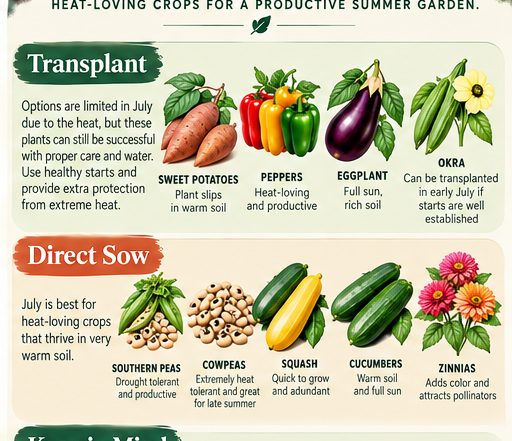
- Plant fall tomatoes during the late-June to mid-July window.
- Plant peppers and eggplant during their summer/fall windows, with extra attention to transplant stress.
- Okra remains a strong summer choice.
- Late July opens fall windows for pole beans, Irish potatoes, cantaloupe, and watermelon.
Prepare next
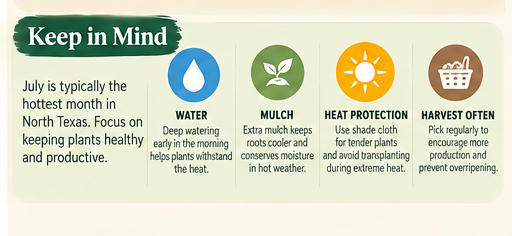
- Use afternoon shade or temporary shade cloth for tender transplants while roots establish.
- Order or start fall brassica transplants so they are ready for August and September.
- Clear out diseased or completely spent spring plants rather than nursing them indefinitely.
Wait on these
- Most lettuce, spinach, cilantro, carrots, and other cool-season crops are still better saved for later.
Garden jobs for July
July is the month to think two seasons at once: maintain the summer garden while quietly building the fall garden behind it.
July is about survival, harvest, and planning ahead
The North Texas garden is under its greatest heat stress in July. Focus on crops that genuinely tolerate summer conditions and avoid filling beds with plants that are unlikely to establish well. Harvest frequently, keep irrigation reliable, and remove plants that are clearly finished so they do not consume water and space without producing.
Use shade carefully
Temporary afternoon shade can help newly transplanted or particularly heat-sensitive plants, but mature sun-loving vegetables still need substantial light. Shade cloth should reduce stress, not turn the garden into deep shade. Airflow matters too; tightly wrapped covers can trap heat instead of relieving it.
Begin making room for fall
Even while summer crops are producing, identify the beds that will transition first into fall vegetables. Fall brassicas and other cool-season crops may need seed-starting space before outdoor temperatures feel remotely autumn-like. July planning prevents August and September planting windows from arriving before space is ready.
Do not force productivity through stress
Extreme heat can temporarily slow flowering, fruit set, and growth even when plants are alive and reasonably healthy. Adding extra fertilizer during heat stress can create another problem without fixing the weather. Prioritize root-zone moisture, mulch, airflow, and pest control, then let the crop respond when temperatures moderate.
July is also a good month to take notes on which varieties handled heat best. Those observations can guide next year's seed orders more effectively than generic claims on a packet.
Common July mistakes
The biggest is trying to solve heat stress with more fertilizer. Plants cannot be fertilized out of extreme weather. Another is watering shallowly several times a day, which keeps roots near the hottest part of the soil and can leave deeper soil dry. Water deeply when the root zone needs it and use mulch to slow evaporation.
Decide what is worth keeping
A declining cucumber or tomato plant may not deserve another month of irrigation if disease and heat have already ended useful production. Removing exhausted crops opens space, reduces pest habitat, and makes fall preparation easier. Healthy peppers, okra, southern peas, and other heat-tolerant crops may still have plenty of season left.
Start fall crops where conditions are controllable
Seed trays, shaded nursery areas, and small containers can be easier places to start fall brassicas than an exposed garden bed. Once seedlings are strong enough and outdoor conditions begin easing, move them into prepared fall spaces.
July checklist
Prioritize water, mulch, shade for vulnerable new plants, and frequent harvest. Remove crops that are finished, record which varieties tolerate heat best, and start organizing fall seed and trays. If you are starting brassicas indoors, make sure they have strong light and airflow so they are sturdy enough for late-summer hardening off.
July is also the month to check whether your irrigation system is still reaching every bed evenly. Plants are at their largest, roots are using more water, and small leaks or clogged emitters show up quickly in extreme heat. Fixing those problems now protects both summer harvests and the fall garden that follows.
Protect your own energy too
July gardening is easier when chores are done early in the morning or near sunset. Group tasks together, keep tools close, and avoid turning routine maintenance into an all-afternoon project. A garden that fits the gardener's energy is more likely to be watered, harvested, and checked consistently.