
Plant now
- Plant onion plants and onion seed during January through about mid-February.
- Plant garlic cloves during the winter planting window if you did not get them in during fall.
- Begin English peas and spinach around the latter part of January when conditions are workable.
Prepare next
- Order warm-season seed and map out where tomatoes, peppers, beans, squash, and cucumbers will go.
- Refresh labels, seed-starting supplies, trellises, and irrigation before the spring rush.
- Work compost into beds only when soil is moist and crumbly—not wet and sticky.
Wait on these
- Hold beans, cucumbers, squash, melons, okra, peppers, and eggplant for warmer soil.
- Do not let a random warm January afternoon convince you that spring has arrived.
Garden jobs for January
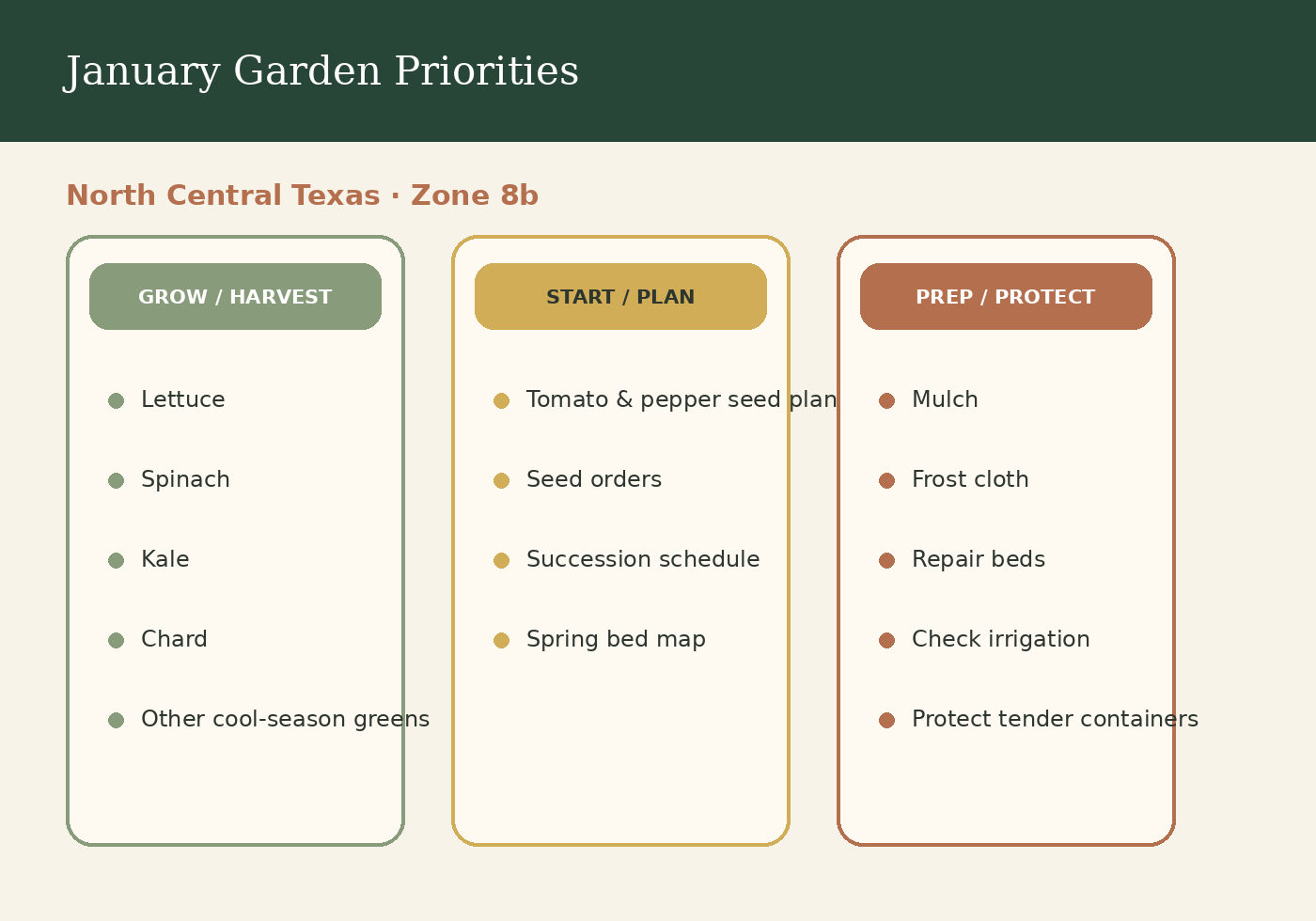
Use the quiet month to test irrigation, sharpen tools, clean up diseased debris, and decide which beds will carry cool-season crops into spring.
Use January to make spring easier
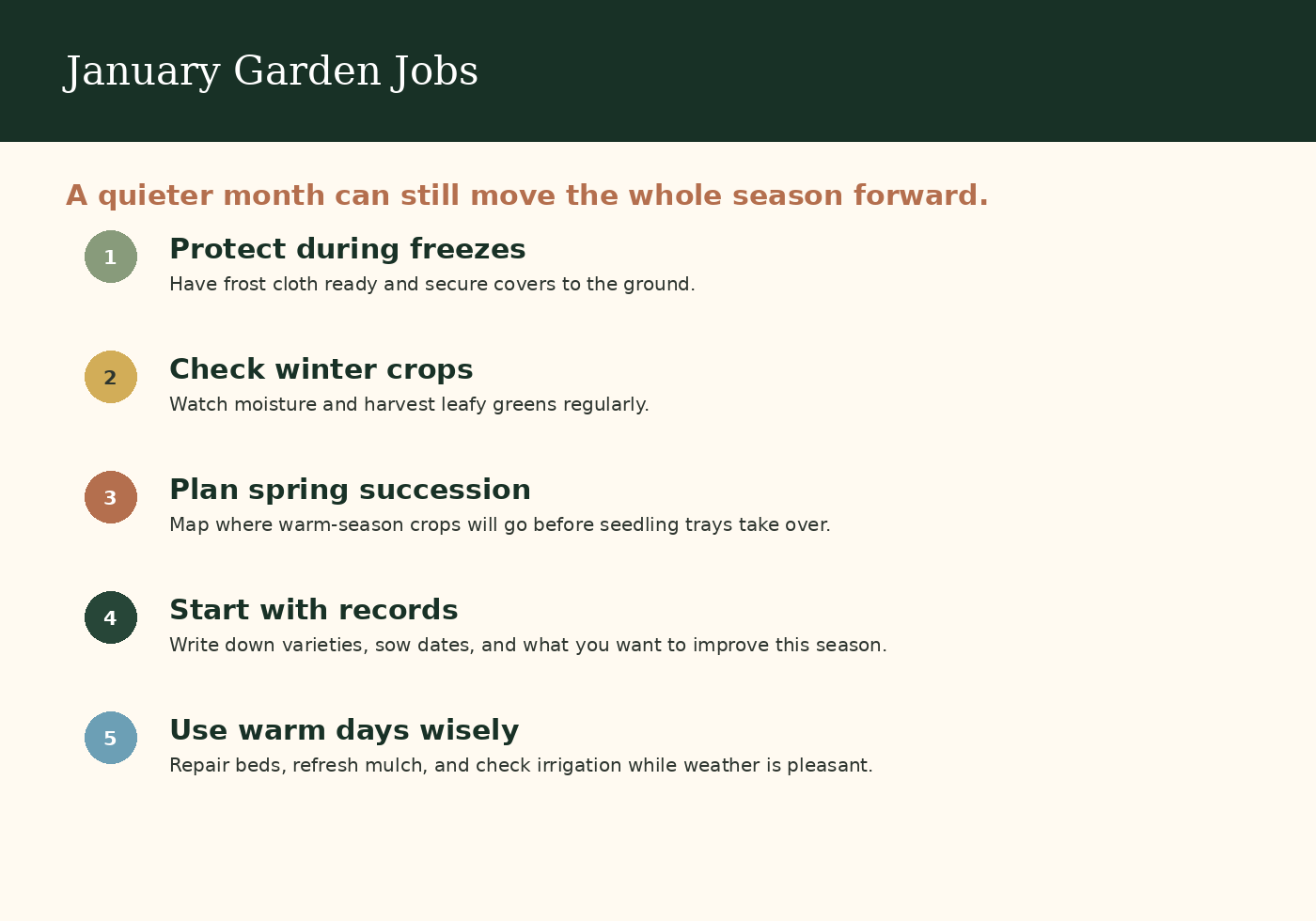
January can feel quiet, but it is one of the best months to make decisions before seed trays and transplanting take over. Review which beds will still contain onions, garlic, peas, spinach, or other cool-season crops in early spring and which spaces need to be available for tomatoes, peppers, beans, squash, and cucumbers. That simple map prevents the spring garden from becoming a last-minute puzzle.
This is also a good time to check seed inventory, replace old labels, clean trays, repair trellises, and test irrigation. A few minutes spent finding missing fittings or cracked hose now is far easier than discovering the problem during the first hot week after transplanting.
Winter watering still matters
Cold weather reduces water use, but winter crops are still alive and growing. Check the soil rather than assuming winter rain has done the job. Containers and raised beds may dry faster than native ground, especially during windy stretches. Water deeply when the root zone is dry, but avoid keeping cold soil constantly saturated.
What to harvest and watch in January
Established greens, onions, herbs, roots, and brassicas may continue producing even though growth is slower. Harvest damaged or mature leaves so plants stay clean and productive. Watch for cold injury after hard freezes, but do not assume every wilted leaf means the plant is dead. Many cool-season vegetables recover once temperatures rise.
Winter weeds can quietly establish while the garden looks inactive. Pull them while small so they are not competing with slow-growing crops for light, water, and nutrients. Keeping beds tidy now reduces the amount of cleanup needed just as spring planting accelerates.
Common January mistakes
The easiest mistake is responding to one warm afternoon as if the season has changed. Tender warm-season crops still have a long way to go, and starting them outdoors too early creates more protection work than progress. Another mistake is ignoring winter beds completely. Slow growth can make a garden look dormant even while weeds, moisture problems, and cold damage are developing.
January is also not the month to aggressively cultivate wet clay. If beds are sticky after rain, stay out of them. Compaction created now can last well into spring. Use dry days for surface cleanup, mulch, planning, and repairs instead.
Use containers to add flexibility
Winter containers can hold herbs, lettuce, spinach, and other compact cool-season crops where they can be moved or protected more easily than an entire bed. They also make it possible to experiment without sacrificing permanent garden space. Just remember that pots cool and dry faster than in-ground soil, so they need closer moisture and freeze monitoring.
What success looks like this month
A successful January garden does not need to look full. It should have healthy cool-season crops, protected soil, working irrigation, labeled plantings, and a clear spring plan. If you finish the month knowing what each bed will do next, you are already ahead.
January checklist
Keep frost cloth accessible, harvest mature cool-season crops, check mulch depth, inspect irrigation after freezes, and label anything that will remain in the bed into spring. If you start warm-season seed indoors, make sure you already have enough light and pot-up space for the plants they will become—not just the seeds you are sowing today.
← December All months February →