
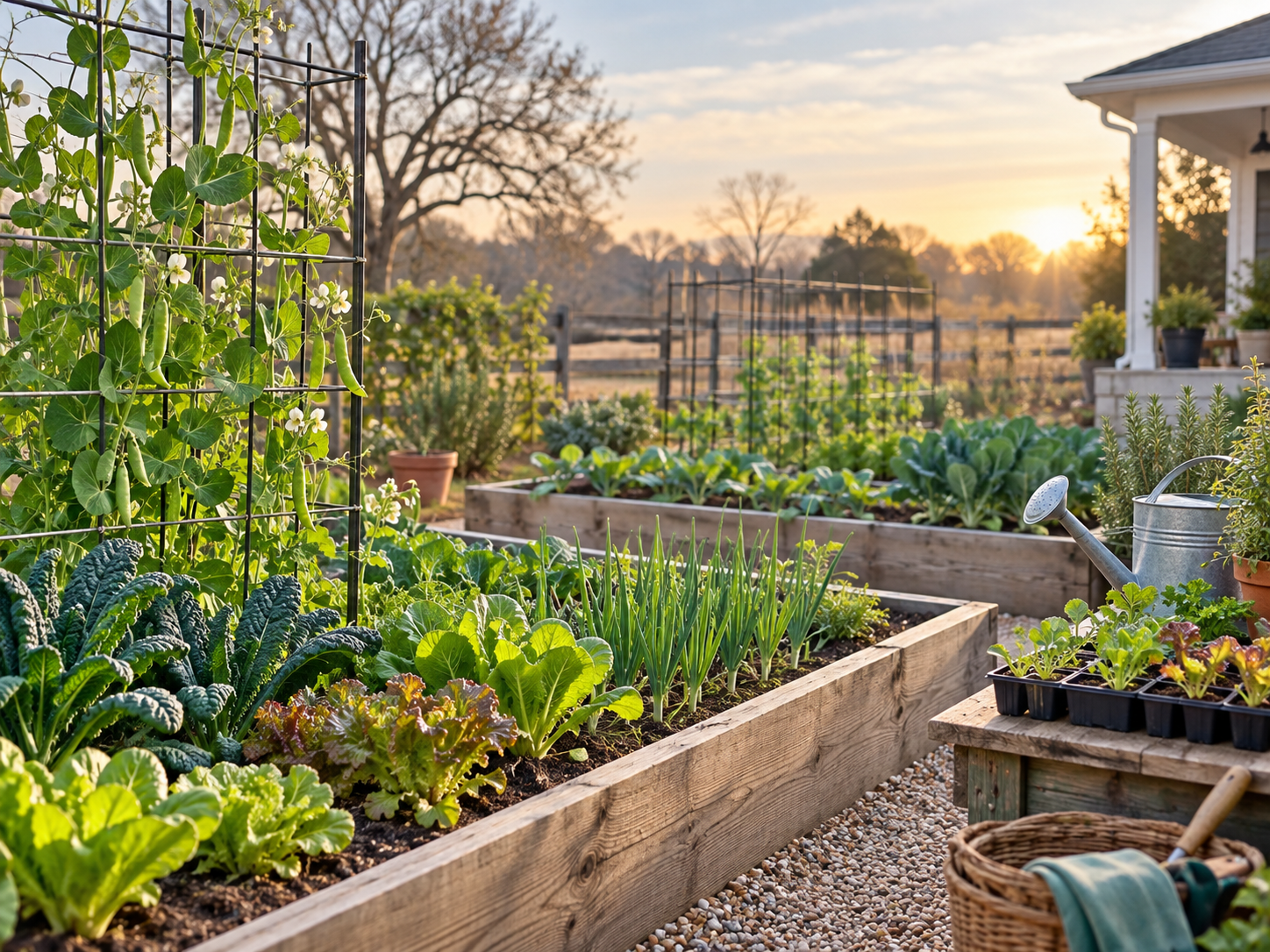
Plant now
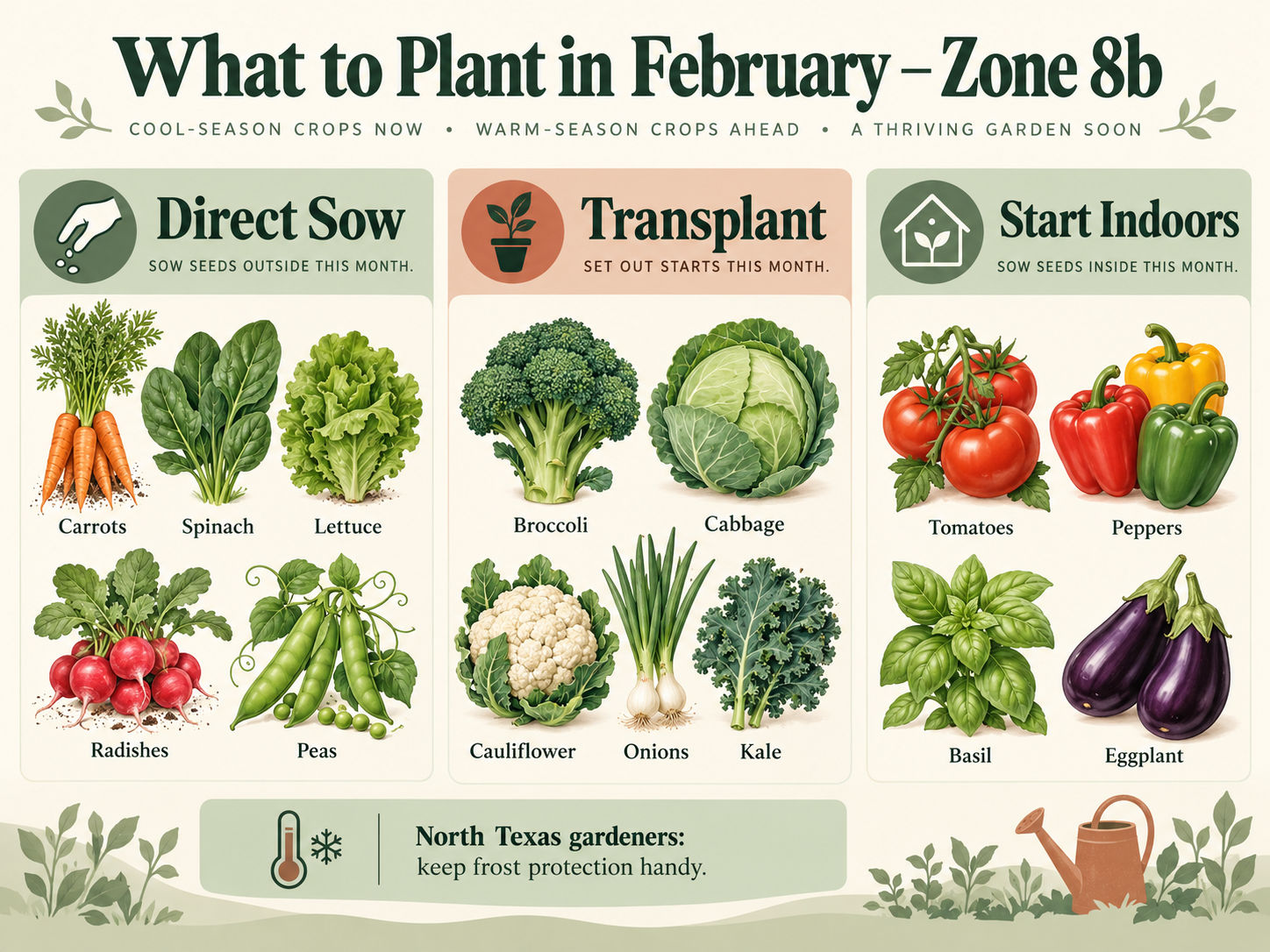
- Plant beets, broccoli, Brussels sprouts, cabbage, Chinese cabbage, carrots, cauliflower, Swiss chard, cilantro, kohlrabi, lettuce, parsley, radishes, and turnips within their February windows.
- Plant Irish potatoes early in the month.
- Continue English peas and spinach.
- Finish onion plants, onion seed, and garlic early in the month if they are not already planted.
Prepare next
- Start watching soil temperature and the forecast as March approaches.
- Prepare supports for peas and future pole beans before roots and vines are in the way.
- Begin hardening off any transplants that will move outside once conditions fit.
Wait on these
- Warm-season crops still need warmer soil and more dependable nighttime temperatures.
- Tomatoes may be available at stores, but outdoor planting timing and freeze protection still matter.
Garden jobs for February
This is the month to get cool-season beds planted instead of spending all of February waiting for spring.
February is a transition month
February is where winter gardening and spring preparation overlap. Cool-season crops can still be planted and harvested, while warm-season seedlings begin taking up space indoors. The biggest mistake is treating one warm week as proof that freezing weather is finished. Keep tender plants movable or protected until the weather pattern is genuinely stable.
Prepare beds before transplant season
Finish major compost additions, irrigation repairs, and support installation before tomatoes and peppers need the space. If a bed is wet from winter rain, wait until the soil is workable rather than digging heavy clay while it is saturated. Mulch can be pulled back temporarily where you need the sun to warm planting areas, then returned after crops are established.
Start succession thinking now
Radishes, lettuce, carrots, peas, and other cool-season crops do not all need to be planted at once. Small repeated sowings can extend harvest and reduce the risk of losing an entire planting to one bad weather event. Leave yourself room to transition those areas into warm-season crops later.
Manage the overlap between winter crops and spring space
By February, some winter vegetables are still productive while spring transplants are only weeks away from needing room. Decide which cool-season crops are worth carrying longer and which can be harvested out to free beds. This is especially useful in a small garden where every square foot has to transition cleanly.
Keep frost cloth accessible even while preparing warm-season beds. North Texas weather can swing quickly, and the most expensive mistake is often putting tender plants outside because the afternoon felt like spring. Harden plants on mild days, but bring them back to protection when nights are still questionable.
Common February mistakes
February can tempt gardeners into buying transplants that are available before the garden is ready. Nursery availability is not the same thing as safe planting weather. If you bring home tomatoes or peppers early, be prepared to keep them protected and growing well until soil and nighttime temperatures are appropriate.
Another common problem is overcrowding seed-starting shelves. Start the number of plants you can actually light, water, pot up, and harden off. Forty healthy seedlings are more useful than two hundred stretched plants competing for one light.
Make the transition bed by bed
Instead of clearing the entire winter garden, identify which areas will transition first. A bed of radishes may finish quickly and become an early spring space, while onions or garlic may remain much longer. Treating each bed as its own timeline makes the seasonal handoff smoother and keeps productive winter crops from being removed unnecessarily.
Watch drainage after winter rain
February soil can be cold and wet. A raised bed may be ready to work while the surrounding ground is still sticky. Check conditions before planting or amending. Seedlings started in saturated soil often struggle even when air temperatures are mild.
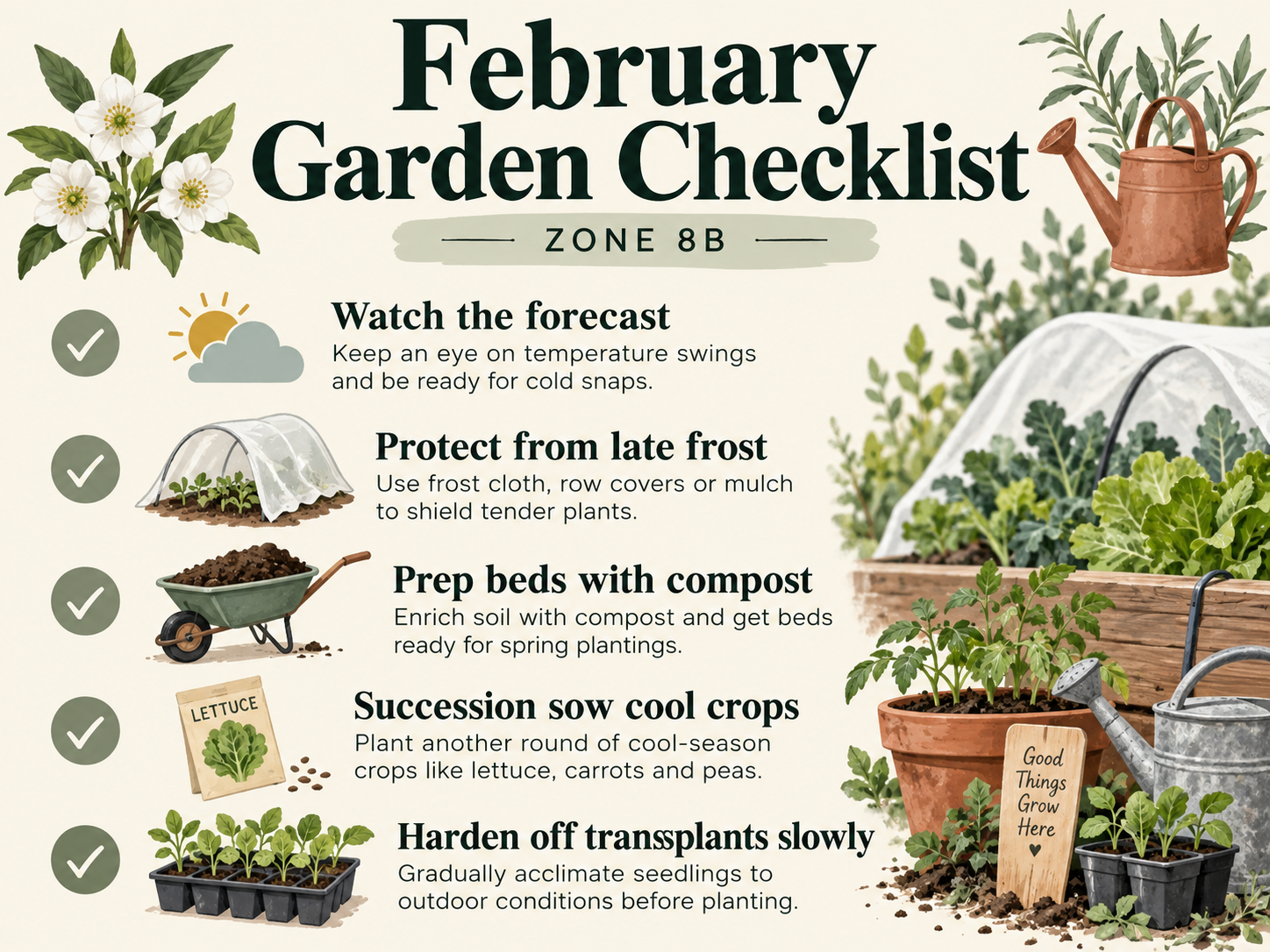
February checklist
Keep cold protection available, succession sow quick cool-season crops, prepare beds without working wet clay, and begin hardening only the plants that are truly close to transplant time. Check trellises and cages now. A repaired tomato cage in February is a five-minute job; the same repair around a four-foot plant is not.