
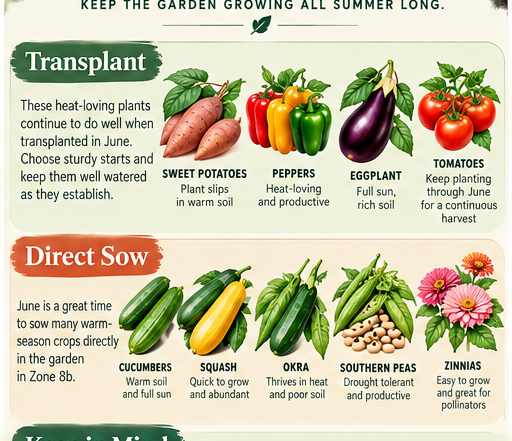
Plant now
- Finish any remaining sweet potato slips right at the beginning of the month if needed.
- Begin fall tomato transplants around late June, using shade and careful watering to help them establish.
- Keep harvesting beans, squash, cucumbers, tomatoes, peppers, and other spring crops while quality is high.
Prepare next
- Start planning the fall garden now instead of waiting until September.
- Make seed lists for fall beans, brassicas, greens, roots, garlic, and peas.
- Identify which spring crops are failing from heat and which are still worth maintaining.
Wait on these
- Do not sow cool-season fall crops into blazing summer conditions simply because you are thinking about fall.
- Save most fall direct sowing for the windows that begin in July and August.
Garden jobs for June
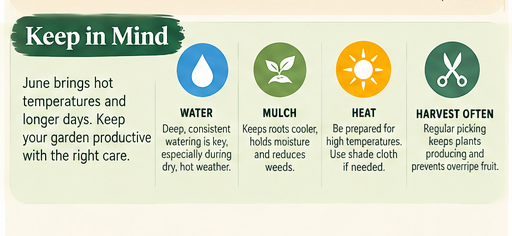
Water deeply, mulch well, harvest frequently, and start making room for the second Texas gardening season.
June shifts the garden from planting to maintenance
There are still crops that can be planted, but June increasingly becomes about keeping established plants healthy and productive. Harvest beans, squash, cucumbers, peppers, and tomatoes regularly so plants are not carrying oversized fruit. Remove damaged leaves, keep vines trained, and maintain access to the center of beds before growth becomes tangled.
Water deeply and protect the soil surface
Longer days and higher temperatures increase evaporation. Mulch helps, but it does not eliminate the need to check the root zone. Water deeply enough to encourage roots below the hottest surface layer. Containers may need far more frequent checks than raised beds or in-ground crops.
Expect fruit set to change in extreme heat
Tomatoes and peppers can remain alive and healthy while flowering becomes less productive during very hot weather. Avoid assuming every dropped flower is caused by a fertilizer deficiency. Keep plants watered consistently, protect roots with mulch, and let weather moderate before making major changes.
Keep the garden from becoming a jungle
By June, paths can disappear under vines and tomato branches. Redirect runners, tie up growth, remove dead lower foliage, and keep harvest access open. The goal is not a perfectly pruned garden; it is a garden where you can still inspect plants, water the root zone, and find fruit before it rots.
Pay attention to irrigation uniformity. A long bed may have one end staying wet while the far end barely receives water. Checking several points after a watering cycle can reveal clogged emitters or pressure problems before plants show obvious stress.
Common June mistakes
June problems often come from inconsistency. A bed that swings from bone dry to saturated can produce cracking fruit, blossom-end problems, stressed roots, and uneven growth. Aim for steady soil moisture rather than trying to rescue plants after they wilt badly.
Another mistake is allowing overripe fruit to stay hidden on the plant. Giant squash and cucumbers pull energy from newer fruit and become harder to use. Check beneath leaves several times a week.
Manage the garden canopy
Dense foliage can trap humidity and make pest inspection difficult. Tie tomatoes, guide cucumber vines, remove clearly dead or diseased leaves, and keep the lower canopy from collapsing onto wet soil. Do not strip healthy foliage unnecessarily; leaves are what power fruit production.
Use June observations to guide next year
By now you can see which varieties handled spring weather, disease, and early heat best. Record what is thriving and what disappointed you. A short note made now is more reliable than trying to remember every variety when seed catalogs arrive months later.
June checklist
Check soil moisture below the surface, clear paths, harvest frequently, remove diseased debris, and keep containers from drying unnoticed. Refill mulch where it has thinned and make sure emitters are not clogged. A few small maintenance checks each week can prevent most mid-summer garden emergencies.
Keep pollinators working
Squash, cucumbers, melons, and many flowers depend heavily on insect activity. Avoid spraying open blooms while bees are foraging, and keep a few flowering herbs or companion flowers nearby when practical. Good pollinator traffic can make the difference between lots of flowers and an actual harvest.